Oct 20, 2026 KOSPI Market Brief — What to Watch Before the Korean Open
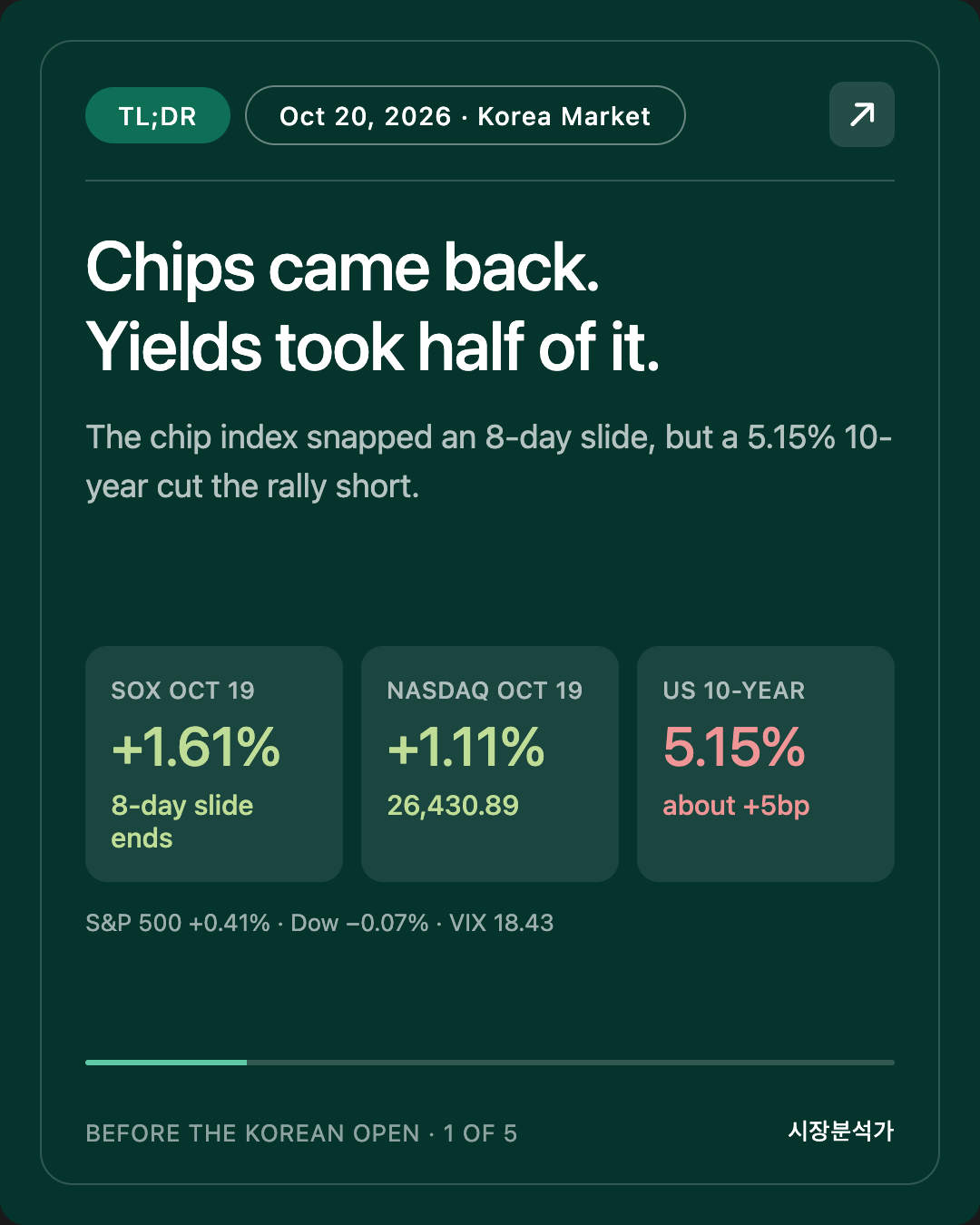
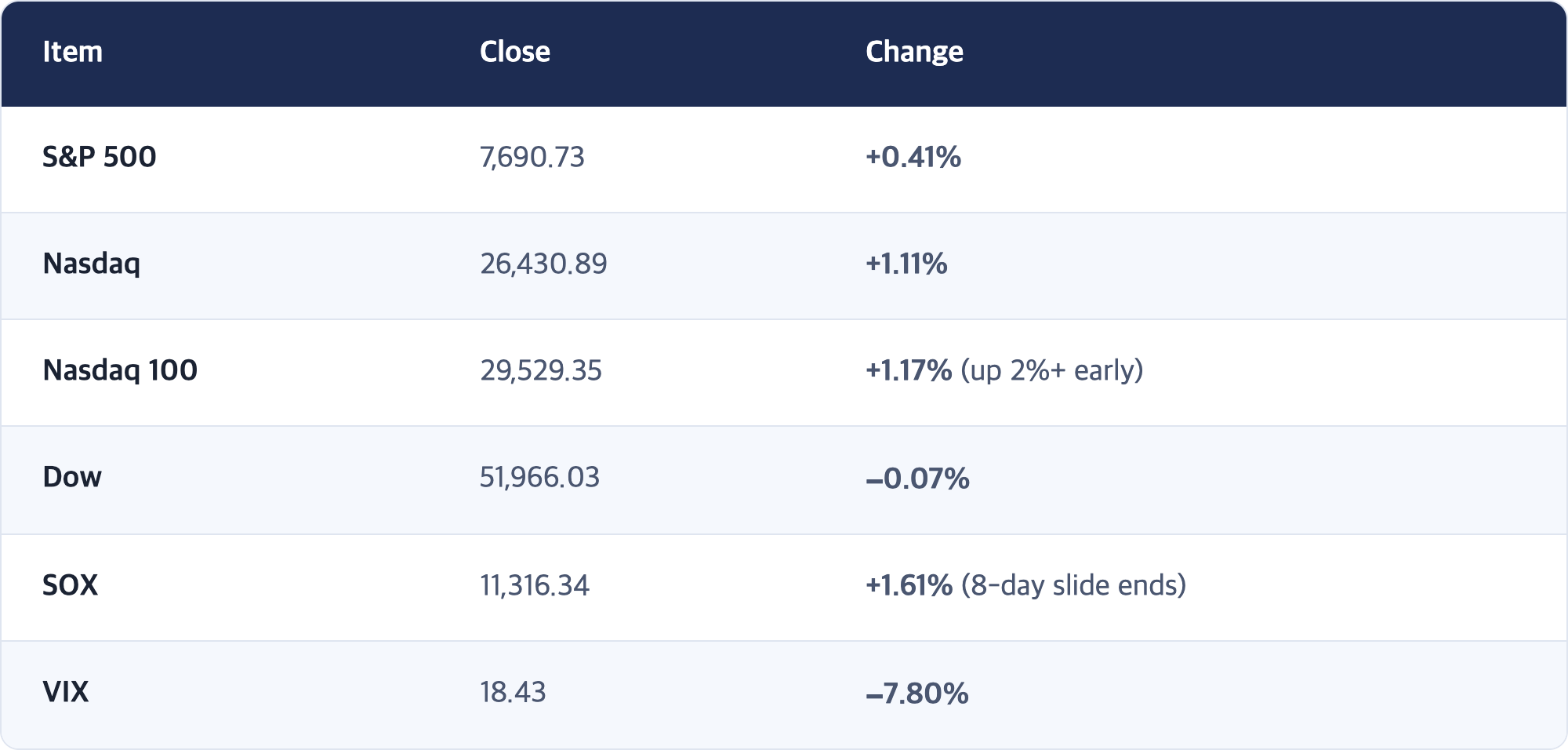
- ★ Chips came back, and yields took half of it. SOX +1.61% (the prior eight sessions cost 15.7%), Nasdaq +1.11%, S&P 500 +0.41%, Dow 51,966.03 (−0.07%). The Nasdaq 100 trimmed a 2%+ intraday gain to +1.17%.
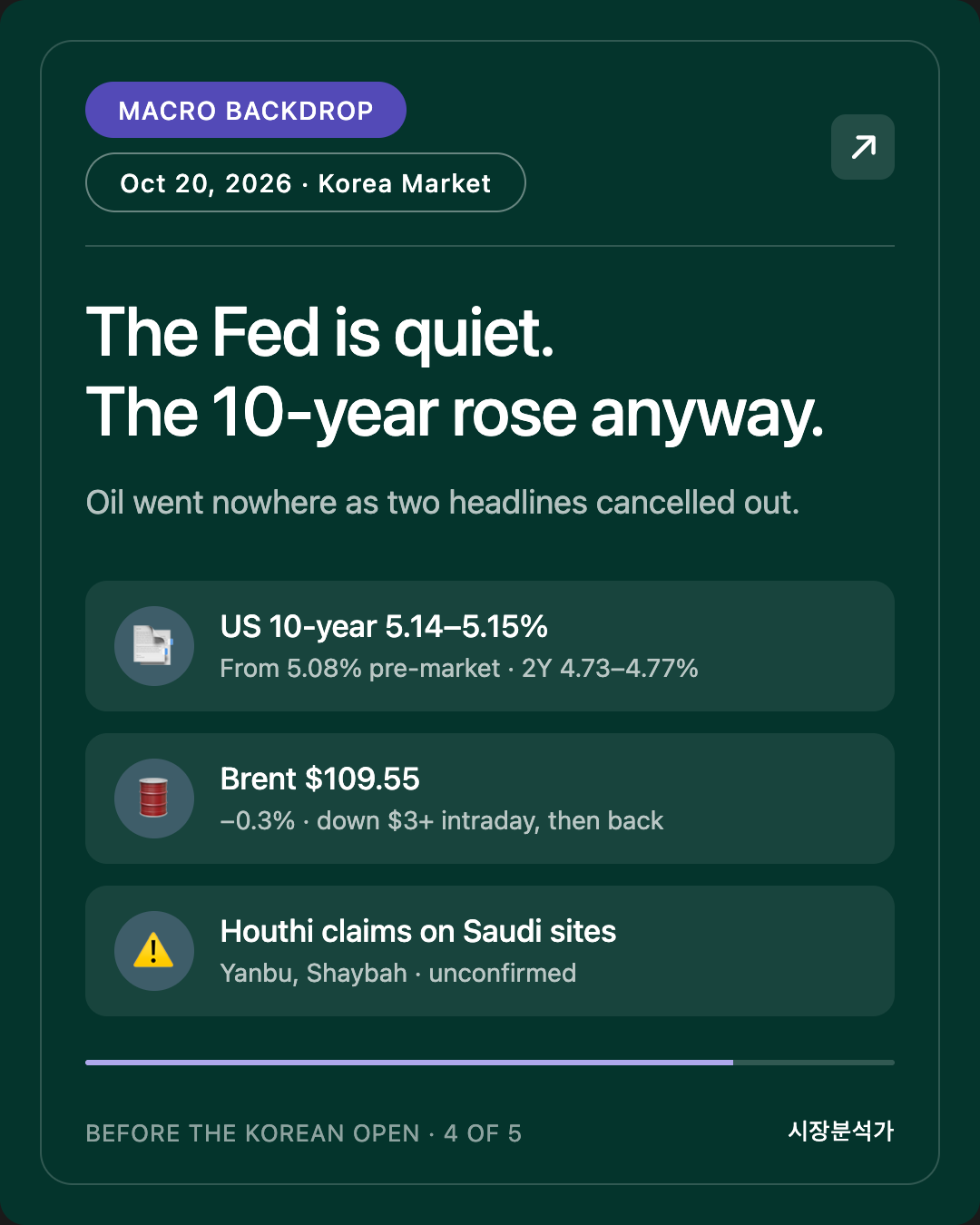
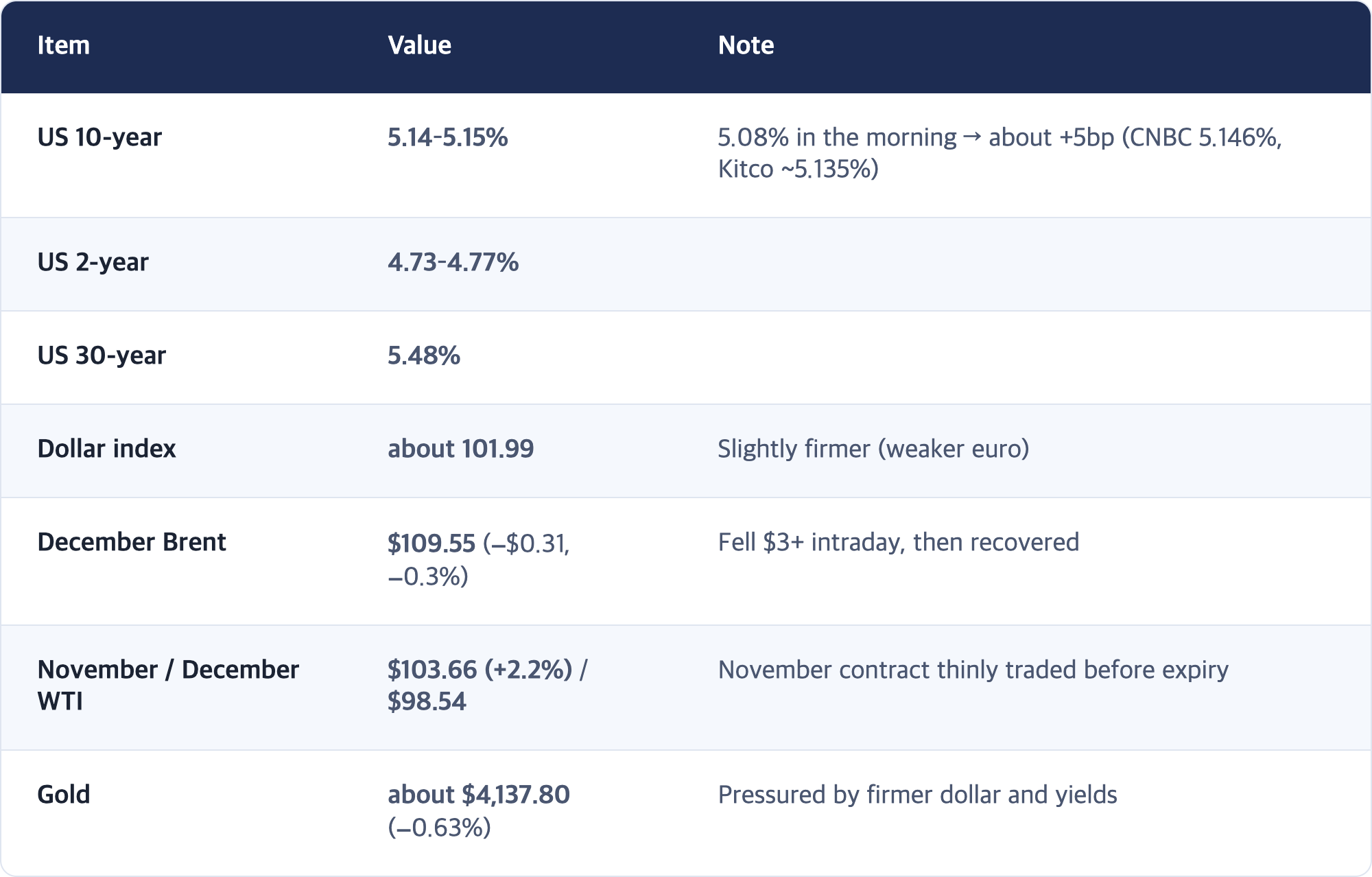
- ★ The US 10-year is back at 5.14–5.15%. Up roughly 5bp from about 5.08% in the morning. The 2-year sits at 4.73–4.77%, the 30-year at 5.48%. That crosses the 5.12% line the morning brief set.
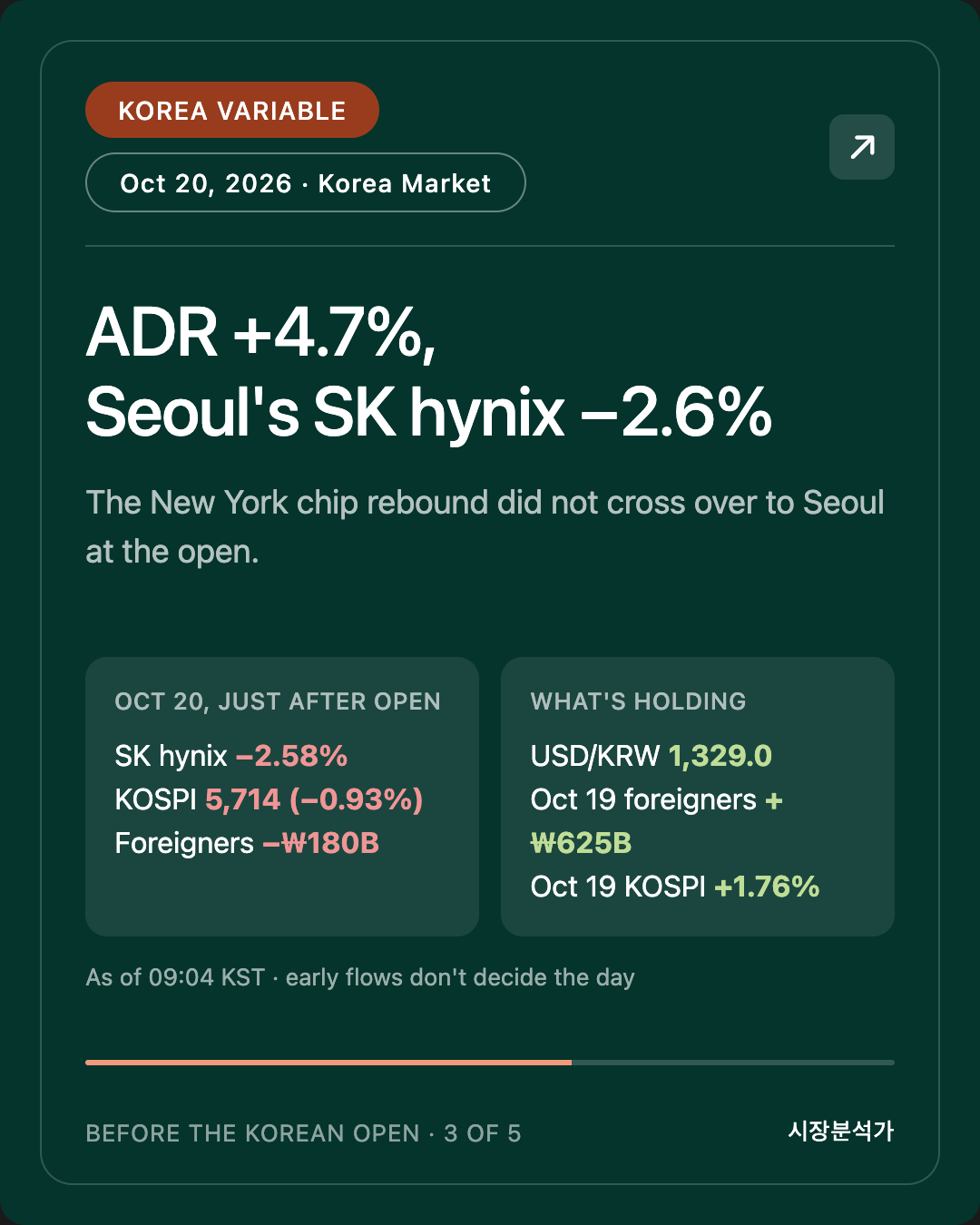
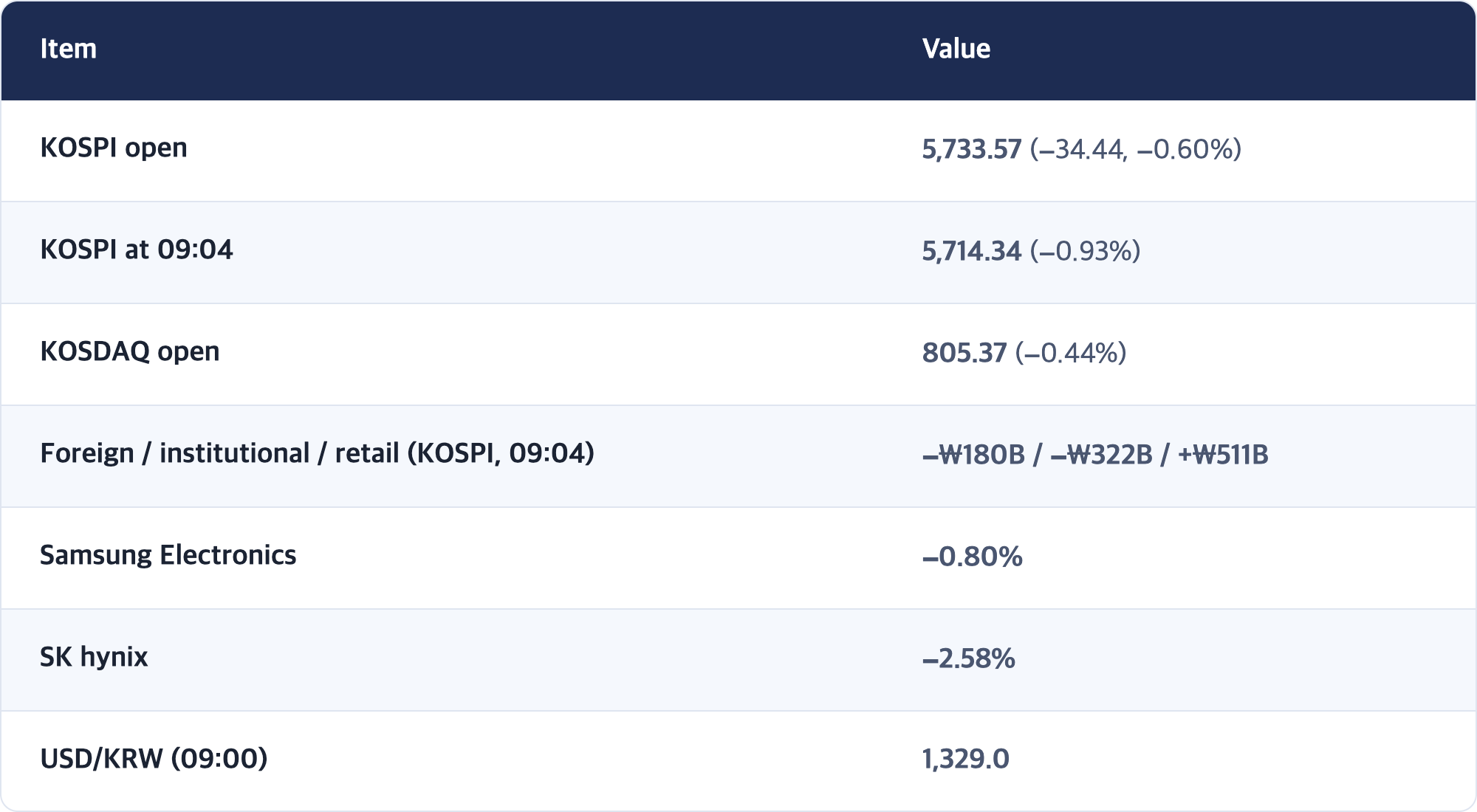
- ★ Seoul opened without the New York chip rally. KOSPI open 5,733.57 (−0.60%), 5,714.34 (−0.93%) at 09:04. SK hynix −2.58%, Samsung Electronics −0.80%. Foreign investors −₩180B, institutions −₩322B, retail +₩511B (as of 09:04).
- Oil flipped twice in one day. December Brent settled at $109.55 (−0.3%). It fell more than $3 intraday on the US waiver of Russia sanctions, then recovered most of it after Yemen's Houthi rebels claimed strikes on Saudi energy sites (Yanbu and the Shaybah field; not confirmed by Saudi authorities). Expiring November WTI rose to $103.66 (+2.2%); December WTI settled at $98.54.
- The won is still firm. USD/KRW 1,329.0 (09:00 KST Oct 20). VIX 18.43 (−7.8%). Gold about $4,138 (−0.6%). Korea's central bank meets on Oct 22, with a hold at 3.00% the consensus.
This is Mr. Can. Here is the Oct 20, 2026 brief ahead of the Korean market open.
Written: 2026-10-20 10:23 KST (Vancouver Oct 19, 18:23 PDT) · Work started 08:29 KST
Basis: US regular session close on Mon Oct 19 (05:00 KST Oct 20) + Treasury close + oil settlement + the first minutes of Seoul trading on Oct 20 (as of 09:04 KST)
🔴 Scheduled for 16:00 PDT, started 16:29 PDT. Data gathering ran long, so this brief was finished after Seoul opened (09:00 KST). Opening numbers are added in Section 3.
🟢 No missed editions. The previous brief was the Oct 19 AM (US preview).
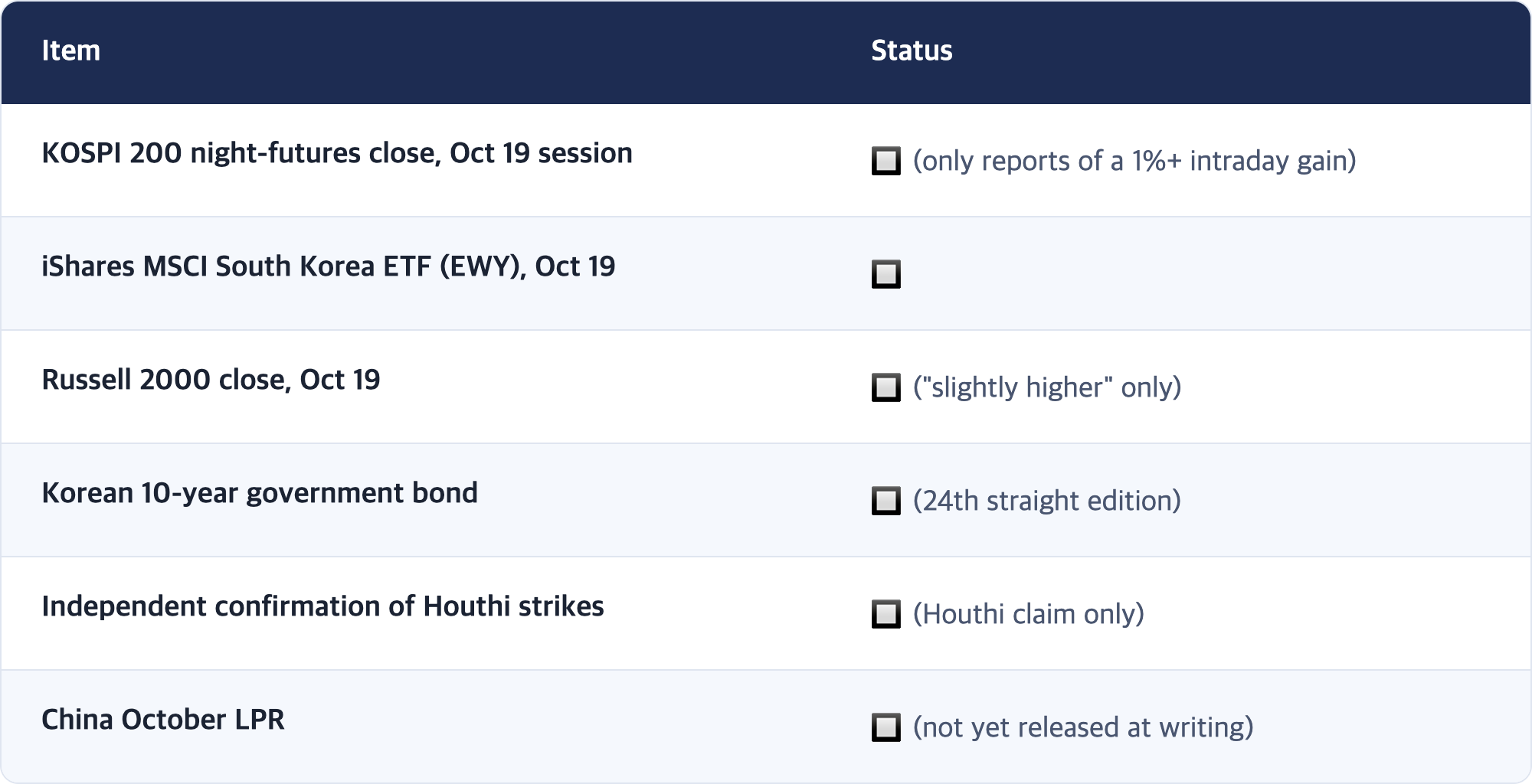
🟡 We could not confirm the KOSPI 200 night-futures close, the Russell 2000 close, or the Korean 10-year government bond yield (see Section 7).
SEO Intro
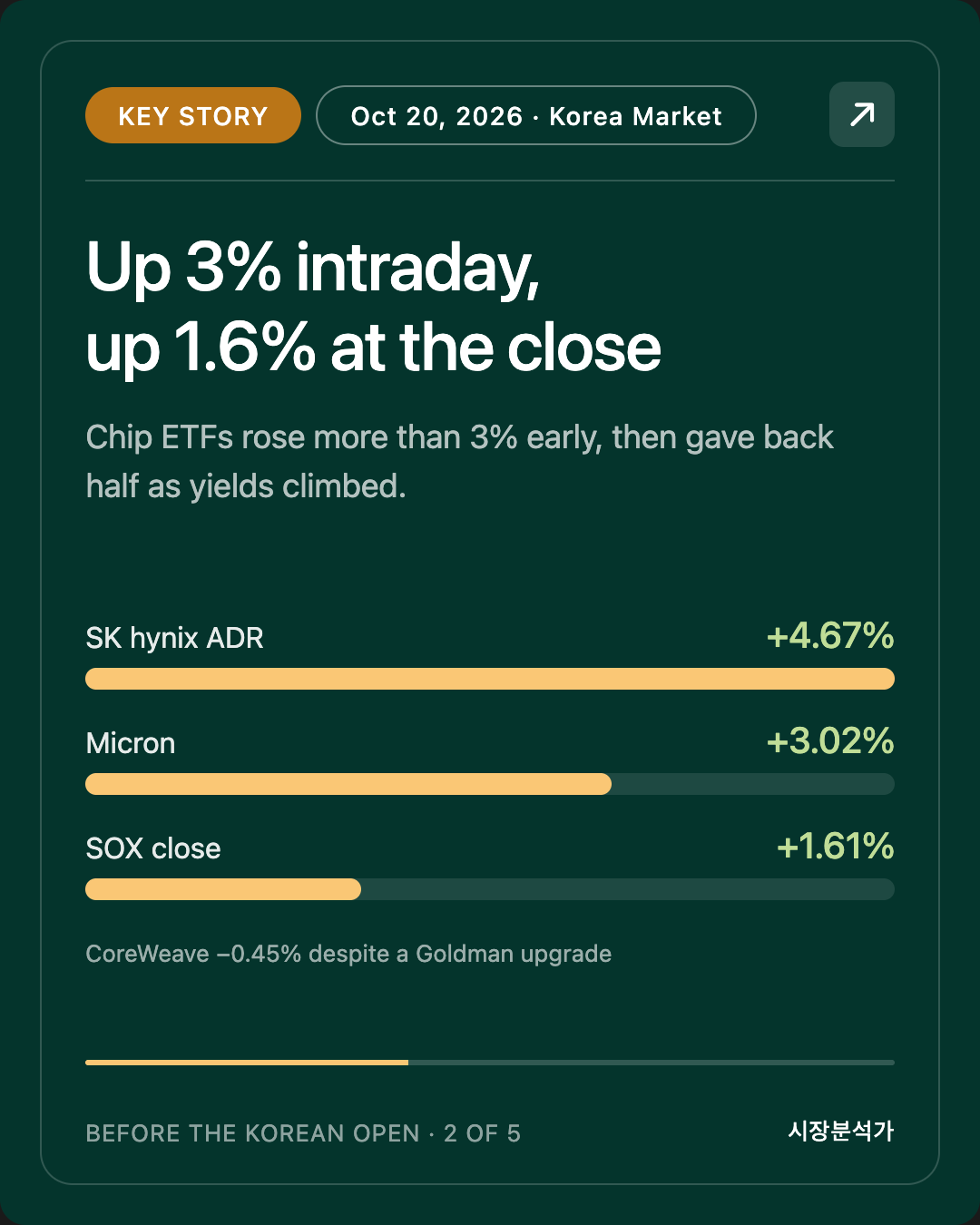
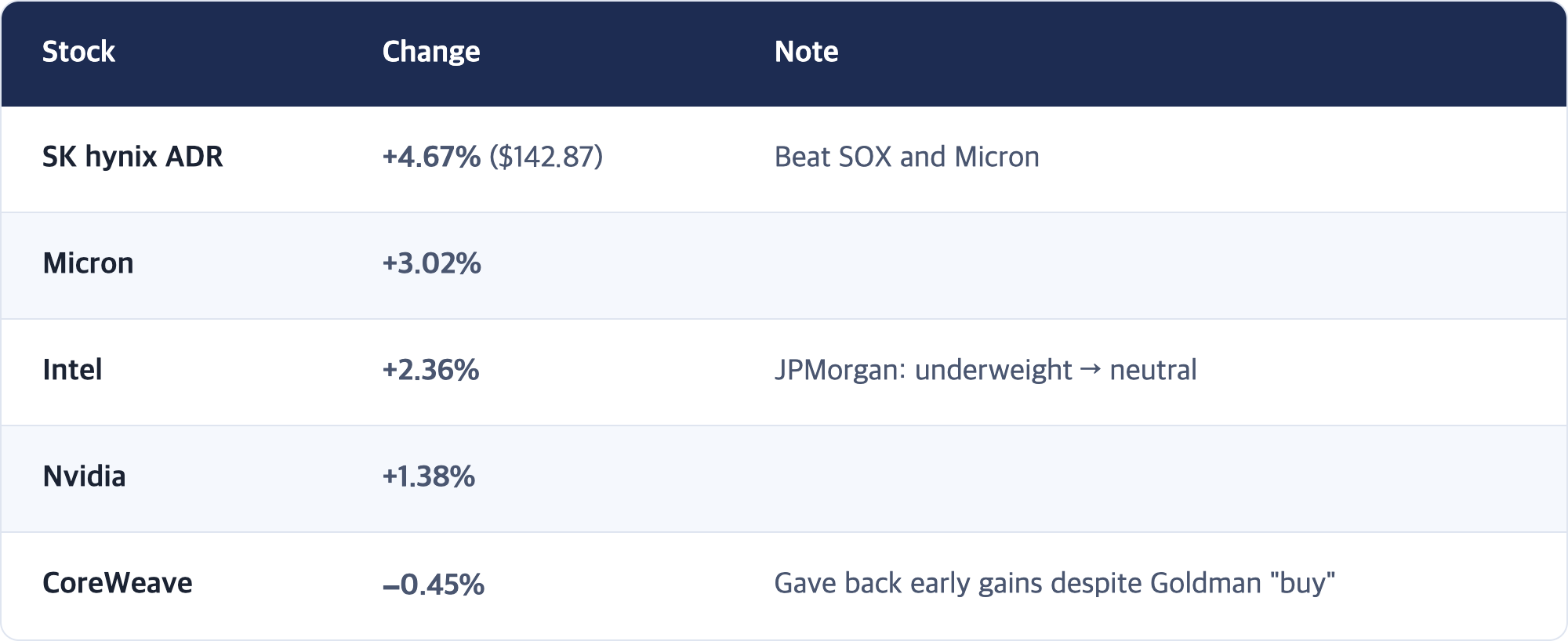
Chip stocks bounced on Monday. The Philadelphia Semiconductor Index (SOX) closed at 11,316.34 (+1.61%), ending an eight-session losing streak, the longest since October 2008. The Nasdaq finished at 26,430.89 (+1.11%) and the S&P 500 at 7,690.73 (+0.41%). SK hynix's US-listed depositary receipt (ADR) gained 4.67%.
But the rally lost about half its height in the afternoon. The Nasdaq 100 was up more than 2% early and closed +1.17%. Over the same hours, the US 10-year Treasury yield climbed back to 5.14–5.15% (about +5bp). The morning story, "chips are breathing because yields and oil have eased," lost its rates leg by the close.
Seoul read the signal the other way. The KOSPI opened at 5,733.57 (−0.60%), and SK hynix fell 2.58% in early trading despite its ADR's 4.67% gain. The question for Seoul today: does New York's chip rebound cross over to Korean chipmakers, or does Seoul keep rallying everywhere except semiconductors, as it did yesterday?
1. Scoring Last Session's Checkpoints
The four set by the Oct 19 AM brief (US close, Oct 19)
The question was "Do chips lead the market again, or does money rotate away from chips the way it did in Seoul?" Oil was again left as the possible third variable.
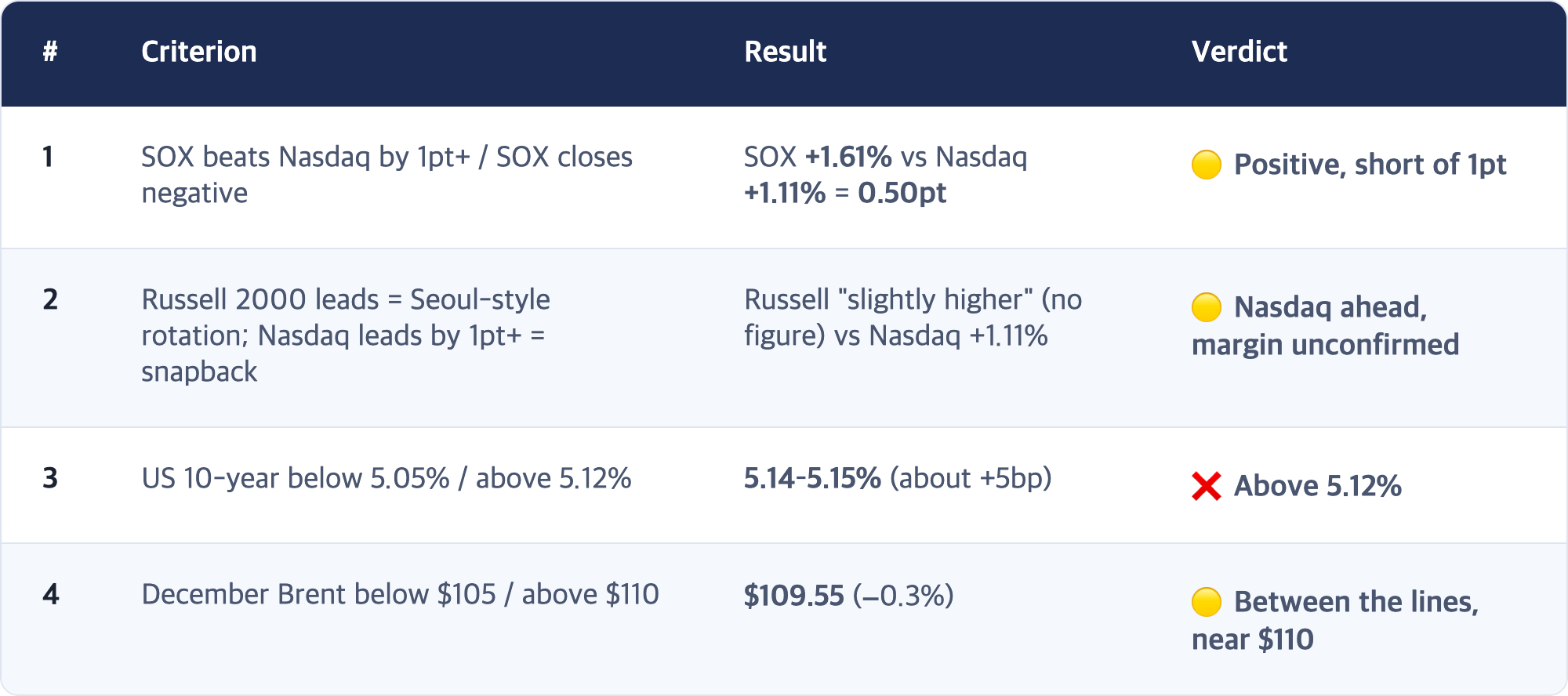
★ [Interpretation] The rebound was right. The reason for it was wrong
The morning brief said that if chips outperformed (1) and the 10-year fell below 5.05% (3), the case that "high rates were choking AI spending" would gain ground. We got the opposite pair: chips rose, and so did yields.
[Observation] So "chips rose because rates fell" does not fit Monday. Two explanations remain. One is a snapback from oversold levels: after a 15.7% drop in eight sessions, bargain hunters were due regardless of rates. The other is analyst calls: JPMorgan upgraded Intel (+2.36%), Goldman Sachs moved CoreWeave to "buy," and Morgan Stanley named Amazon (+4.98%) a top pick.
[Interpretation] Still, the afternoon fade lines up with the moment the 10-year moved back into the 5.1% range. Rates didn't start the rally, but they may have capped it. That distinction is the starting point for reading Seoul's chip stocks today.
2. Today's Key Story: Chips Came Back, Yields Took Half of It
[Fact] US close, Monday Oct 19
[Fact] Key chip and AI names
★ [Interpretation] Where the rally stopped matters more than how high it went
The VanEck chip ETF (SMH) was up as much as 3.2% and the iShares chip ETF (SOXX) 3.7% intraday. SOX closed +1.61%, giving back nearly half.
[Observation] CoreWeave is the tell. A Goldman upgrade still left it in the red. Since last week's selloff was driven by worries about money lent to AI infrastructure, this suggests that worry hasn't gone away (interpretation).
[Interpretation] Monday looks more like a breather after an oversold run than a confirmed bottom. Confirmation comes from earnings: Netflix and SpaceX (Tue), Tesla, Meta, IBM and Texas Instruments (Wed) need to show that AI spending continues and pays. Citigroup expects tech to deliver about 70% of global earnings growth next year, which also shows how high the bar is.
3. The Korea Variable: ADR +4.67%, Seoul's SK hynix −2.58%
[Fact] Seoul just after the open, Tue Oct 20 (Newspim, 09:04 KST)
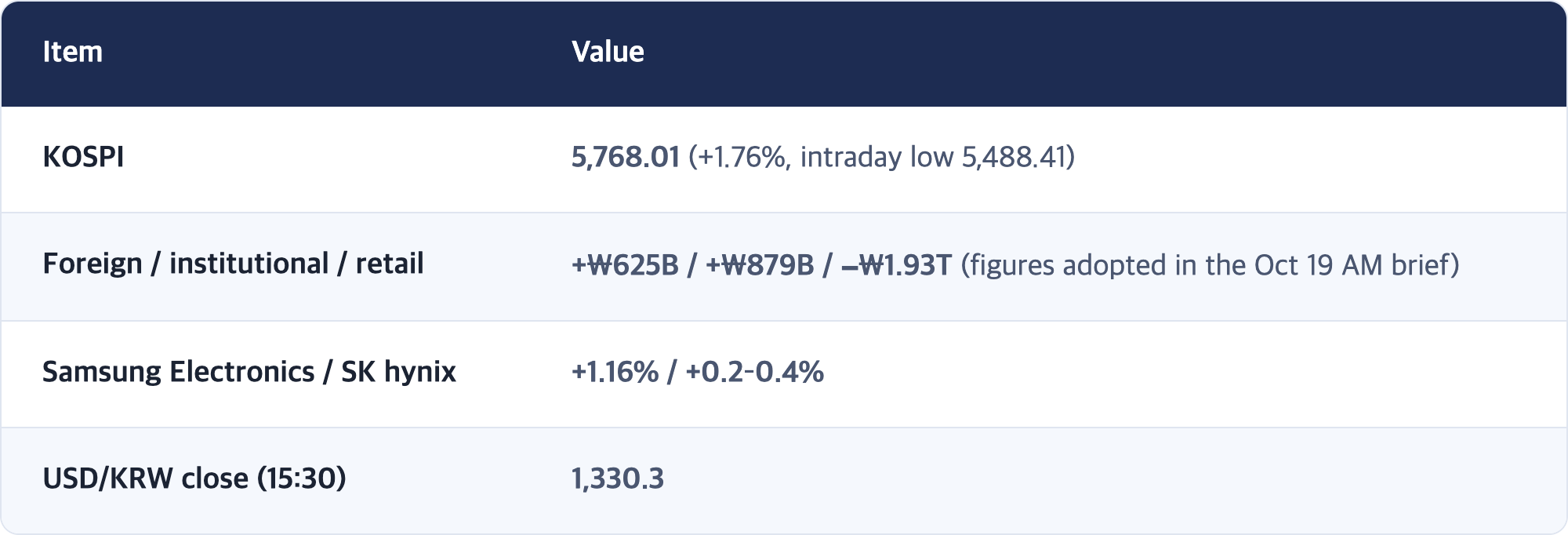
[Fact] Yesterday's Seoul close (Oct 19)
★ [Interpretation] Seoul may have already spent New York's rally
An ADR up 4.67% while the home-market share falls 2.58% is unusual. Three possible explanations:
- The afternoon fade. What happened to Nasdaq futures and yields after the ADR closed matters more for Seoul's open than the ADR close itself. A 10-year closing at 5.15% leans against Korean chip stocks (interpretation).
- Some of it was priced in yesterday. Seoul swung from −3.17% at the open to +1.76% at the close on Oct 19, while US futures were already rising on chips.
- Foreign chip selling is not finished. Of the roughly ₩17.7T foreign investors sold in Korean stocks Oct 1–16, about 80% was Samsung Electronics and SK hynix (Newspim). Foreigners were net buyers overall on Oct 19, but one tally shows them still net selling SK hynix (about −₩218B, Topstar News).
[Observation] −₩180B of foreign selling in the first minutes is small. We don't judge the day from the opening flow. The real test is whether foreign investors stay net buyers for a third straight session by today's close.
4. Macro Backdrop: Yields Came Back, Oil Flared on the Saudi Front
[Fact] Rates, dollar and commodities (near the New York close, Oct 19)
[Fact] The two oil headlines
- Russia sanctions waiver (Oct 16 executive order, up to 60 days of review): pushed oil down 2% in Asian hours.
- Houthi strike claims on Saudi Arabia: the group said it hit an Aramco facility in Yanbu and the Shaybah oilfield, among other targets. Saudi authorities did not immediately confirm, and Reuters could not independently verify.
- Kpler estimates crude flows through the region fell to about 8.5 million barrels a day last week, from more than 20 million the week before.
★ [Interpretation] Oil absorbed "more supply coming" and "supply cut off" on the same day
The Russia waiver adds supply; the Houthi attacks and the Strait of Hormuz threaten it. Net result: Brent barely moved (−0.3%). The two stories cancelled out.
[Observation] For Korea, the level matters more than the direction. As long as Brent hovers near $110, Korea, a major crude importer, faces pressure on its trade balance and inflation. For now, though, the won is holding near 1,330, so oil is not yet dragging the currency down.
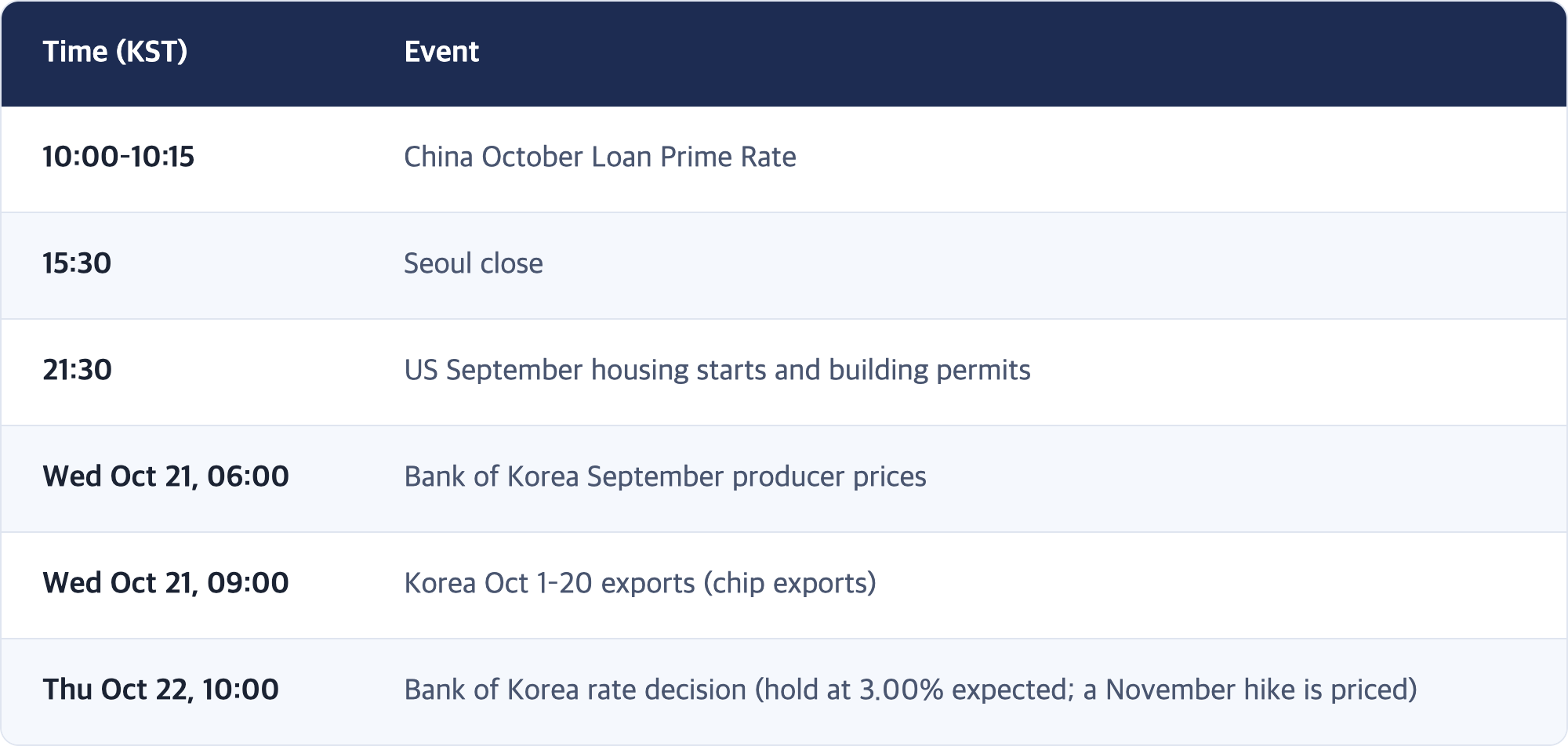
[Interpretation] On rates, this week has little US data (September housing starts on Oct 20) and the Fed is in its pre-meeting quiet period. Kitco notes expectations lean toward a hold at the Oct 27–28 FOMC. That the 10-year rose anyway suggests something other than Fed expectations, possibly the extra return investors demand for holding long bonds (the term premium), is pushing it up (see the Study Note).
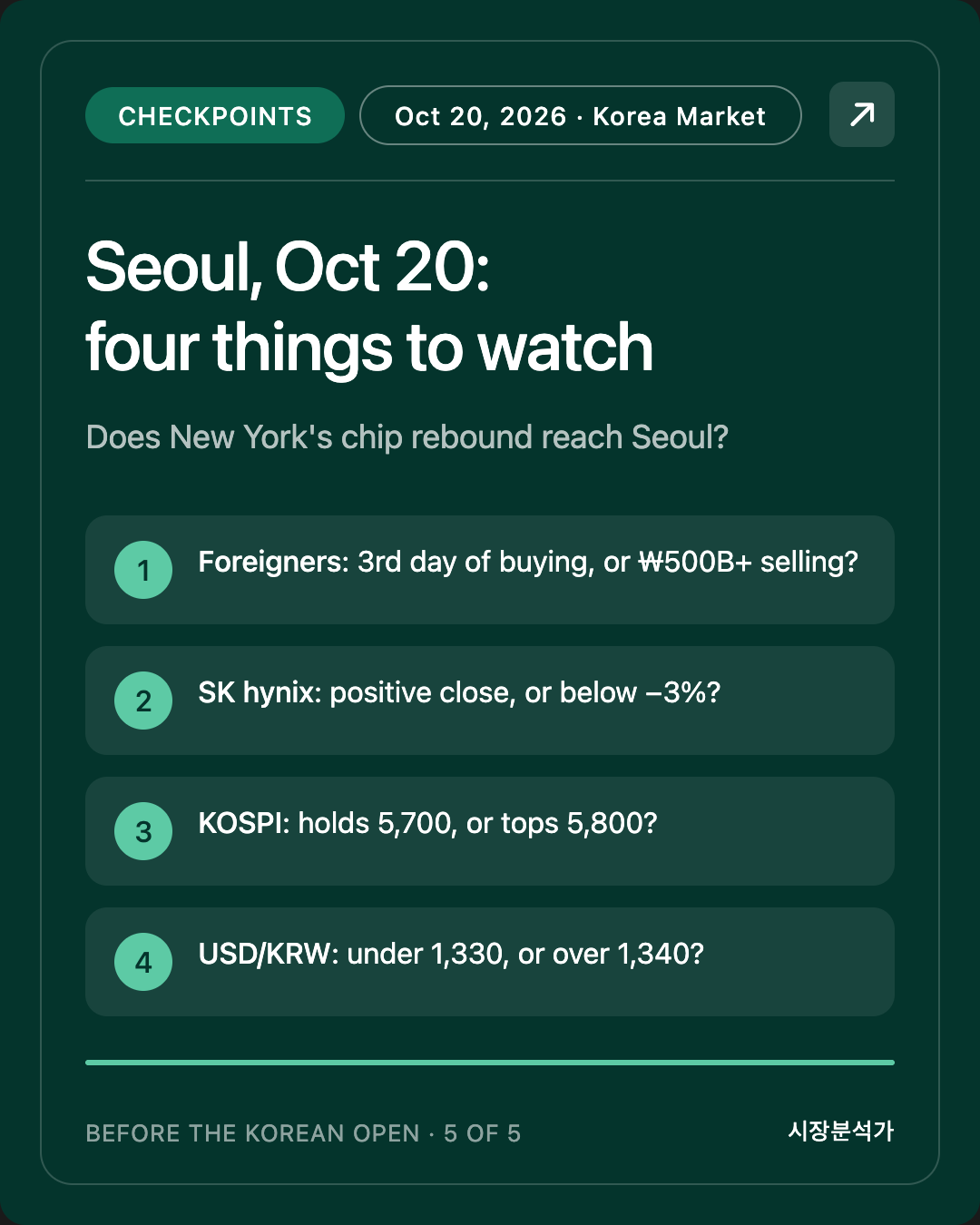
5. Today's Seoul Session (Tue Oct 20): Checkpoints
[Observation] Remaining schedule (KST)
✅ Four Checkpoints (by today's Seoul close)
The question: "Does New York's chip rebound cross over to Seoul's chipmakers, or does Seoul keep rallying outside chips?" This time the third-variable slot goes to the US 10-year yield.
- Foreign investors: a third straight session of net buying, or more than ₩500B of net selling? Watch how the opening −₩180B evolves. (Most important)
- SK hynix: closes positive, or below −3%? Does the gap with the +4.67% ADR narrow or widen?
- KOSPI: holds 5,700, or breaks 5,800? Several outlets flag 5,800 as resistance; 5,700 is being tested right after the open.
- USD/KRW: stays under 1,330, or rises above 1,340? Does the won hold even if stocks wobble?
[Interpretation] Net buying (1) plus a positive SK hynix (2) would move the story from "foreigners stopped selling chips and bought other things" to "foreigners are starting to come back to chips too." Net buying with SK hynix below −3% would mean a second day of "rally outside chips." More than ₩500B of foreign selling would suggest yesterday's buying was a one-off, and then whether the 10-year stays above 5.15% becomes part of the explanation.
6. Study Note: The "Term Premium" (Why Long Yields Can Rise While the Fed Sits Still)
The concept
Someone buying a 10-year bond wants to be paid for two things. One is what they expect the Fed's policy rate to average over the next ten years. The other is a cushion for not knowing what will happen over that long stretch. That cushion is the term premium.
An analogy
Lending a friend money for a month is different from lending it for ten years. Even with the same friend, over ten years you don't know how much prices will rise or how their situation will change, so you want a bit more interest. That "bit more" is the term premium.
Today's example
The Fed is in its quiet period this week and markets expect a hold in October. Nothing new shifted policy-rate expectations much, yet the 10-year rose about 5bp in a day, while the 2-year, which tracks policy expectations more closely, moved less (4.73–4.77%). On days like this, the first suspect is the term premium rather than Fed expectations. Oil-driven inflation uncertainty and fiscal worries are the usual culprits.
Why it matters
Long yields driven up by the term premium may not come down just because the Fed stops hiking. So "the Fed is pausing, so the rate headwind is over" may not hold for chip and growth stocks.
One-line summary
When the Fed is quiet but the 10-year rises, suspect the term premium.
7. Corrections and Open Items
Corrections
- None. (The Oct 19 AM figures for S&P 500 +0.57%, Nasdaq +0.98%, Dow −0.05% were early-session readings; closing values are in Section 2.)
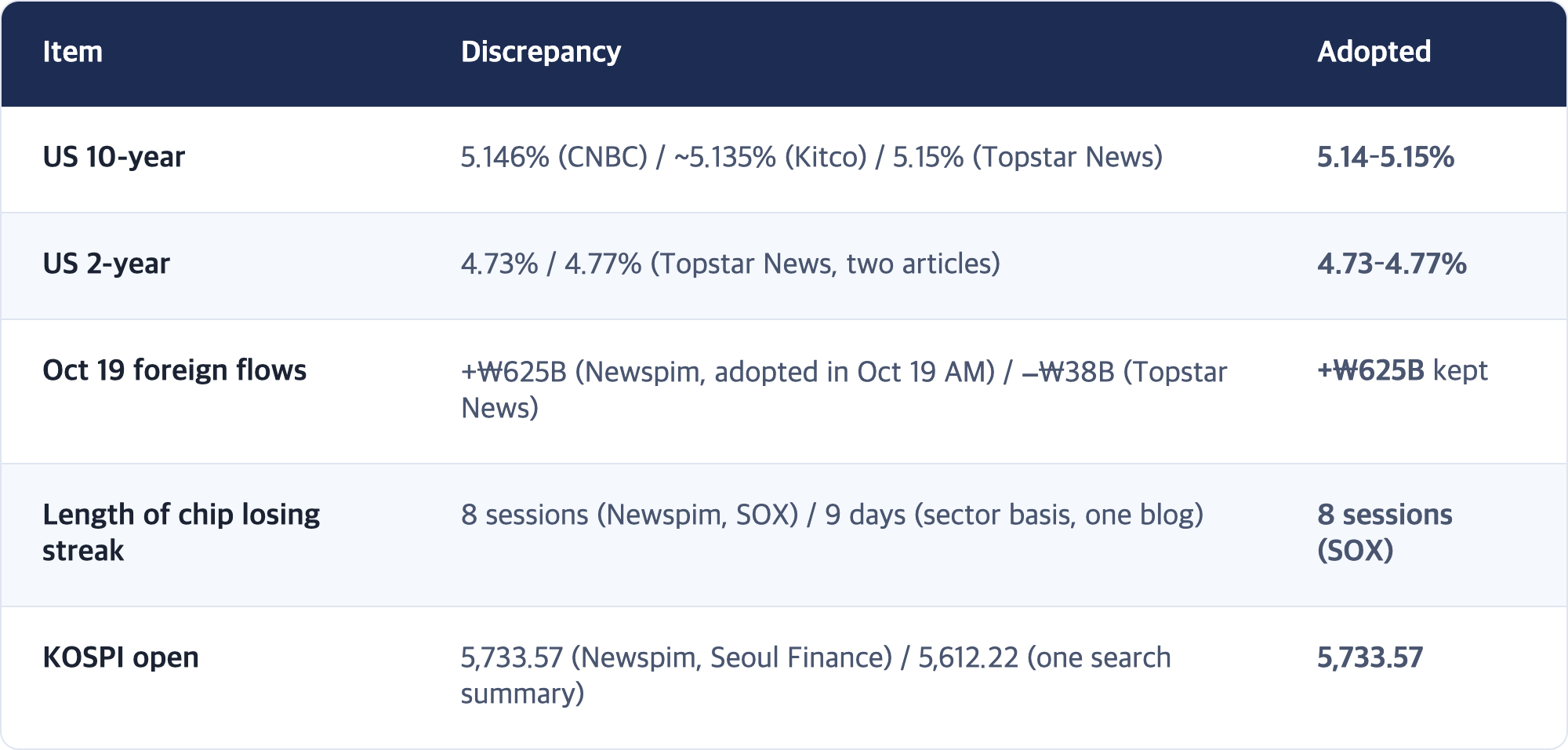
Source discrepancies (adopted value noted)
🔲 Unconfirmed
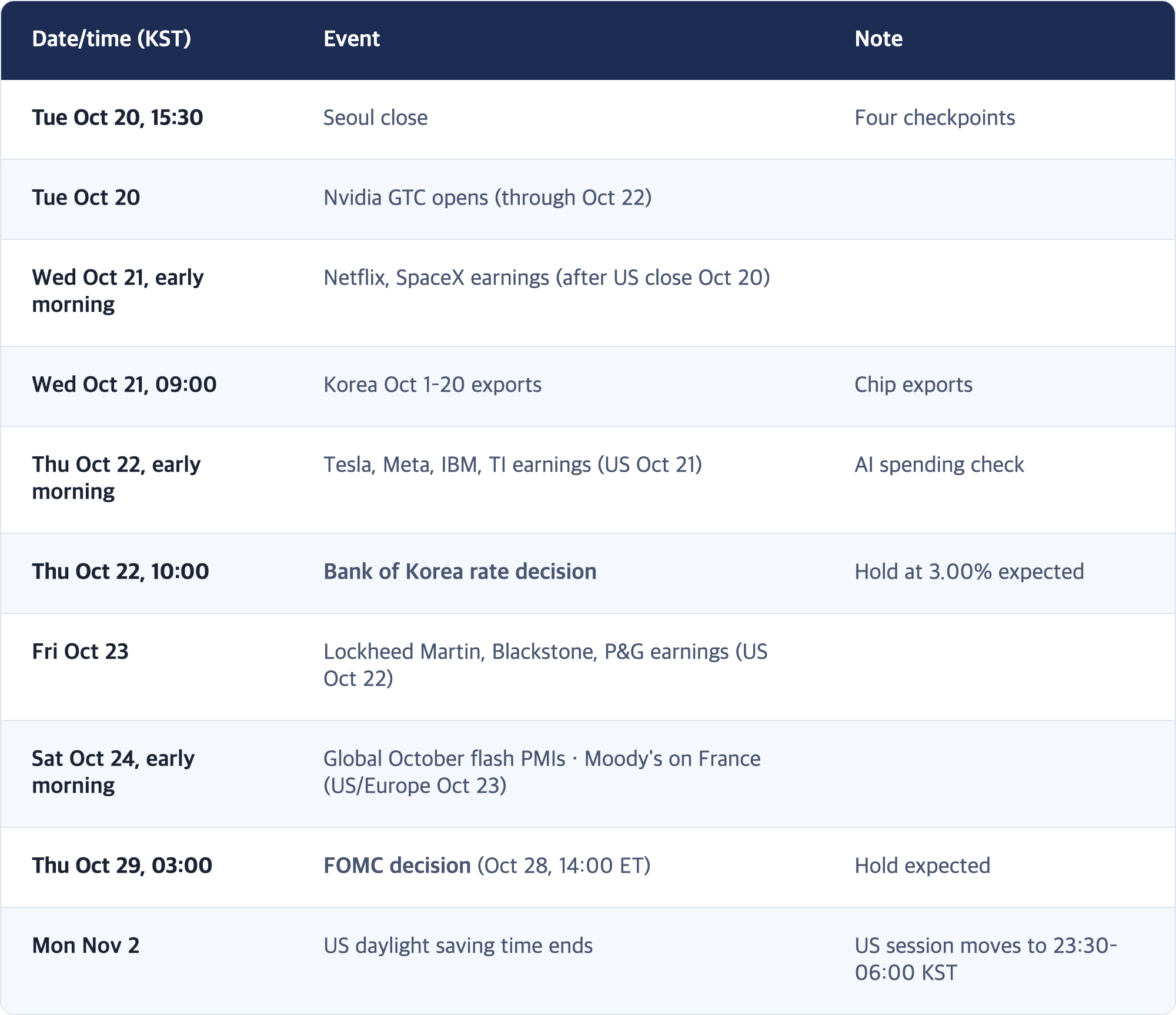
8. Event Calendar (KST)
Sources
- NY stocks close mixed on chip rebound; Nasdaq +1.11% | Newspim
- Nasdaq +1.11%, Dow flat; chip rebound fades late | Topstar News
- US chips rebound after rout; SK hynix ADR +4% | Topstar News
- Korean stocks get breathing room from US chip rebound | Topstar News
- Market open: KOSPI weak despite US tech rebound | Newspim
- KOSPI opens 34.44 points lower at 5,733.57 | Seoul Finance
- US stock market wrap, Oct 19, 2026 | Vegastooza
- Stock market news for Oct. 19, 2026 | CNBC
- Treasury yields move higher as investors assess U.S. inflation backdrop | CNBC
- Gold falls as dollar, Treasury yields rise | Kitco
- Brent crude edges lower, even after Houthi attacks on Saudi infrastructure | Reuters via Yahoo Finance
- Oil slips from 5-month high as Trump's Russia sanctions waiver may bring more supplies | The Globe and Mail
- BOK expected to slow pace after back-to-back hikes | Aju News
- S&P 500, Nasdaq climb as AI-linked stocks recover ahead of earnings | Detroit News
Market Analyst · We do not recommend buying or selling individual stocks. This brief offers macro context and interpretation.
📌 More market briefs
※ This post is market observation and organization intended to support your own judgment. It is not a recommendation to buy or sell any security. Figures are as of the time of writing and may differ between sources.
If this was useful, bookmark it or pass it along. It genuinely helps me write the next one.
I can survive. We can survive.