September 4, 2026 US Market Brief — Nasdaq and S&P 500 Before the Open
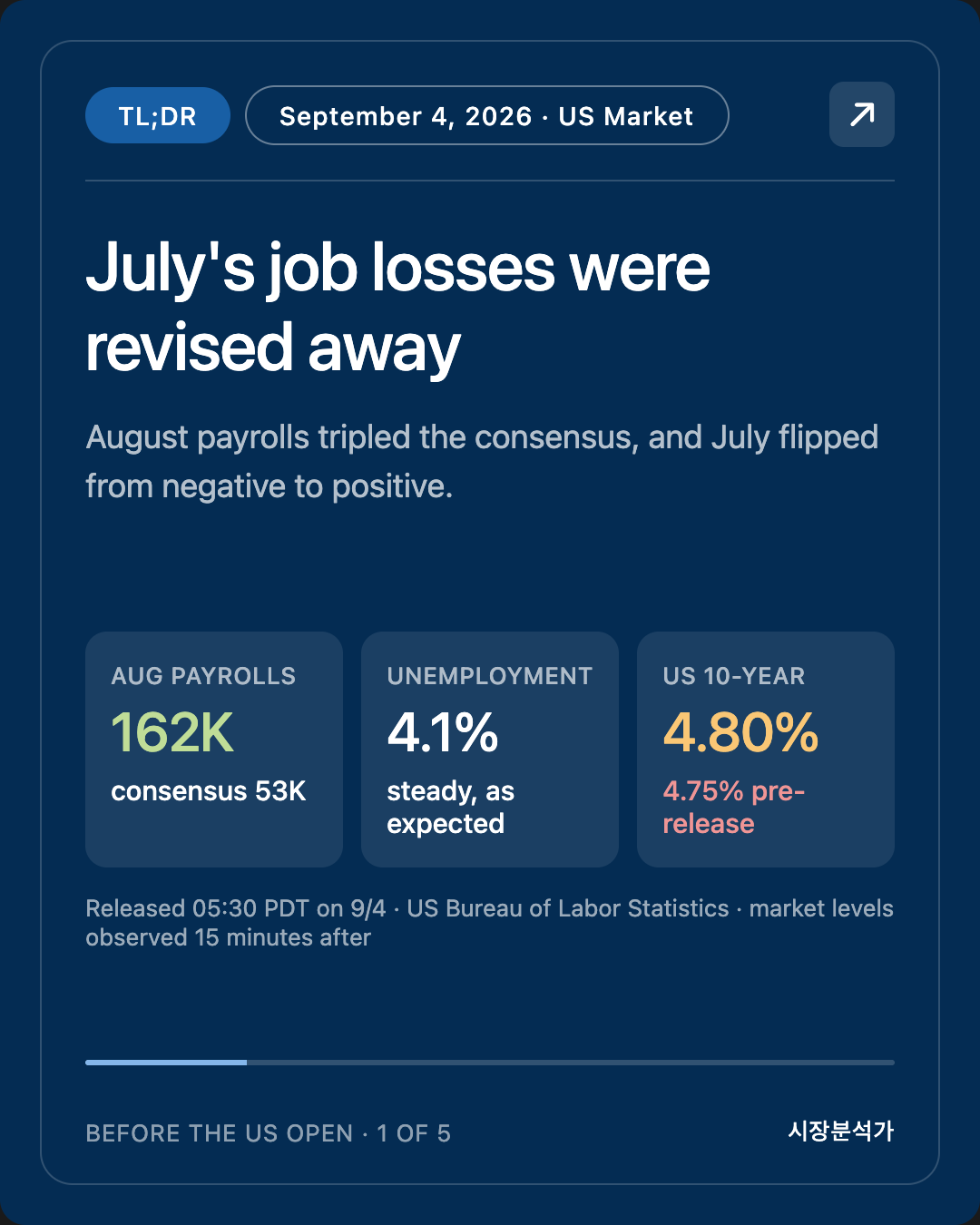
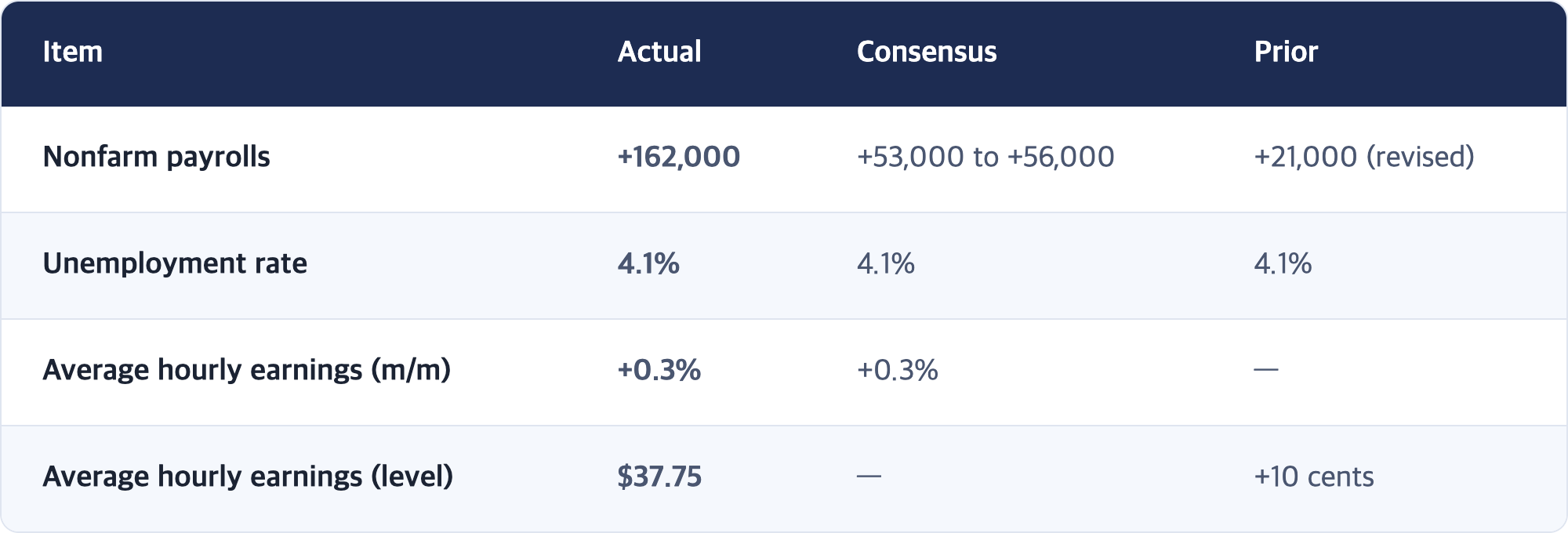
- August payrolls came in at roughly three times the consensus. Nonfarm payrolls +162,000 (consensus +53,000 to +56,000), unemployment steady at 4.1%, average hourly earnings +0.3%. The assumption that the labor market is cooling took a direct hit.
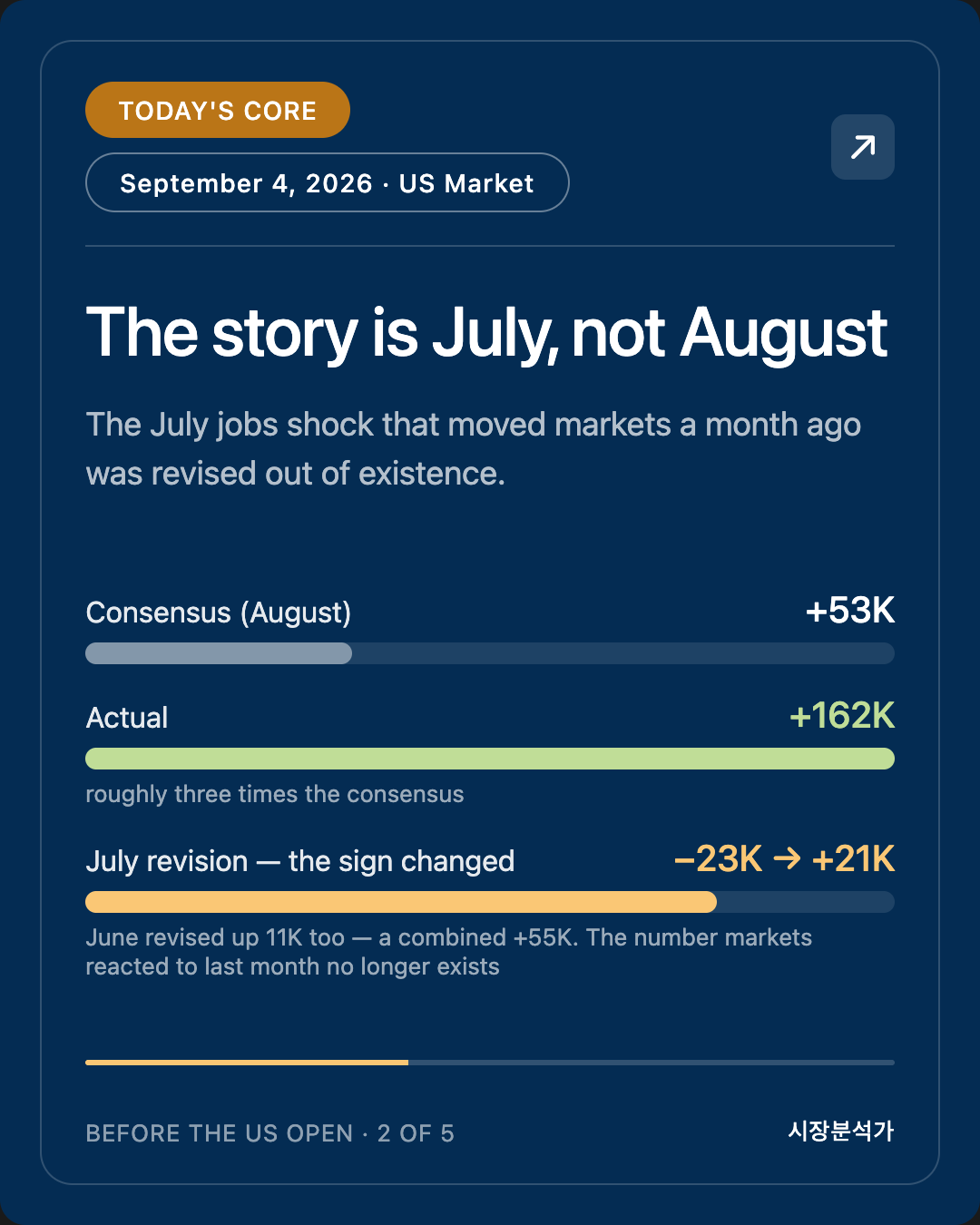
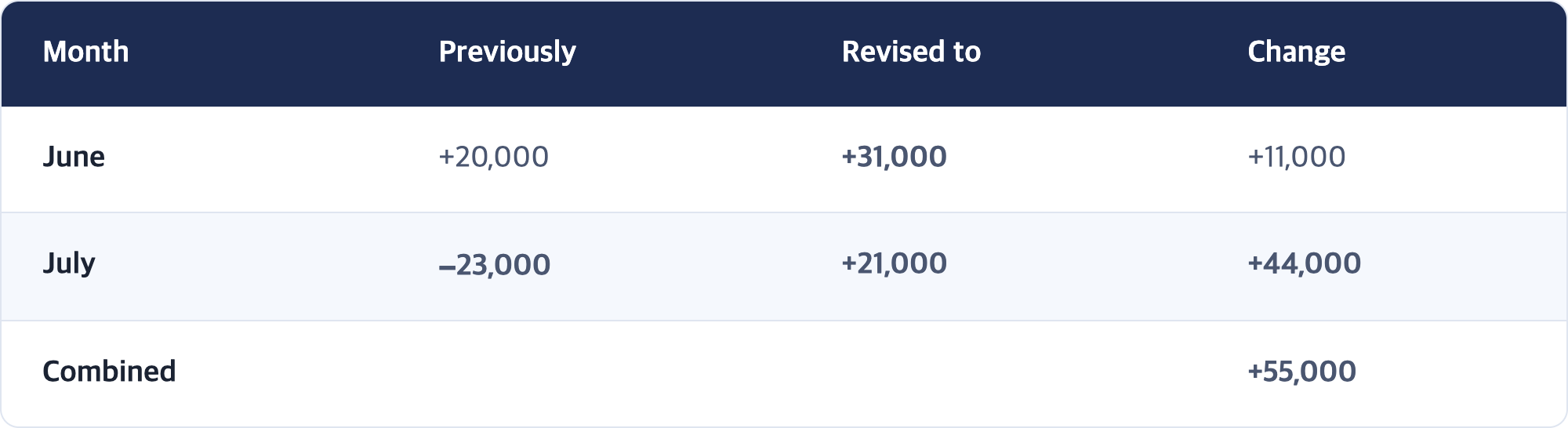
- The revisions matter more than the headline. July flipped from −23,000 to +21,000, and June was revised up by 11,000 — a combined +55,000 upward revision. The July "jobs shock" that moved markets a month ago is no longer an event that happened.
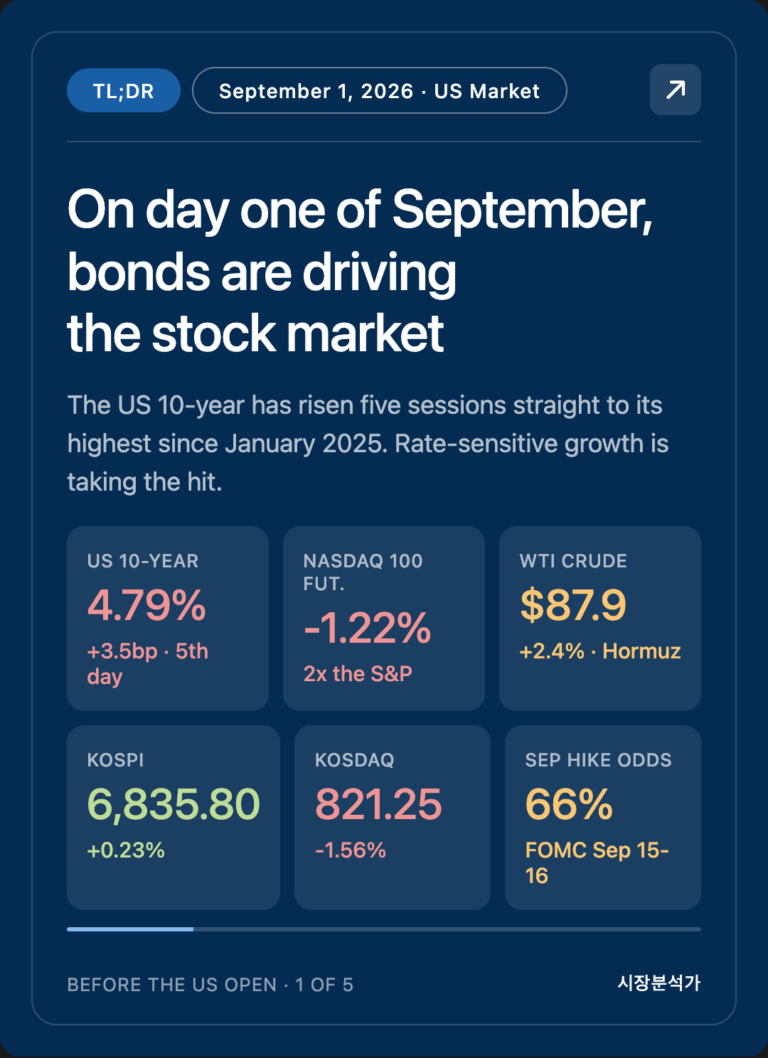
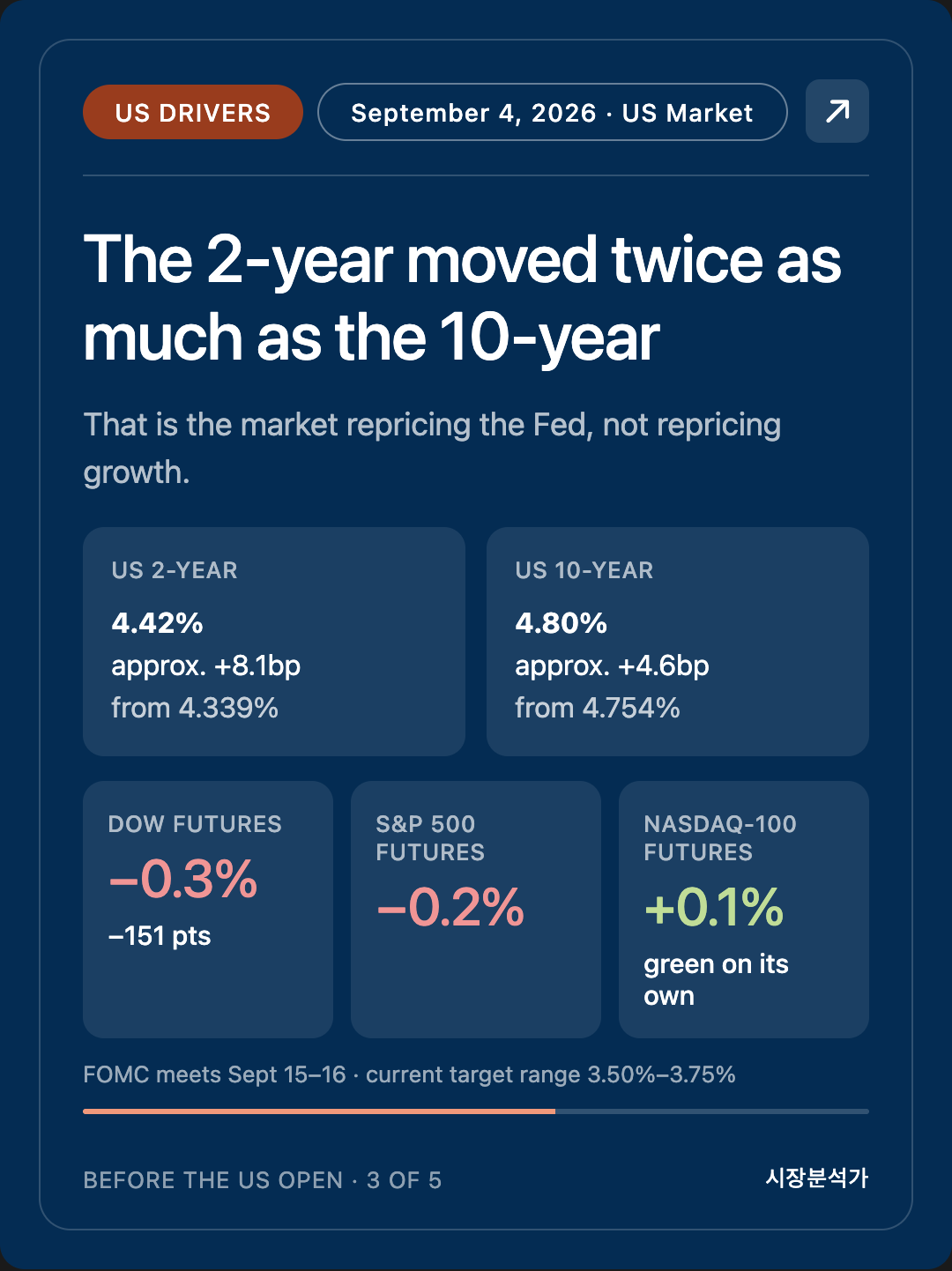
- Bonds moved first. The 10-year Treasury yield is at 4.80% (4.754% just before the release) and the 2-year at 4.42% (from 4.339%). The front end moved nearly twice as much as the long end — that is a repricing of the Fed, not of growth.
- Equities split. Dow futures −151 points (−0.3%) and S&P 500 futures −0.2%, while Nasdaq-100 futures are +0.1%. Rate-sensitive names gave way first; big tech is so far holding.
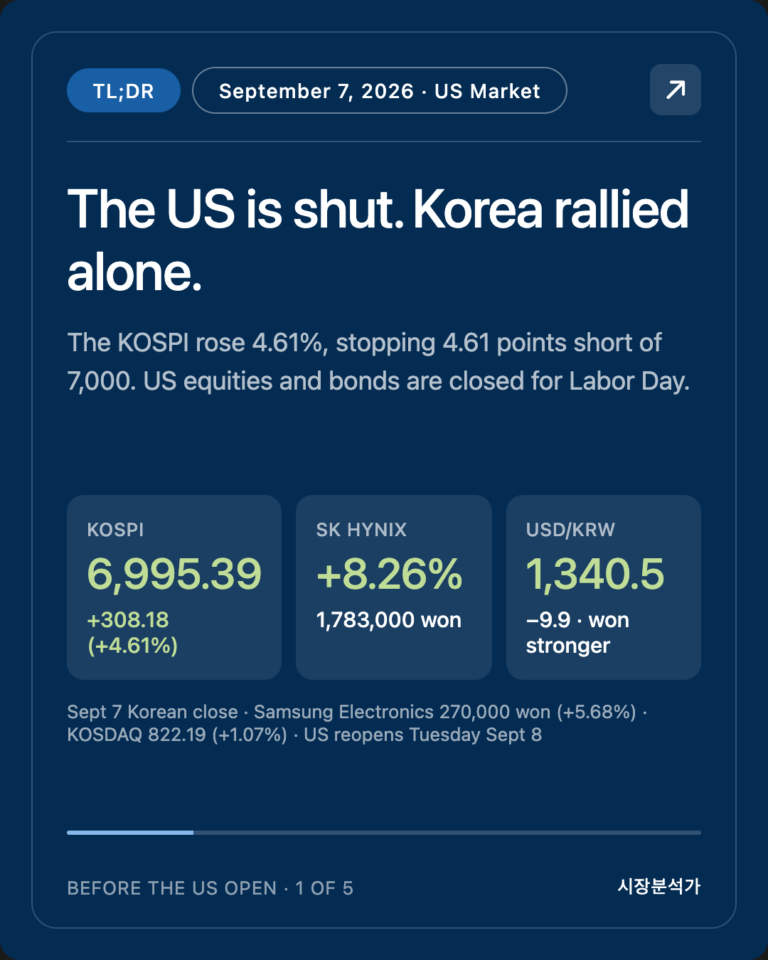
- Korea never saw any of this. It closed hours before the release. And because Monday, September 7 is Labor Day in the US, Korea will trade Monday on the strength of Friday's American answer alone, with no fresh US session behind it until Tuesday.
This is Mr. Can. Here is the September 4, 2026 brief ahead of the US market open.
Written: 2026-09-04 05:45 PDT (Seoul 9/4 21:45 KST)
Covers: Korea and Asia 9/4 close, European morning, and the US August jobs report released minutes ago (05:30 PDT / 08:30 ET)
SEO Intro
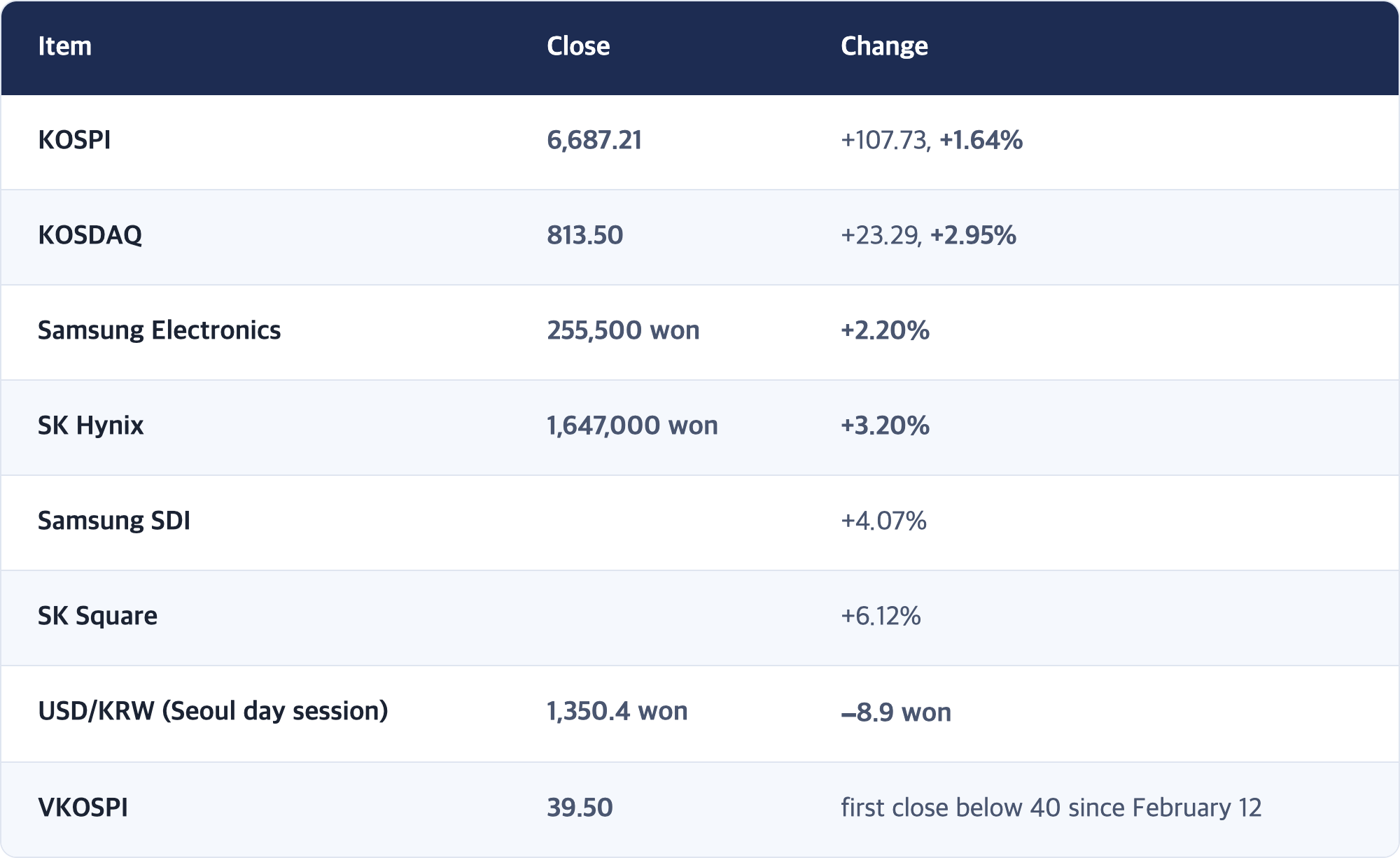
Yesterday afternoon, Fed Governor Christopher Waller said he wanted to "give disinflation a chance," and the odds of a September rate hike fell from 63.2% to 50.4%. Korea walked straight through that open door today: the KOSPI closed at 6,687.21 (+1.64%), the KOSDAQ at 813.50 (+2.95%), and SK Hynix reclaimed the 1.6 million won level it had lost the day before. Then, six hours after Korea closed, the premise underneath that rally gave way. August payrolls came in at 162,000 against a consensus of 53,000, and — more importantly — July was revised from a loss of 23,000 jobs to a gain of 21,000. The "jobless summer" narrative did not just weaken; it was revised out of existence. Korea banked the good news and went into the weekend before the bad news landed. Here is what matters.
1. The Real Story — The Report Rewrote July, Not August
[Fact] — August Employment Situation (US Bureau of Labor Statistics, released 05:30 PDT on 9/4)
[Fact] — Revisions to the prior two months
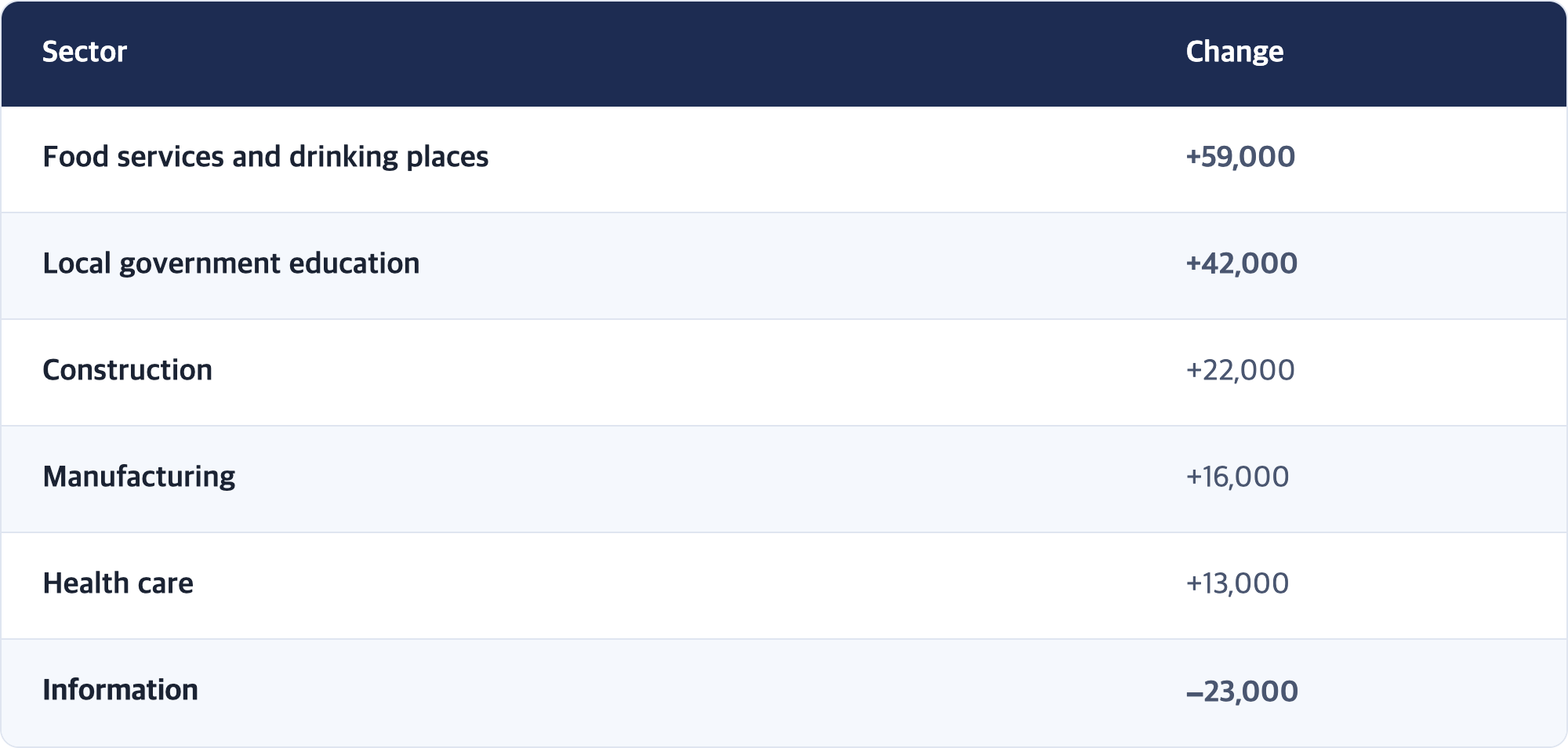
[Fact] — By sector
[Interpretation] The news is not the number 162,000
A strong August is a fact about one month. The heavier fact is that July changed sign.
When July printed at −23,000, markets read it as the reason the Fed could not raise rates. That reading is why hike odds collapsed on August 7. That negative print no longer exists. The revised figure is +21,000.
So one floor has been pulled out of the structure the market has been building for a month. What is left:
- Still supporting a hold: Waller's conditional language, and next week's August CPI.
- Newly supporting a hike: evidence the labor market is sturdier than believed, alongside yesterday's ISM services prices-paid reading of 72.6, the highest since mid-2022.
It is worth rereading the condition Waller actually attached. He said "if disinflation holds up." He did not say "because employment is weak." Today's data therefore does not automatically flip him. But every other member on the committee now has one more argument for hiking. The FOMC meets September 15–16, and the current target range is 3.50%–3.75%.
[Observation] The internals are softer than the headline
Food services (+59,000) and local government education (+42,000) together account for 101,000 jobs — 62% of the total. Neither is a leading indicator of expansion, and local government education in particular is highly sensitive to how the school calendar interacts with seasonal adjustment. Meanwhile, information-sector employment fell by 23,000.
So this reads less as "hiring is hot" and more as "hiring did not break." That is enough for the hawks on the committee. It is not yet evidence of reacceleration. That distinction will likely drive how the market interprets next week's inflation print.
2. What the US Market Repriced in Fifteen Minutes
[Observation] — Immediately after the release (05:30–05:45 PDT, still moving)
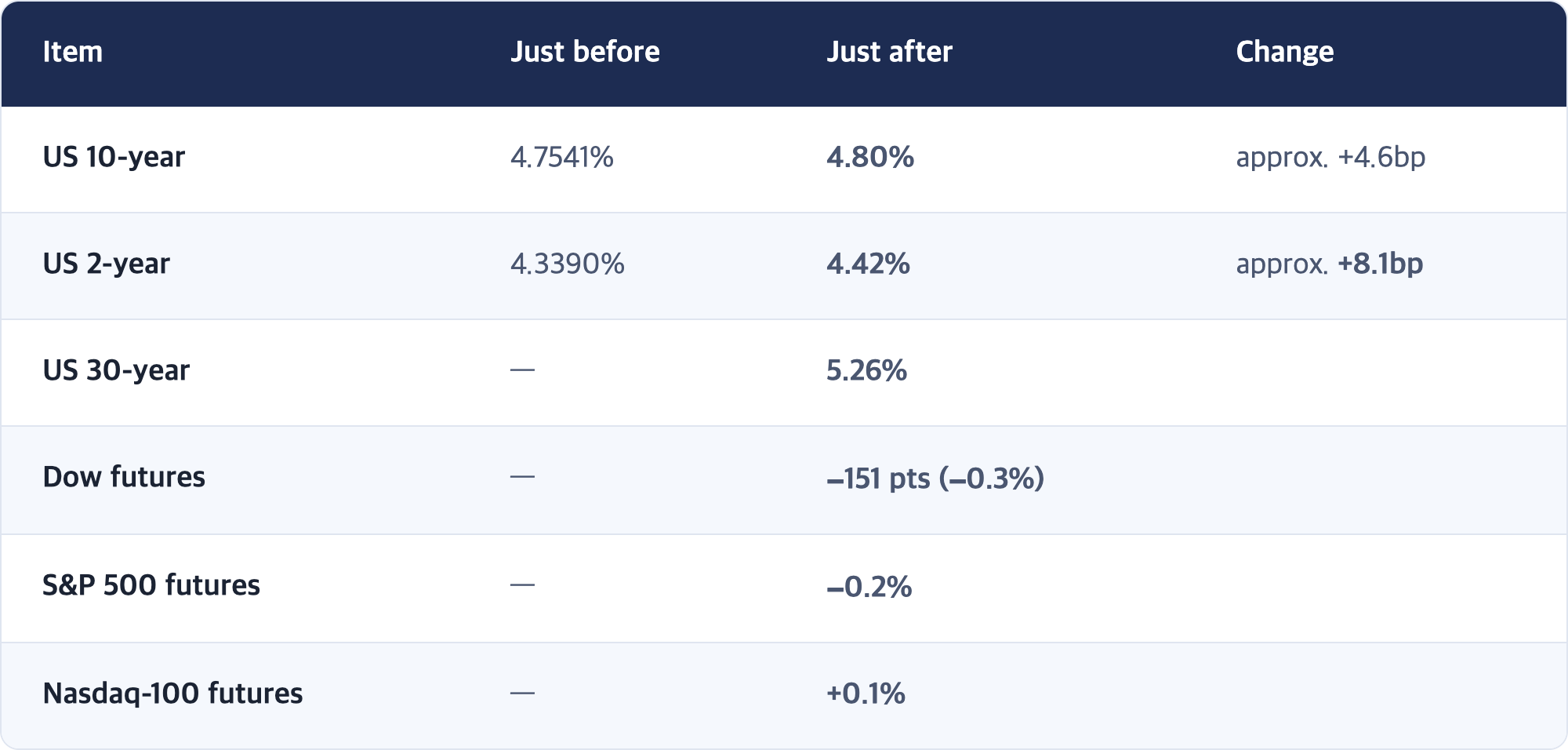
⚠️ These are readings taken within fifteen minutes of the release. Expect further movement before the 06:30 PDT open.
[Interpretation] Two things stand out
First, the 2-year moved nearly twice as much as the 10-year. The front end of the curve is where the next year or two of Fed policy gets priced. When it leads, the market is recalculating the central bank, not the economy. The most natural reading is that yesterday's Waller-driven decline in hike odds is being unwound.
Second, the Dow and the Nasdaq are pointing in opposite directions. Rising yields normally hurt long-duration growth stocks most. Today only Nasdaq-100 futures are green. Two readings are available:
- Reading A: a strong labor market is ultimately good for corporate earnings. But if that were the driver, the cyclically weighted Dow should be leading, not lagging. It does not hold together.
- Reading B: there is a separate bid in AI and semiconductor-adjacent names that is operating independently of rates. Seen alongside yesterday — the Nasdaq up 1.40% while the SOX managed only +0.11% — this points to a market where a specific group of names is moving on its own, inside the index.
I lean toward B for now. But this is exactly the kind of call that thirty minutes of trading can overturn, so it goes in today's checkpoints as item 2.
[Fact] — Yesterday's US close, for reference
S&P 500 7,747.71 (+1.06%) · Nasdaq Composite 26,584.06 (+1.40%) · Dow 53,686.11 (+1.18%) · SOX 11,352.1 (+0.11%) · VIX 14.32 (−5.79%). It was the best single day for the Dow and the S&P since August 4.
3. Korea and Asia, 9/4 Close (15:30 KST = 23:30 PDT on 9/3)
[Fact] — Korea
[Fact] — KOSPI flows
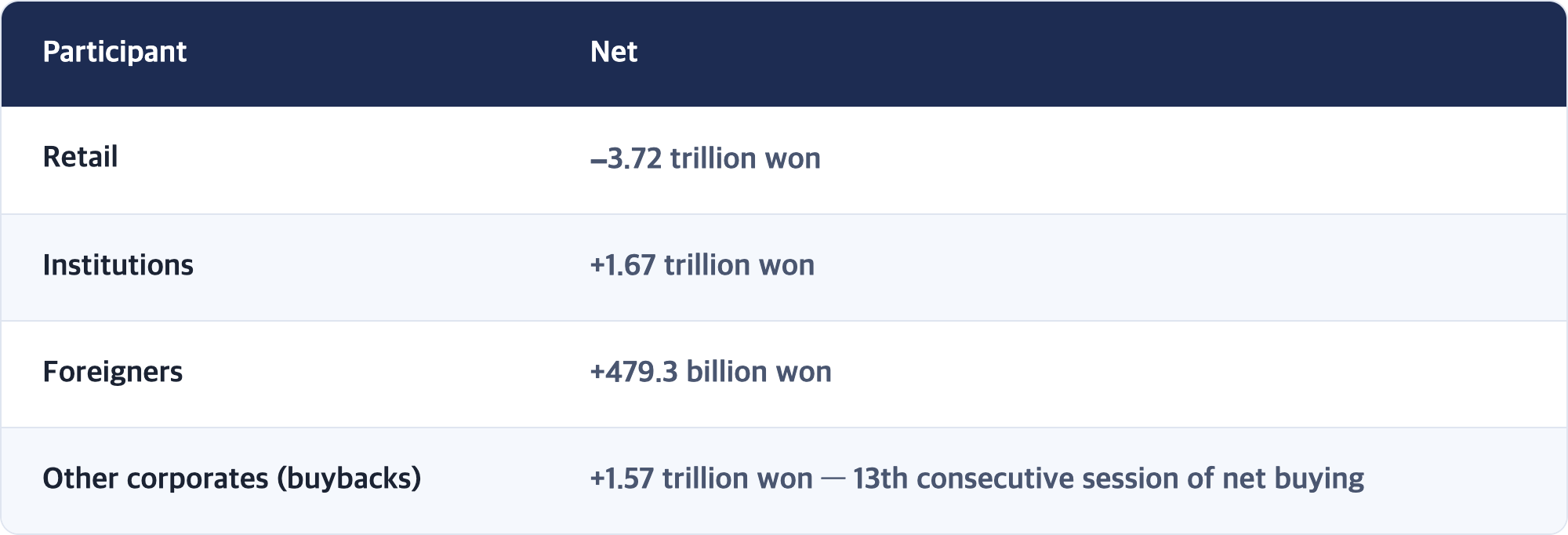
The "other corporates" line is largely Samsung Electronics buying shares for employee stock compensation and SK Hynix buying shares for cancellation.
[Interpretation] A question this report has asked for two weeks finally got an answer
Since late August this report has kept asking one thing: is anyone buying besides the companies themselves? On August 31, all three major participant groups sold — the first time in eight years and ten months. On September 3, all three sold again. Today, foreigners and institutions both turned buyers. It is the first session in which the buying base actually widened.
There is, however, a number pointing the other way in the same table. Retail investors sold 3.72 trillion won, the largest such figure in recent sessions. How to read that is next week's central question.
- The constructive reading: retail supplied stock and foreign and institutional money absorbed it — an ordinary change of hands.
- The cautious reading: retail is unloading into a bounce the positions it accumulated during August's slide, in which case this rally is digesting supply rather than attracting new money.
One session cannot settle this. The test is whether foreign and institutional buying persists next week. A one-day reversal is not a reversal.
[Fact] — Asia and Europe
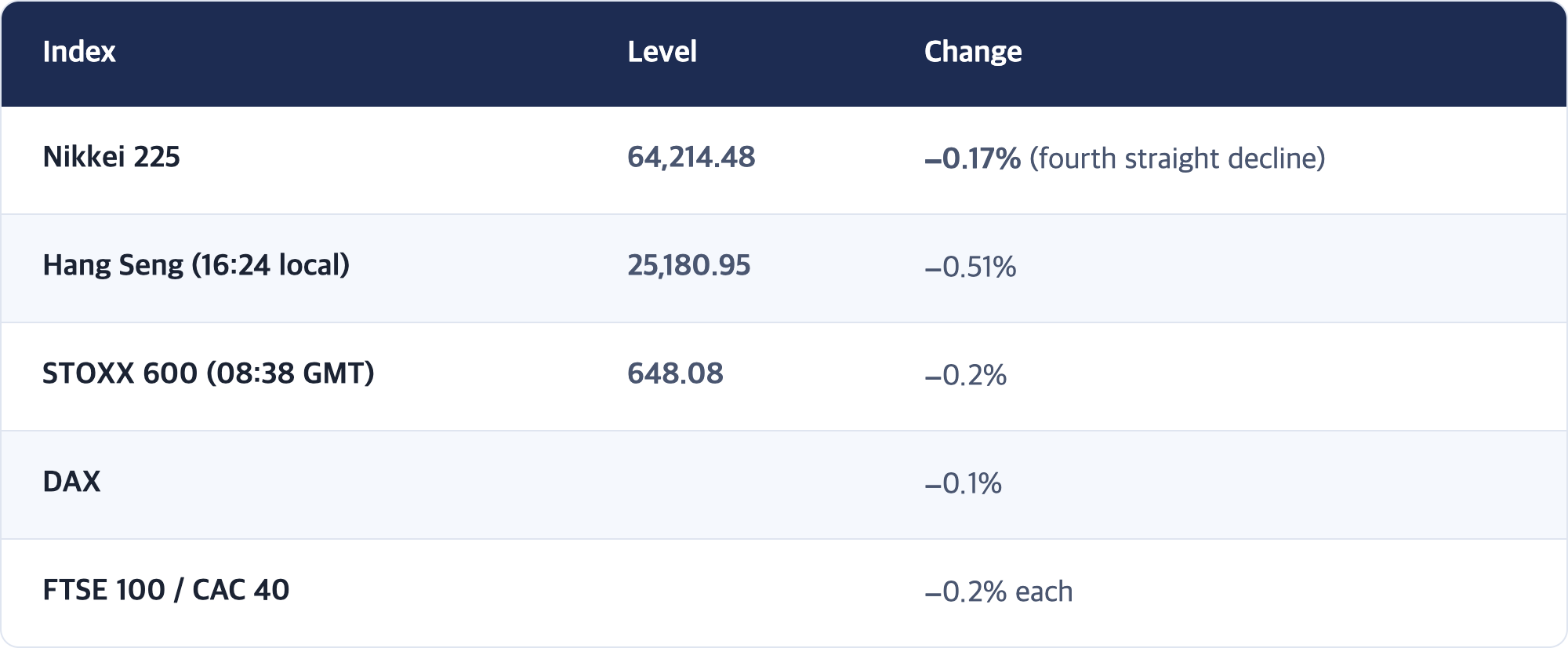
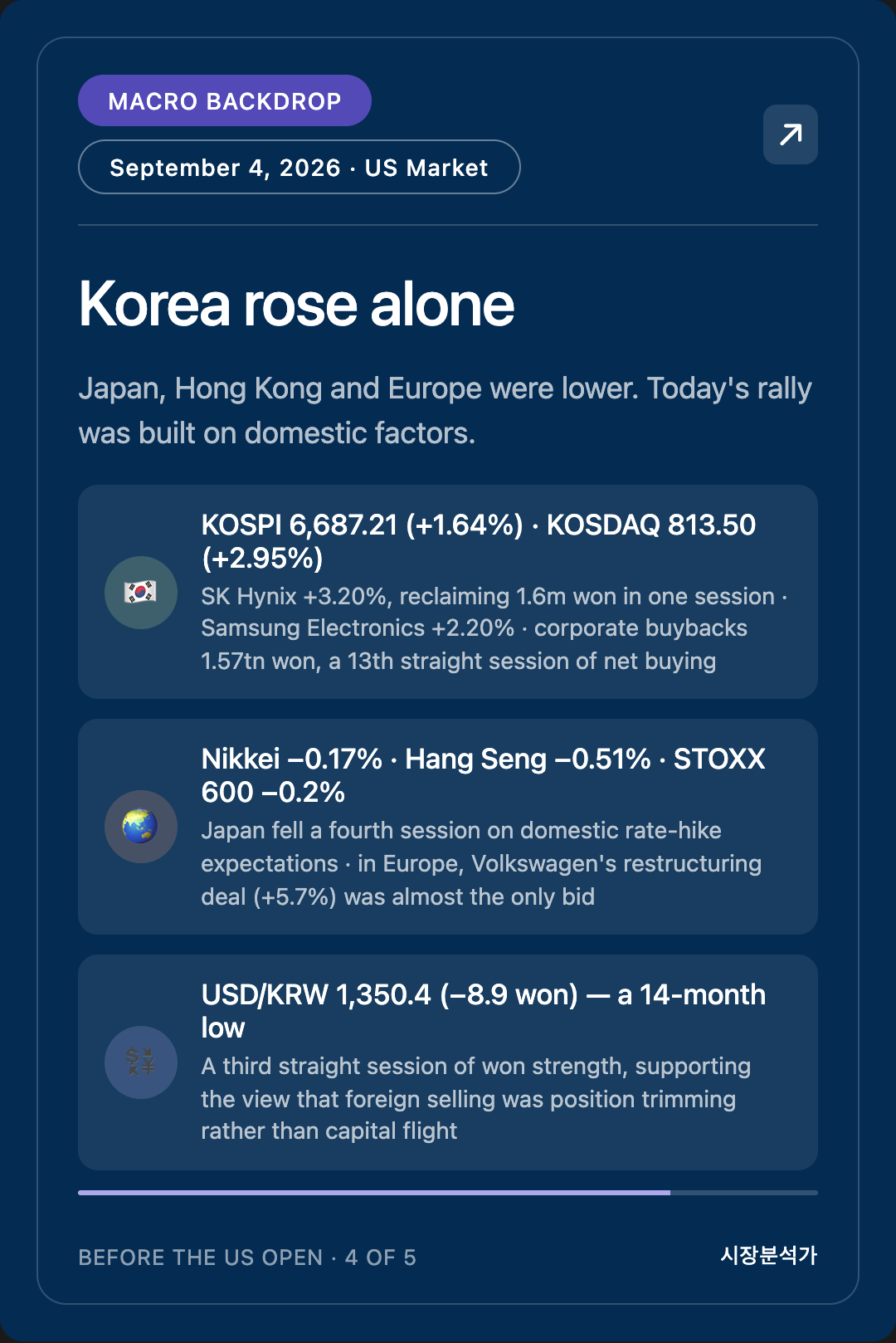
[Observation] Korea rose alone. Japan fell for a fourth session on expectations of further domestic rate increases, and Hong Kong and Europe were modestly lower. In Europe the one bright spot was Volkswagen, up 5.7% after its supervisory board reached a restructuring agreement with unions and the state of Lower Saxony, lifting the autos sector index 4.3%.
That contrast suggests today's Korean rally was built on domestic factors — buybacks, semiconductor flows, a firmer won — rather than a broad recovery in global risk appetite. Read generously, Korea showed independent strength. Read carefully, Korea climbed without anything pushing from outside.
4. Macro Backdrop — Rates, Commodities, Currency
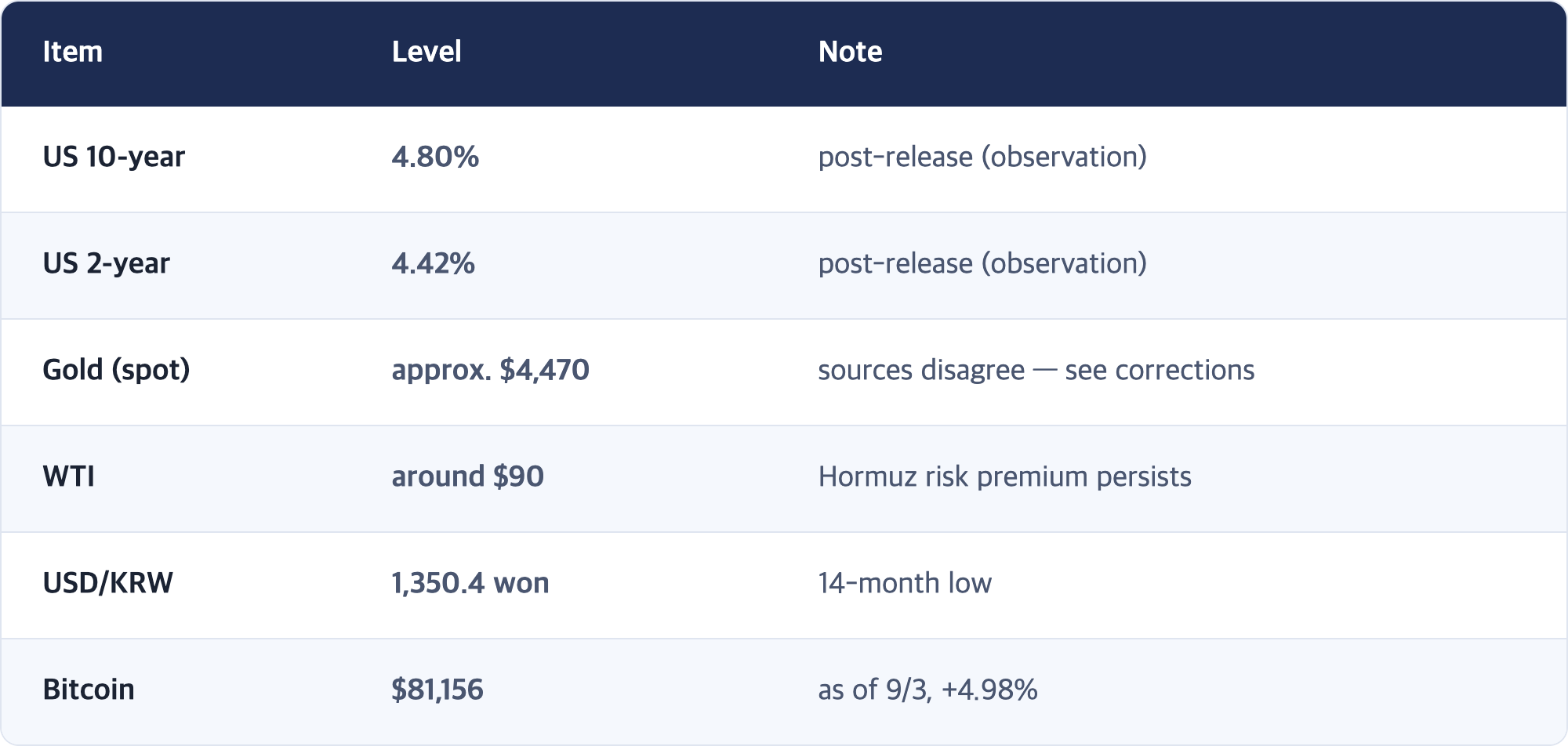
[Fact / Observation]
[Interpretation] The won is telling a different story from everything else
Higher US rates normally mean a stronger dollar and a weaker won. Instead the won has strengthened for three consecutive sessions, closing at a 14-month high against the dollar. Exporter dollar selling is the reason most often cited.
This continues to support a reading this report has held for several days. If foreign selling of Korean equities had meant capital leaving the country, the won should have weakened. It did the opposite. Position trimming inside the equity market remains the better explanation than capital flight — and today's turn to net foreign buying fits the same picture.
One condition applies. If US yields keep rising today and the dollar firms, this pattern faces a real test. Whether USD/KRW holds the 1,350 area next week will tell us how much longer this interpretation is good for.
5. Preview — What to Watch at the US Open
[Interpretation] — Four things today
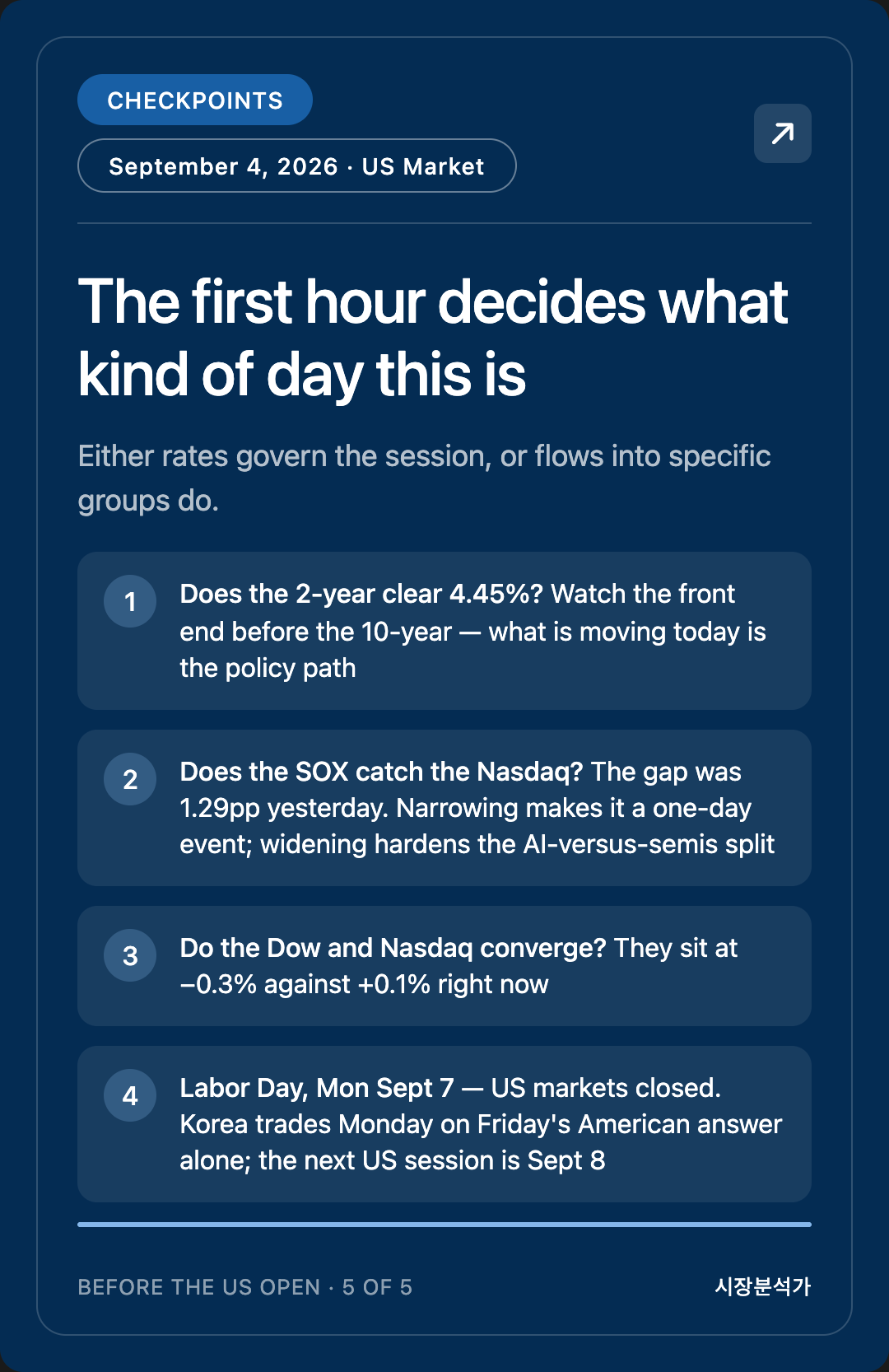
- Does the 2-year clear 4.45%? It sits at 4.42% right after the release. Pushing higher would mean the market is restoring a September hike as its base case. Watch the 2-year before the 10-year — what is moving today is the policy path, not the growth outlook.
- Does the SOX catch up to the Nasdaq? Yesterday the gap was 1.29 percentage points. In pre-market, again, only Nasdaq-100 futures are green. If the gap narrows, yesterday was a one-day event; if it widens, the split between "buy AI infrastructure, avoid semiconductor earnings" hardens into a regime. This is the axis I said yesterday I would start betting on.
- Do the Dow and the Nasdaq converge intraday? They are currently −0.3% against +0.1%. If they align within the first hour, rates are governing the session. If they stay split, flows into specific groups are governing it.
- Do any Fed officials speak? As yesterday demonstrated, when a governor speaks on the same day as a data release, the governor usually wins. Waller's condition was inflation, not employment, so how other officials cite today's jobs data will set the tone until next week's CPI.
[Observation] — Event calendar (D-N)
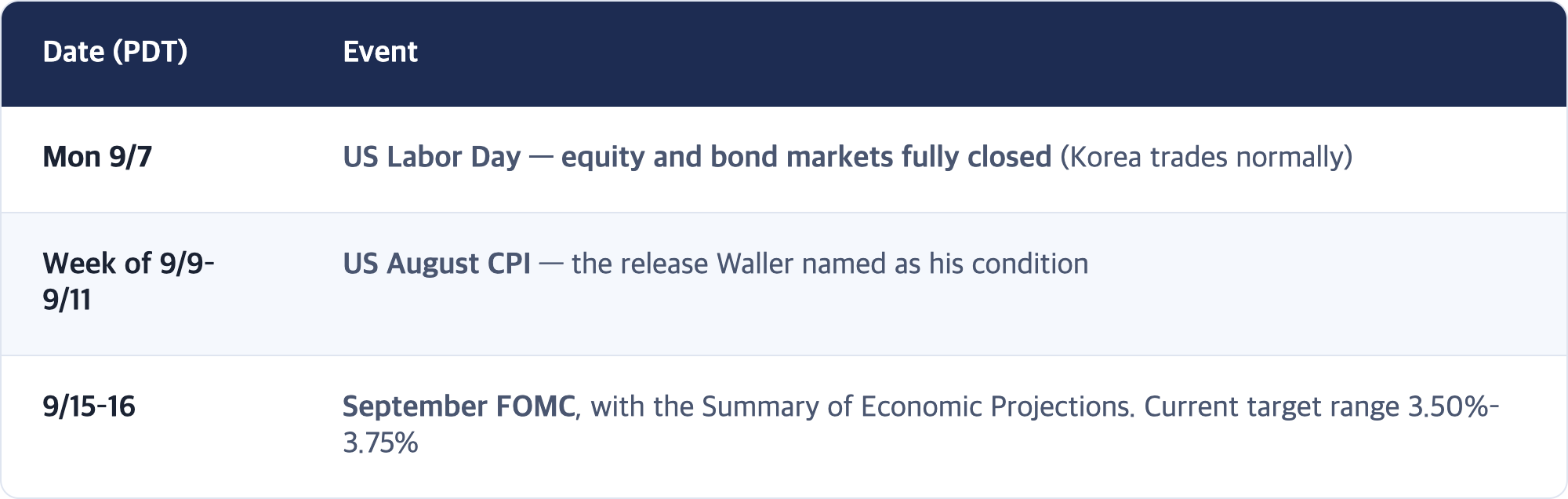
[Interpretation] The structural point for Korean investors
Korea took in all the good news and went into the weekend without the bad. Today's Korean rally rested on US yields having fallen overnight — and those yields went back up after Korea closed.
Labor Day on Monday, September 7 compounds this. Normally Korea opens Monday, looks at the US Friday session, and reacts. This time the sequence runs:
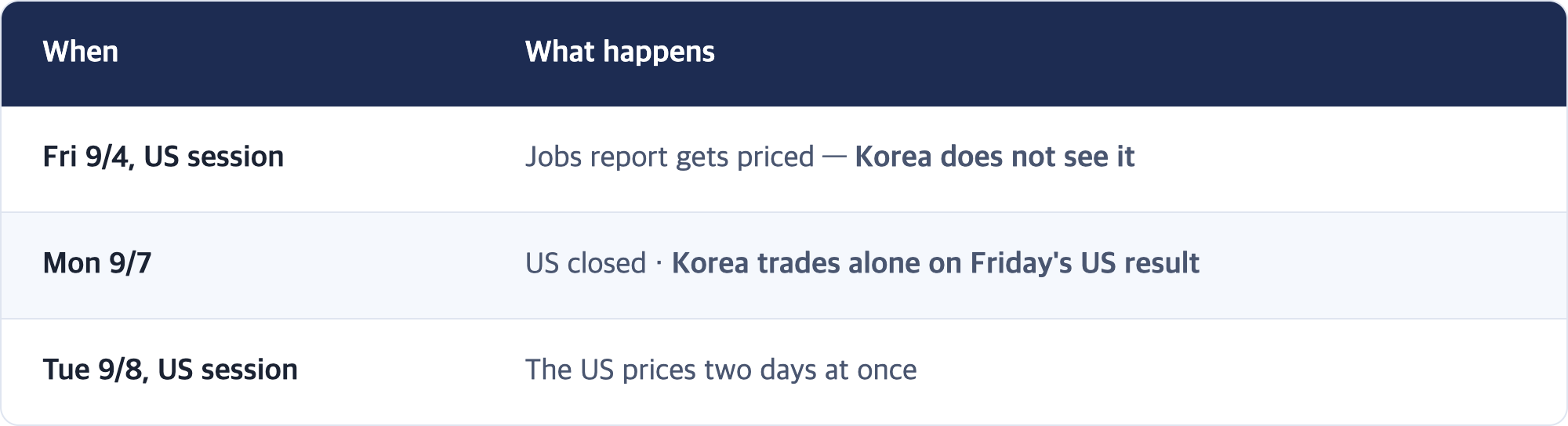
In other words, Korea spends Monday holding only America's Friday answer, and does not find out whether that answer was right until Tuesday. That makes today's US close weigh more than a typical Friday.
Do not read this as a directional call. It says information is unevenly distributed across the calendar, not that markets will rise or fall. The right order is to see how the US session ends today, and only then think about Monday.
📖 Study Note — Revisions: why last month's number changes
The concept. Monthly payroll figures are not final. They are revised twice over the following two months. That process is what turned July from −23,000 into +21,000 today.
Why they change. The BLS surveys roughly 121,000 businesses and agencies. Not all of them answer by the first publication date. The agency publishes with something like 60–70% of responses in hand and corrects the figure as the rest arrive. Late responders skew toward smaller employers, and depending on where the economy is in its cycle, their direction can move the whole number.
An analogy. Think of election-night returns. The count announced at 9pm reflects whichever precincts reported first. When the rest come in overnight, the standings sometimes flip. Someone who treats the 9pm number as the result behaves differently from someone who knows it is partial. The first print of a jobs report is the 9pm number.
How much do they move? A sign change like today's is uncommon, but revisions of tens of thousands are routine. Today June and July were revised up by 55,000 combined. Given how sharply markets reacted when the initial July print missed, a good share of that reaction was to a number that has since ceased to exist.
What to do with this. Three habits are worth keeping:
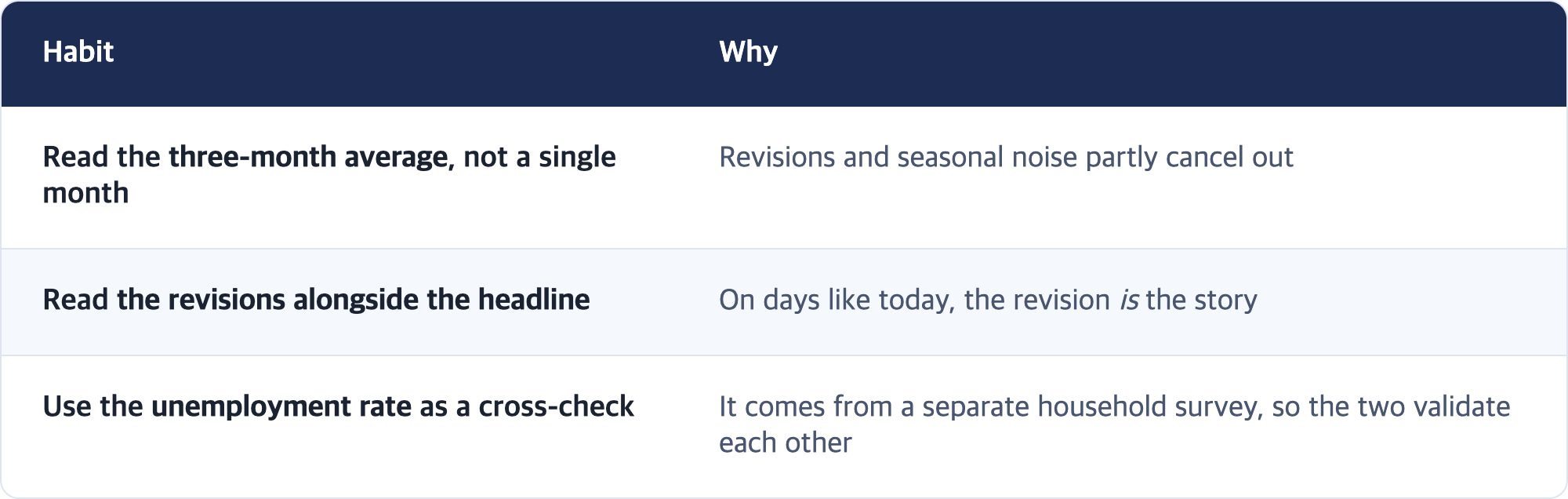
This connects to yesterday's lesson. Yesterday this report learned not to stake a policy path on a single indicator. Today there is a second reason: that indicator may later turn into a different number.
📌 Corrections and Checkpoint Rulings
1) Checkpoint 1 from the 9/3 PM report — correct. The question was whether an opening gap would survive the session. The KOSPI closed at 6,687.21 (+1.64%). The "gap up, then fade" pattern of the two prior sessions did not repeat.
2) Checkpoint 2 — correct, and stronger than expected. Samsung Electronics 255,500 won (+2.20%) and SK Hynix 1,647,000 won (+3.20%) both outpaced the index (+1.64%). SK Hynix recovered the 1.6 million won level within a single session. But the SOX rose only 0.11% the same night, so this strength followed domestic flows — buyback cancellations and stock compensation — rather than US semiconductor momentum.
3) Checkpoint 3 — correct, and two turned rather than one. Foreigners +479.3 billion won and institutions +1.67 trillion won both flipped to net buying. But retail sold 3.72 trillion won, so it is too early to call the demand vacuum filled. Both readings are laid out in section 3.
4) Checkpoint 4 — correct on direction, and the forecast range itself was wrong. The question was whether USD/KRW would settle into the 1,350s; it closed at 1,350.4. The range Seoul dealers had been quoting was 1,353–1,368 won, meaning the actual close came in below the bottom of the expected range. The direction was right, but the market as a whole was underestimating the pace of won strength — worth recording.
5) Consensus for the August jobs report varied by source. Dow Jones had +53,000, Reuters +56,000, and others +55,000 to +58,000. The conclusion versus the actual 162,000 is the same under any of them, so the body quotes a range of +53,000 to +56,000.
6) The gold price discrepancy remains unresolved. Spot gold near $4,470.66 (−0.07%) and gold futures at $4,455.30 (+0.9%) are being observed simultaneously. This has been open since August 31. The body uses an approximate figure.
7) No reliable 9/4 dollar index reading was obtained. One source showed a level near 95, too far from the 9/3 reference of 99.51 to reconcile, so it is not quoted. It will be re-checked next session.
8) The September hike probability cited in the 9/3 PM report also has a source conflict. Some reporting put it at 50.4% after Waller spoke; other reporting showed 70.2% on the same date. The latter appears to predate the remarks, but this could not be confirmed, so only the 63.2% → 50.4% move around Waller's comments is quoted.
9) This edition ran on schedule. Scheduled for 05:30 PDT, started 05:35 PDT — no drift. Because the run overlapped the jobs release, market levels taken fifteen minutes after publication are labeled as observations.
🔗 Sources
- US Bureau of Labor Statistics — Employment Situation Summary, August 2026
- CNBC — Dow futures fall after stronger-than-expected jobs report · August jobs report preview: payrolls projected up 53,000 · Treasurys ahead of payrolls
- Yahoo Finance — Jobs report live: US adds 162,000 in August · Sept 4 pre-open live blog · Sept 3: Dow and S&P post best day in a month
- Trading Economics — US government bond yields · Gold
- Investing.com — European shares edge lower ahead of US jobs data; Volkswagen jumps
- Newspim — KOSPI closes higher on combined foreign and institutional buying
- Etoday — Weekly flows report: "other corporates" buying 1.6 trillion won a day
- Asiae — USD/KRW closes 8.9 won lower at 1,350.4 · Foreigners and institutions both buy
- Money Today — Semiconductor sentiment revives; Samsung and Hynix lead · Nikkei weak on rate-hike expectations
- Business Korea — Market close: KOSPI reclaims 6,680, KOSDAQ up 3%
- Kiplinger — Is the stock market open on Labor Day?
- fedratecalc — Next FOMC meeting: September 15–16
This report summarizes market flows and macro variables. It is not a recommendation to buy or sell any individual security.
📌 More market briefs
※ This post is market observation and organization intended to support your own judgment. It is not a recommendation to buy or sell any security. Figures are as of the time of writing and may differ between sources.
If this was useful, bookmark it or pass it along. It genuinely helps me write the next one.
I can survive. We can survive.