September 1, 2026 US Market Brief — Nasdaq and S&P 500 Before the Open
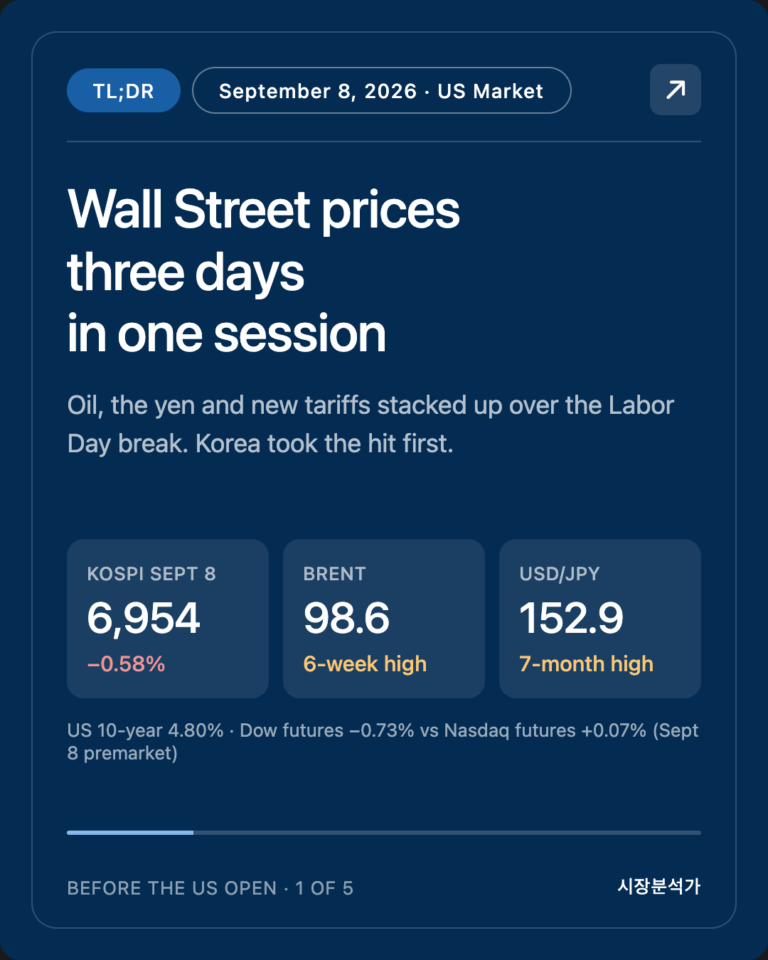
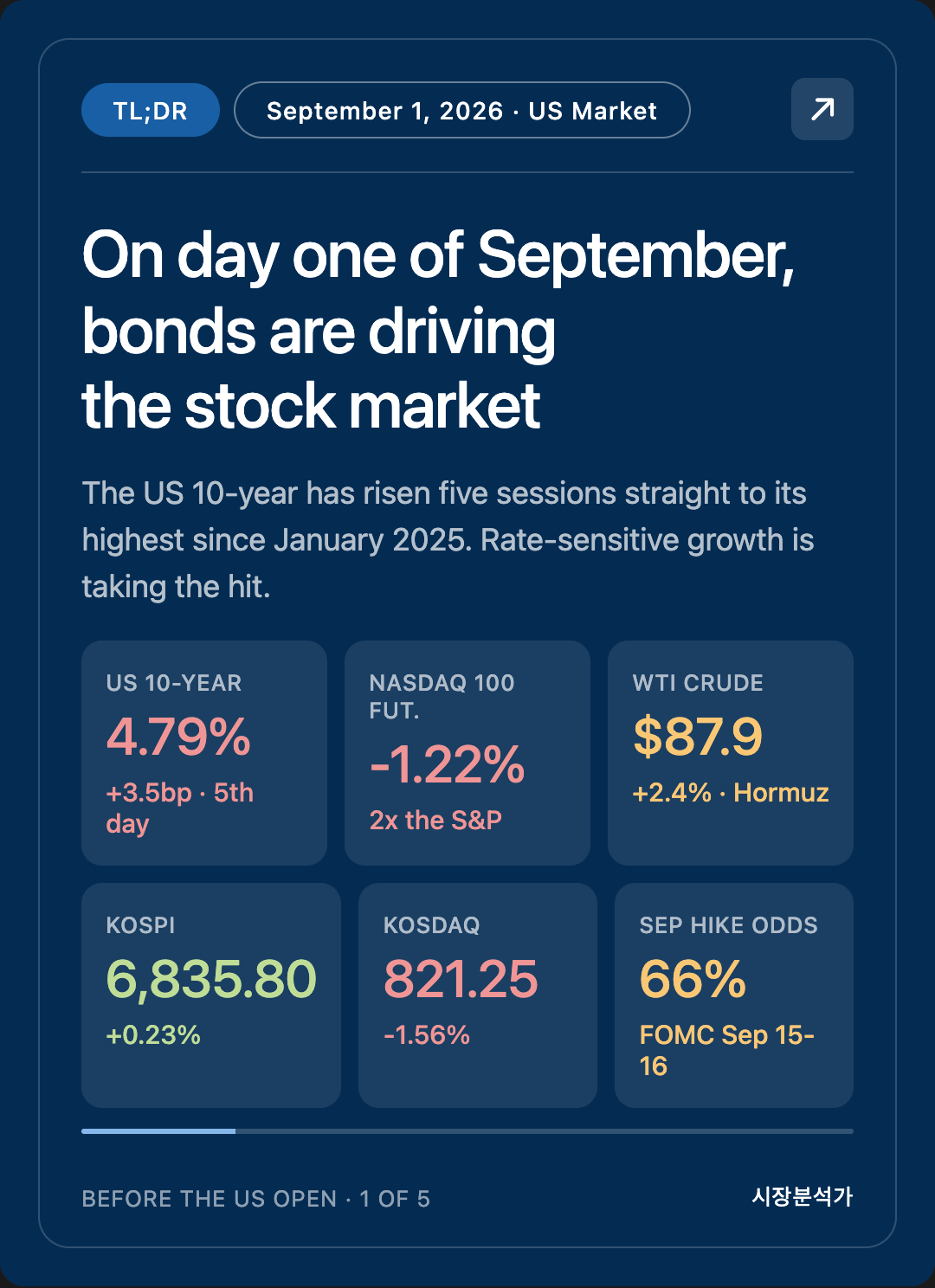
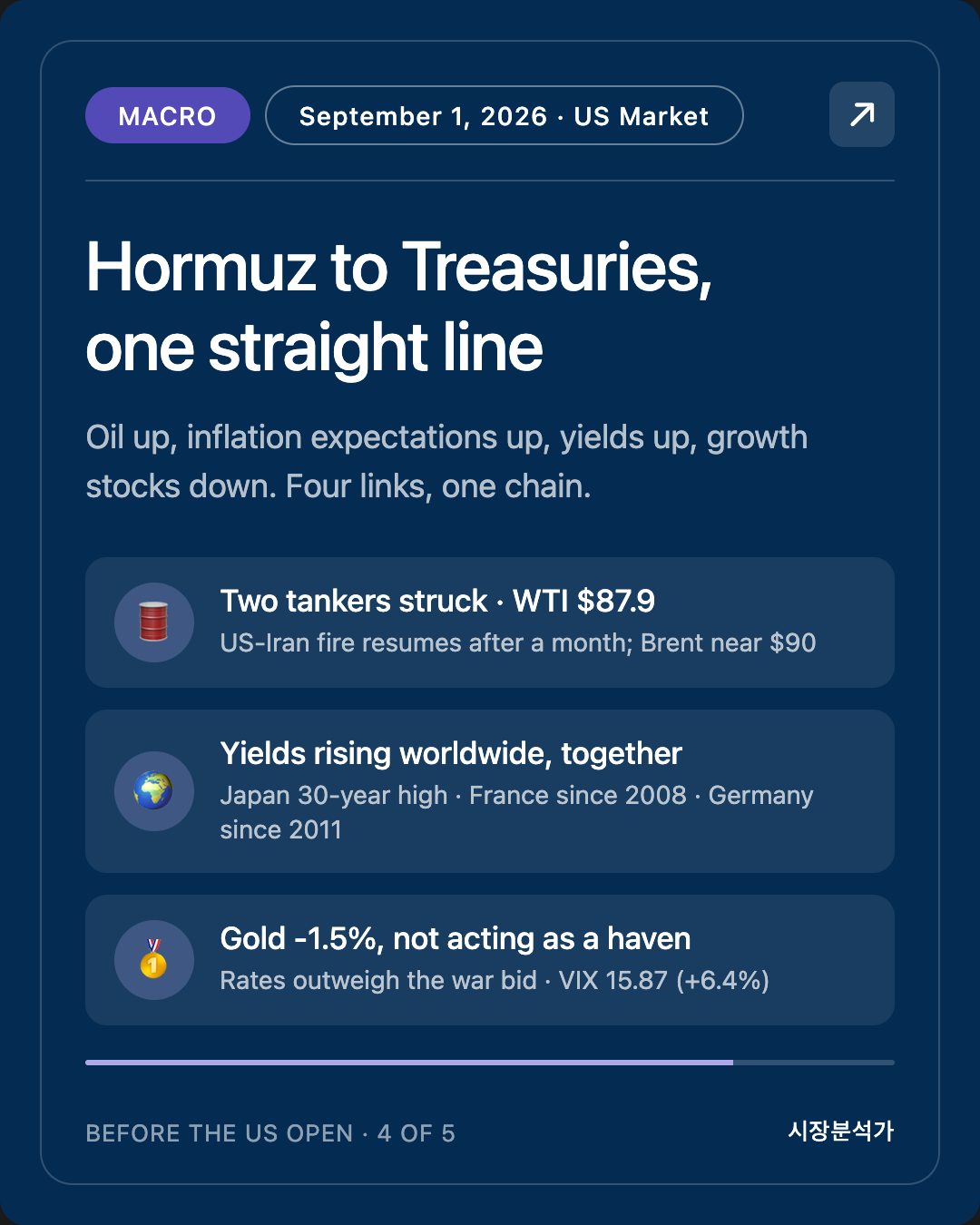
- Bonds are the story. US 10-year at 4.79% (+3.5bp, fifth straight gain, highest since January 2025); 30-year at 5.28%. Falling bond prices are pulling equities down with them.
- This is not a US-only move. Japan's 10-year is at a 30-year high, France's at a post-2008 high, Germany's at a post-2011 high. A genuinely synchronized global selloff.
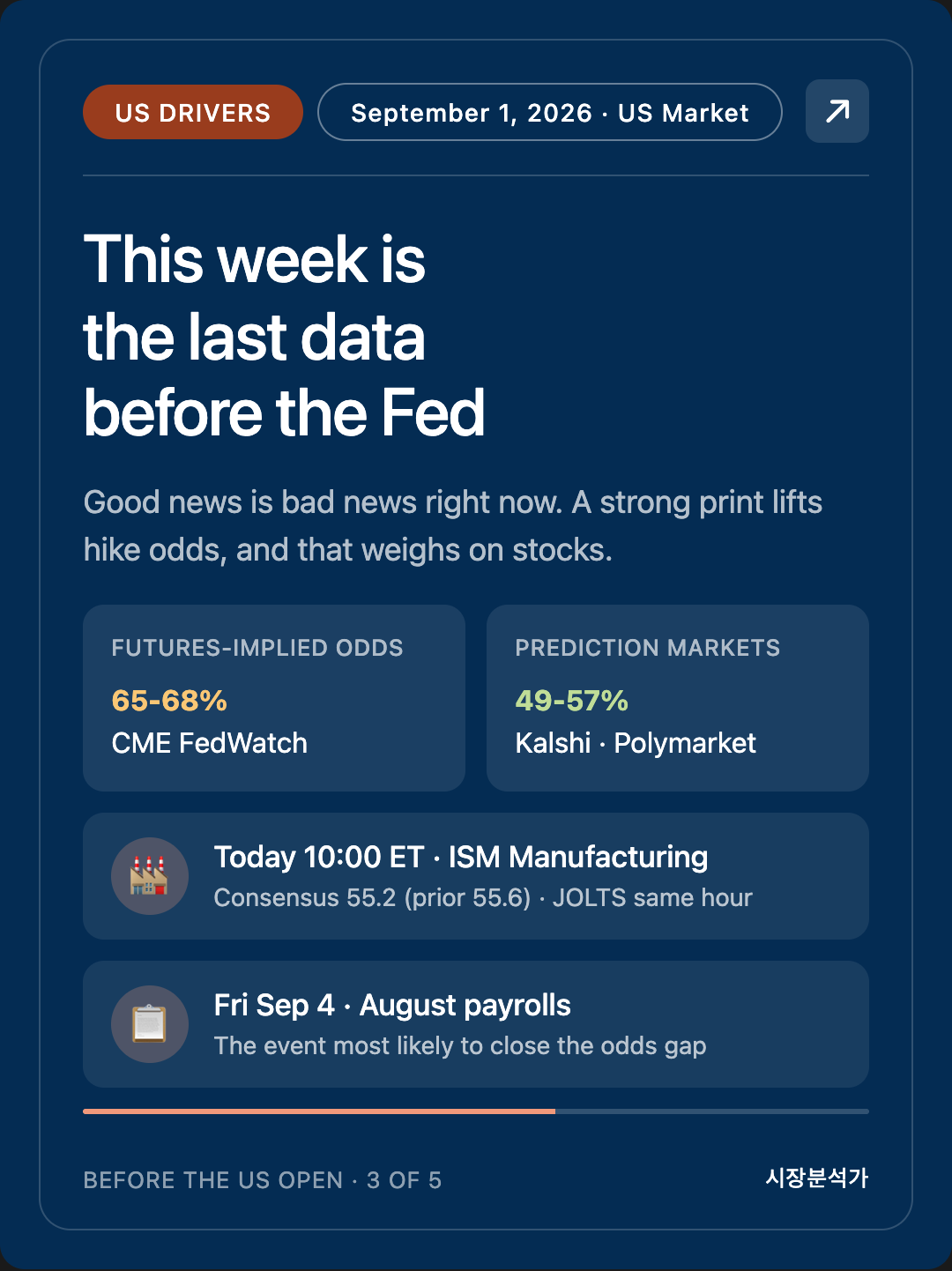
- The chain runs oil → inflation → Fed. Two tankers carrying Saudi crude were struck exiting Hormuz late Monday; US forces hit an island in the strait and Iran retaliated against the UAE and Jordan. WTI $86–88, Brent near $90. September FOMC (Sep 15–16) hike odds: 65–68% on CME FedWatch.
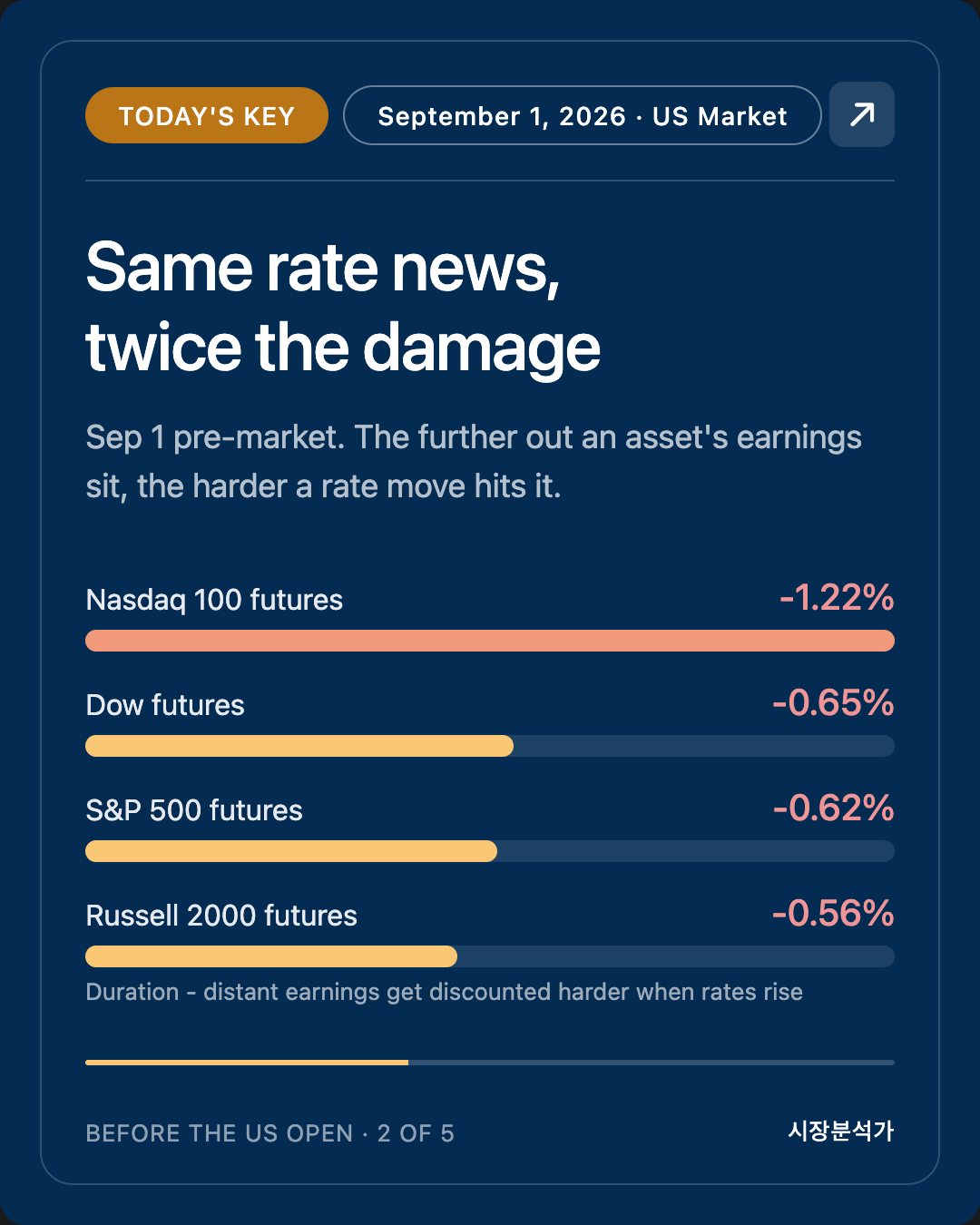
- Growth stocks are taking the heavier hit. Nasdaq 100 futures −1.22% versus S&P −0.62%, Dow −0.65%, Russell −0.56%. VIX back to 15.87 (+6.4%); gold down about 1.5%. Higher rates discount distant earnings more severely — see the study note below.
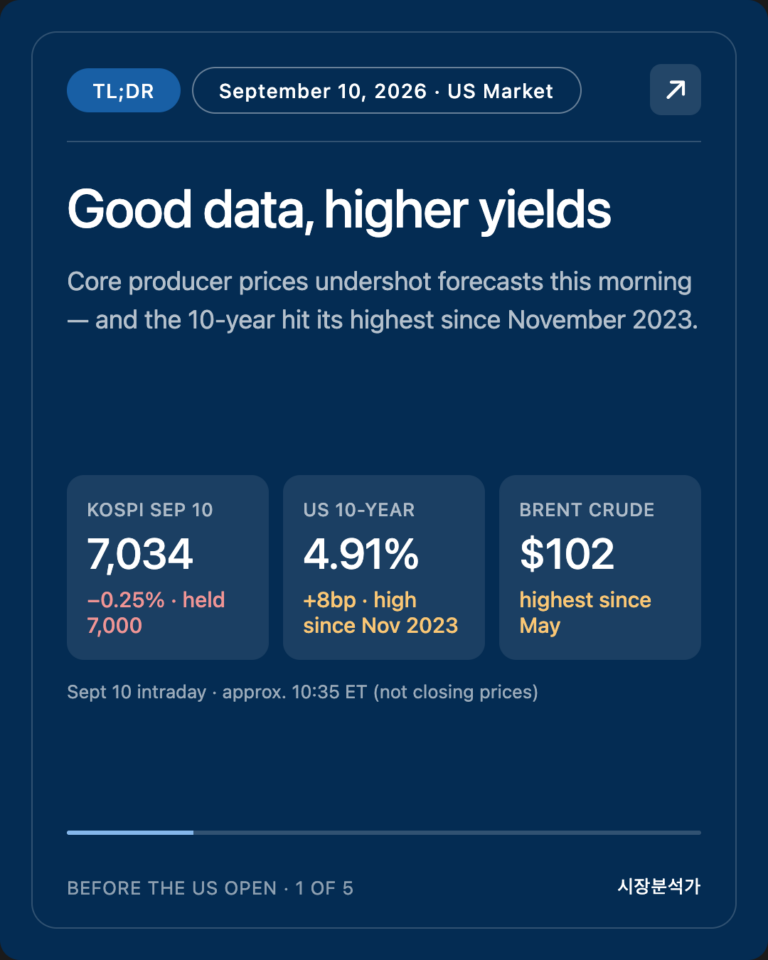
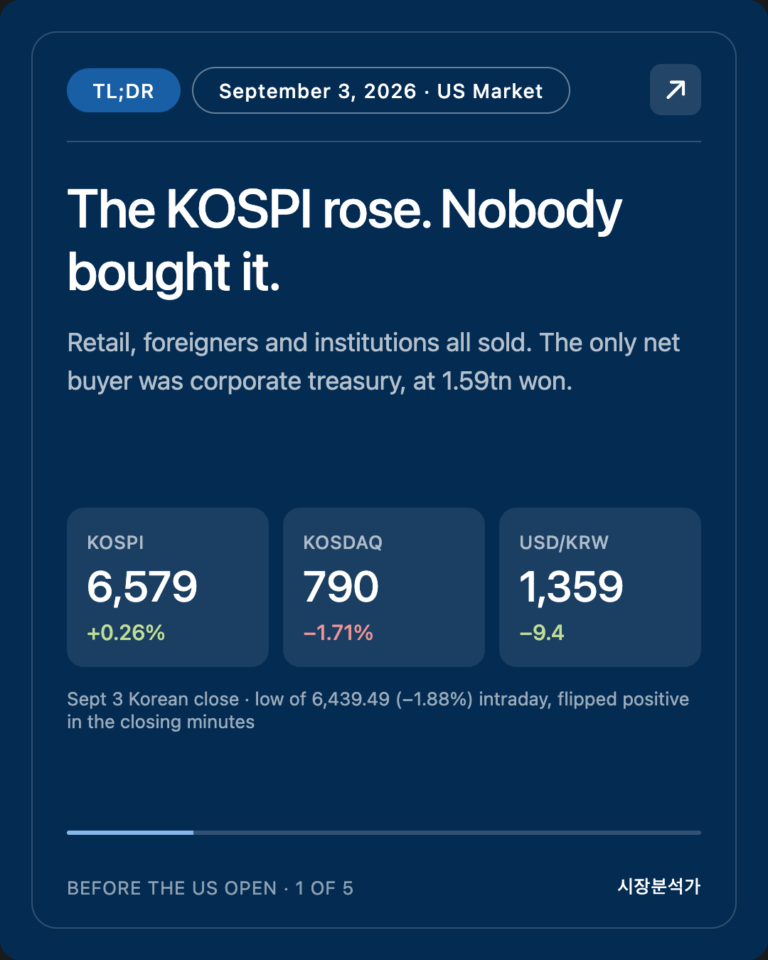
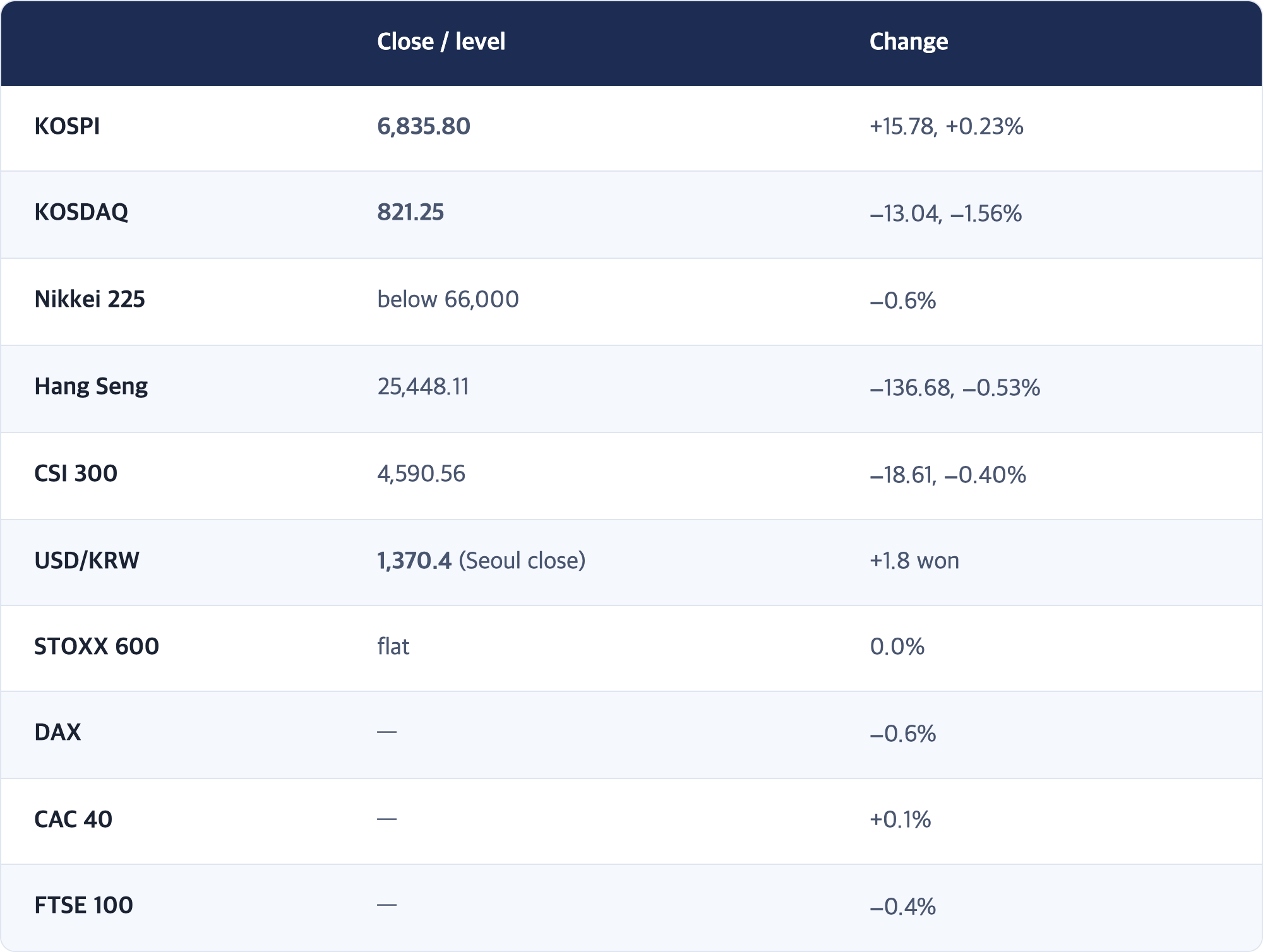
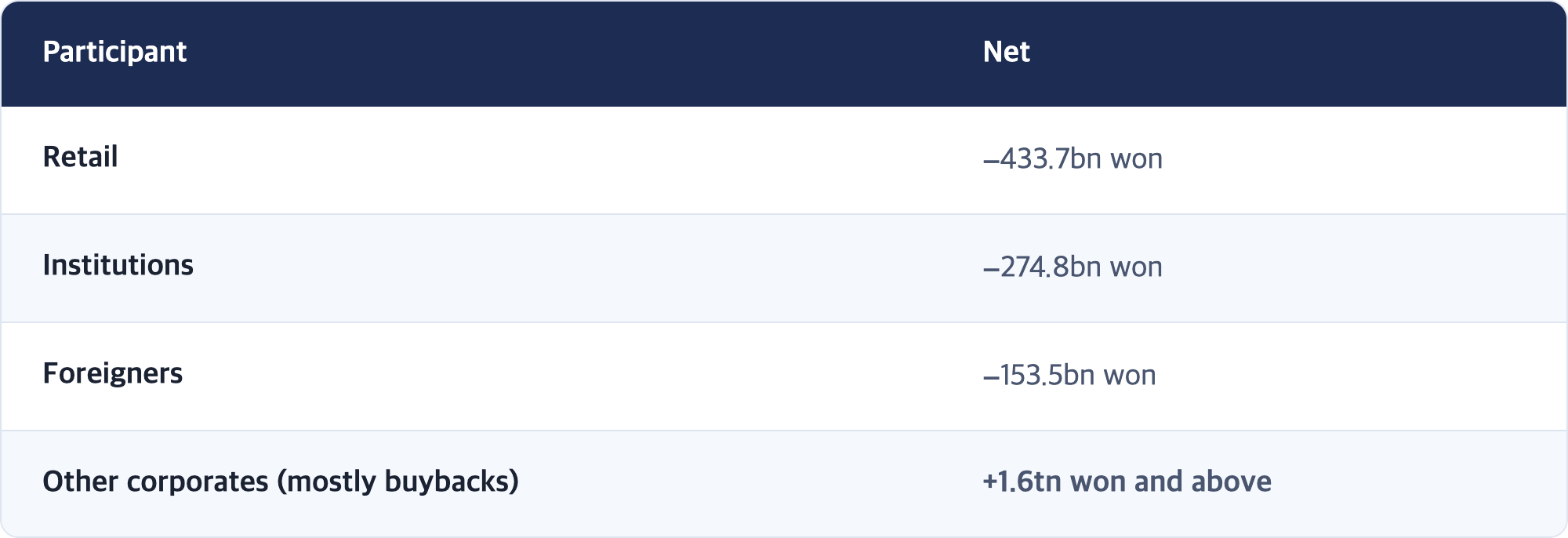
- Korea split down the middle. KOSPI 6,835.80 (+0.23%) but KOSDAQ 821.25 (−1.56%). Retail, institutions and foreigners were all net sellers for a second consecutive day, with corporate buybacks absorbing over 1.6 trillion won. Won at 1,370.4 per dollar.
This is Mr. Can. Here is the September 1, 2026 brief ahead of the US market open.
Written: 2026-09-01 05:40 PDT (Sep 1, 21:40 KST)
Covers: Asia close and Europe's morning session on Sep 1, plus US pre-market. Last US close was Monday, Aug 31.
📌 Corrections to our previous editions
We do not edit published reports after the fact, so corrections are collected here.
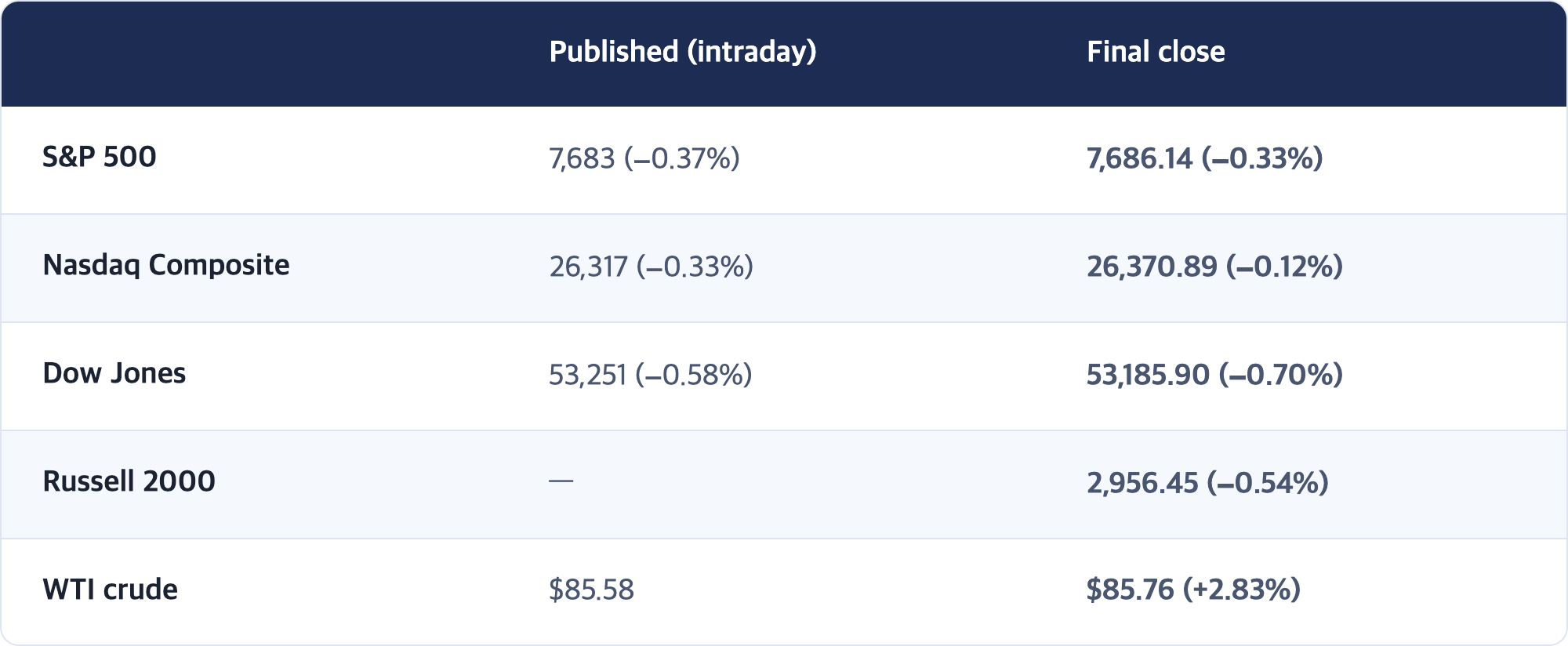
1) The US figures in our Aug 31 evening edition were intraday, not closing. The scheduled job ran early and the piece went out before the US cash session ended. Final closes:
2) The Aug 31 morning edition also ran late — 11:17 rather than the scheduled 05:30 local time. It was written after the US open, not before it, despite the standing headline.
3) On the 10-year yield, we are correcting our own correction. In an internal note filed after Monday's close, we wrote that the 10-year had finished at 4.716% — slightly lower on the day — and that our "long end leading the selloff" reading should therefore be withdrawn. That was wrong. The 4.716% figure was an intraday quote, not a close. Bloomberg reported that the 10-year topped 4.75% on Aug 31, its highest since January 2025, and today's prior-close reference is 4.76%. Yields rose rather than fell, and the original reading stands. That trend is precisely what has intensified this morning, and it is the core of today's report.
4) One unresolved figure. Korean "other corporate" net buying on Aug 31 was reported by us as 1.5433 trillion won in the morning and 1.5429 trillion in the evening. We could not determine which is definitive, and will standardize on approximately 1.543 trillion won going forward.
5) Previously unconfirmed Aug 31 closes, now confirmed — Philadelphia Semiconductor Index 11,472.19 (+0.02%), VIX 14.92 (+3.39%), Bitcoin $78,958.91 (+0.48%). Gold remains unconfirmed: sources differ by nearly 4%, so we quote gold only at current levels below, not as an Aug 31 close.
SEO Intro
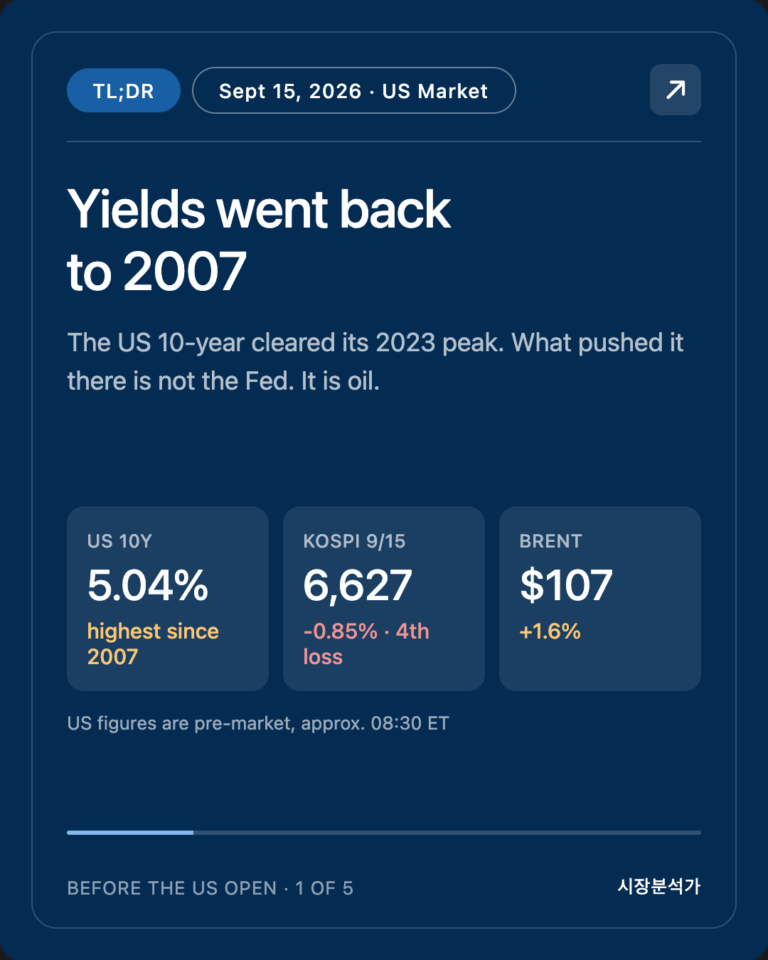
On the first trading day of September, the asset class steering equities is not equities. The US 10-year Treasury yield is at 4.79%, up for a fifth straight session and the highest since January 2025, with the 30-year at 5.28%. On the same morning, Japan's 10-year hit a 30-year high, France's the highest since 2008, and Germany's the highest since 2011. Governments everywhere are paying more to borrow at once. The cause traces back to a single thread: US and Iranian forces resumed hostilities around the Strait of Hormuz, two tankers were struck, oil pushed higher, and the case that inflation will not settle came back to life. Layer on Fed Chair Kevin Warsh's hawkish Jackson Hole address and markets now put a September rate hike at 65–68%. It is no accident that Nasdaq 100 futures are down 1.22% pre-market, roughly double the S&P's 0.62% decline. Here is what that asymmetry tells you, and what to watch between now and Friday's payrolls.
1. Asia and Europe (Sep 1 local sessions)
[Fact] — Levels
[Fact] — Korean flows (Sep 1)
Samsung Electronics closed at 260,000 won (+0.38%), SK hynix at 1,693,000 won (+1.14%) on a favorable high-bandwidth-memory supply picture. Samsung C&T stood out at +3.7%.
[Observation] — Worth explaining for readers outside Korea. Korea's exchange reports flows by participant type, and a category translated as "other corporations" captures companies buying their own shares. Samsung Electronics and SK hynix are midway through a combined buyback program of roughly 55 trillion won, so that line has effectively become a standing bid under the index. Yesterday marked the first day since October 2017 that retail, institutions and foreigners all sold at once. Today it happened again — and buybacks absorbed it again.
[Observation] The KOSPI/KOSDAQ split says the same thing from another angle. Buyback programs target large caps, not small-cap growth names. The part of the market with no supporting bid was left exposed, and it fell 1.56%.
[Interpretation] Do not read the index level as a read on sentiment. Today's KOSPI did not rise because investors wanted in; it rose because companies were buying their own stock. Ask who bought before you interpret what the index did.
[Fact] Chinese and Japanese factory PMIs both beat expectations. Asian activity is holding up — which, in the current regime, reinforces rather than relieves the rates story.
2. The one thing that matters today — bonds are driving equities
[Fact] — Yields
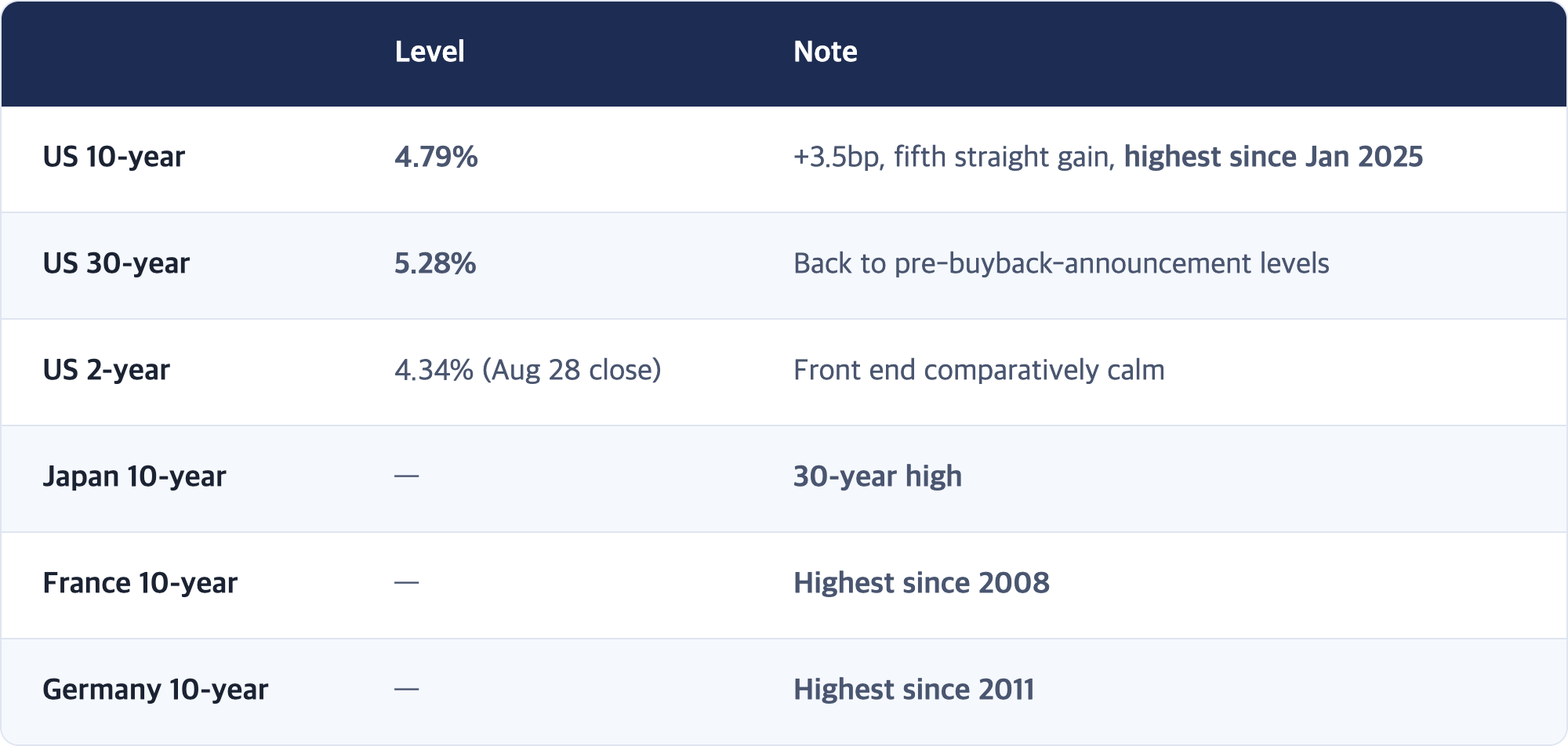
[Observation] European and Japanese government bonds are selling off alongside Treasuries. Deficits, competition from corporate issuance, and above all oil-driven inflation risk are the shared drivers.
[Observation] The shape of the curve is the tell. The 2-year is roughly anchored in the low 4.3s while the 10- and 30-year push higher. That says the move is less about an imminent, aggressive Fed and more about inflation and bond supply persisting — the long end leading, exactly as we described on Aug 31.
[Interpretation] The pre-market ranking makes the mechanism visible.
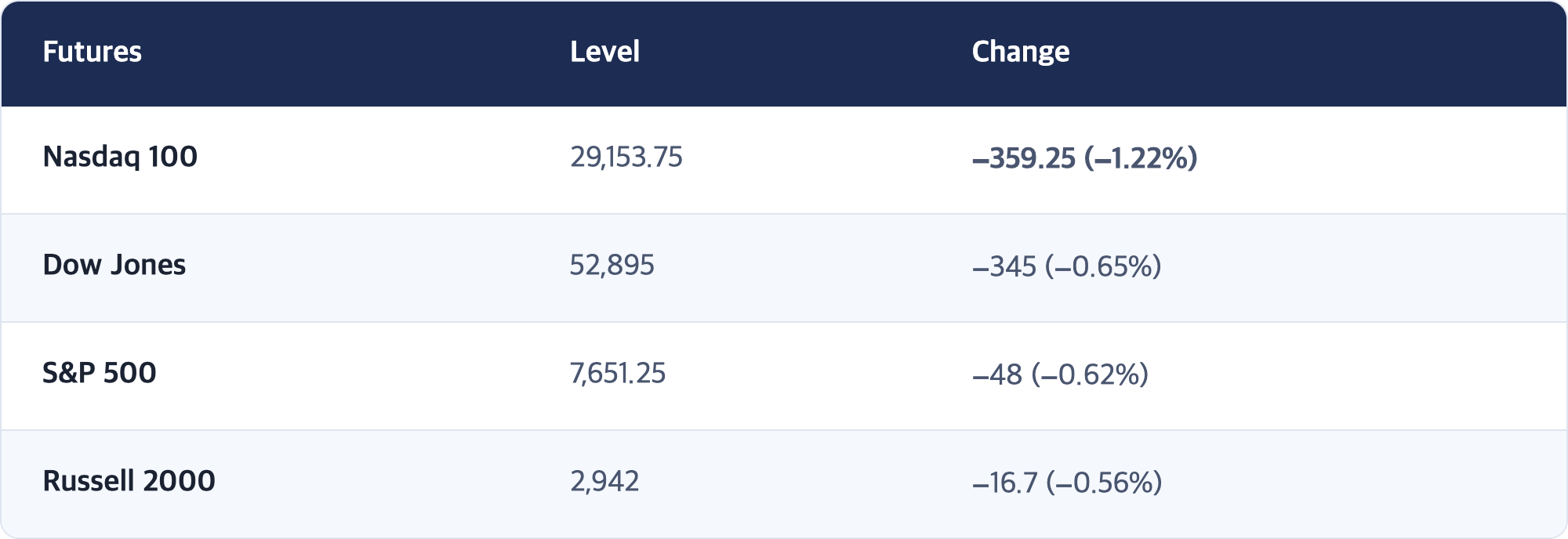
The Nasdaq is falling roughly twice as hard. Growth companies hold their earnings far out in the future, so a higher discount rate cuts their present value more deeply.
3. The second variable — this week is the last data before the FOMC
[Fact] — Calendar (US Eastern)
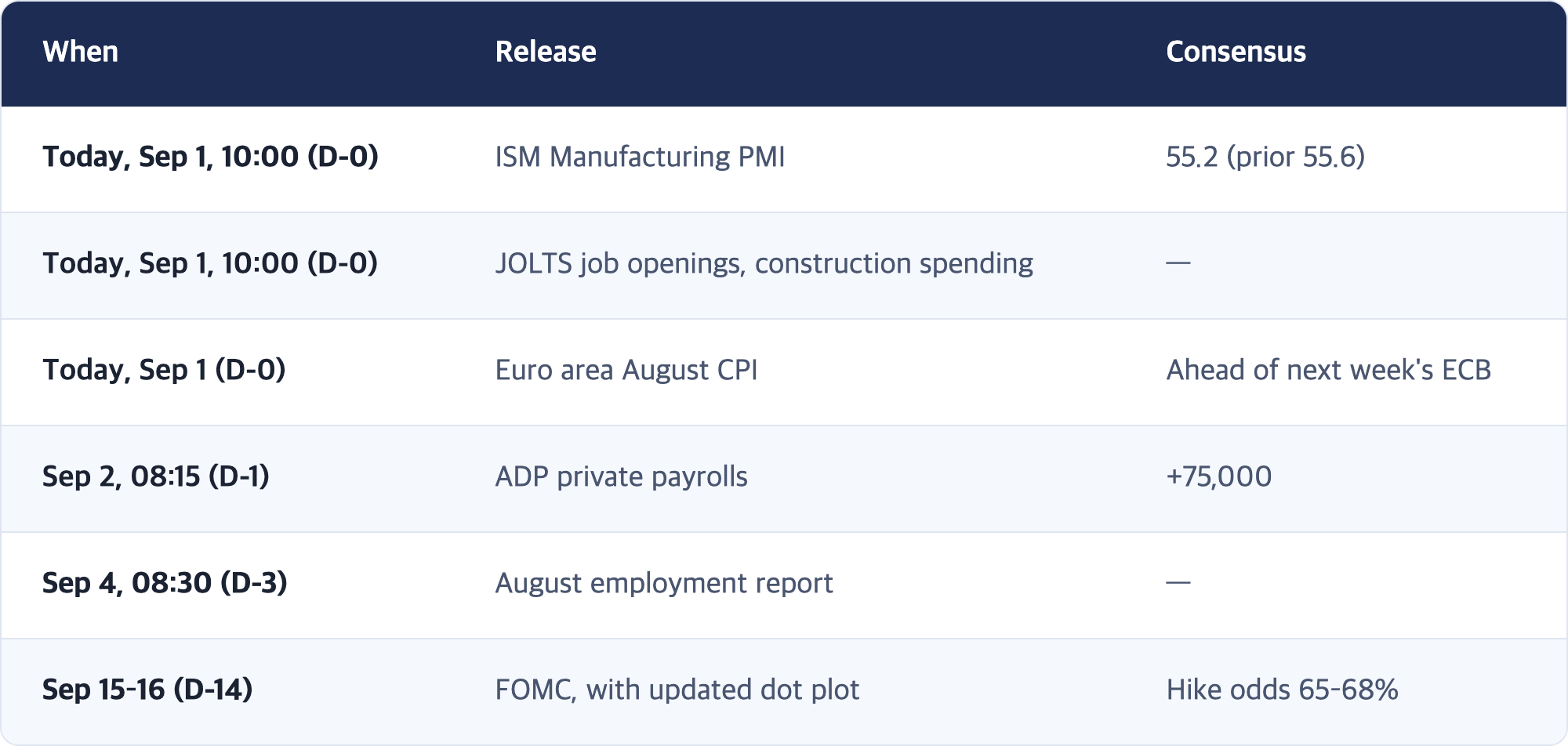
[Interpretation] Good news is bad news right now. Normally a strong ISM or payrolls print supports equities. But the market is currently handicapping a hike at 65–68%. A strong number pushes those odds up, pushes yields up, and reapplies exactly the pressure visible in this morning's futures. This week, do not translate data strength directly into a market call — route it through "does this raise or lower September hike odds" first.
[Observation] The market is not unanimous. Fed funds futures say 65–68%, but prediction markets are lower — Kalshi at 57%, Polymarket at 49%. A 15–20 point gap between the two means participants have not settled on how literally to read Warsh's Jackson Hole language. Friday's payrolls should close much of that gap.
4. Macro backdrop — oil, dollar, safe havens
[Fact]
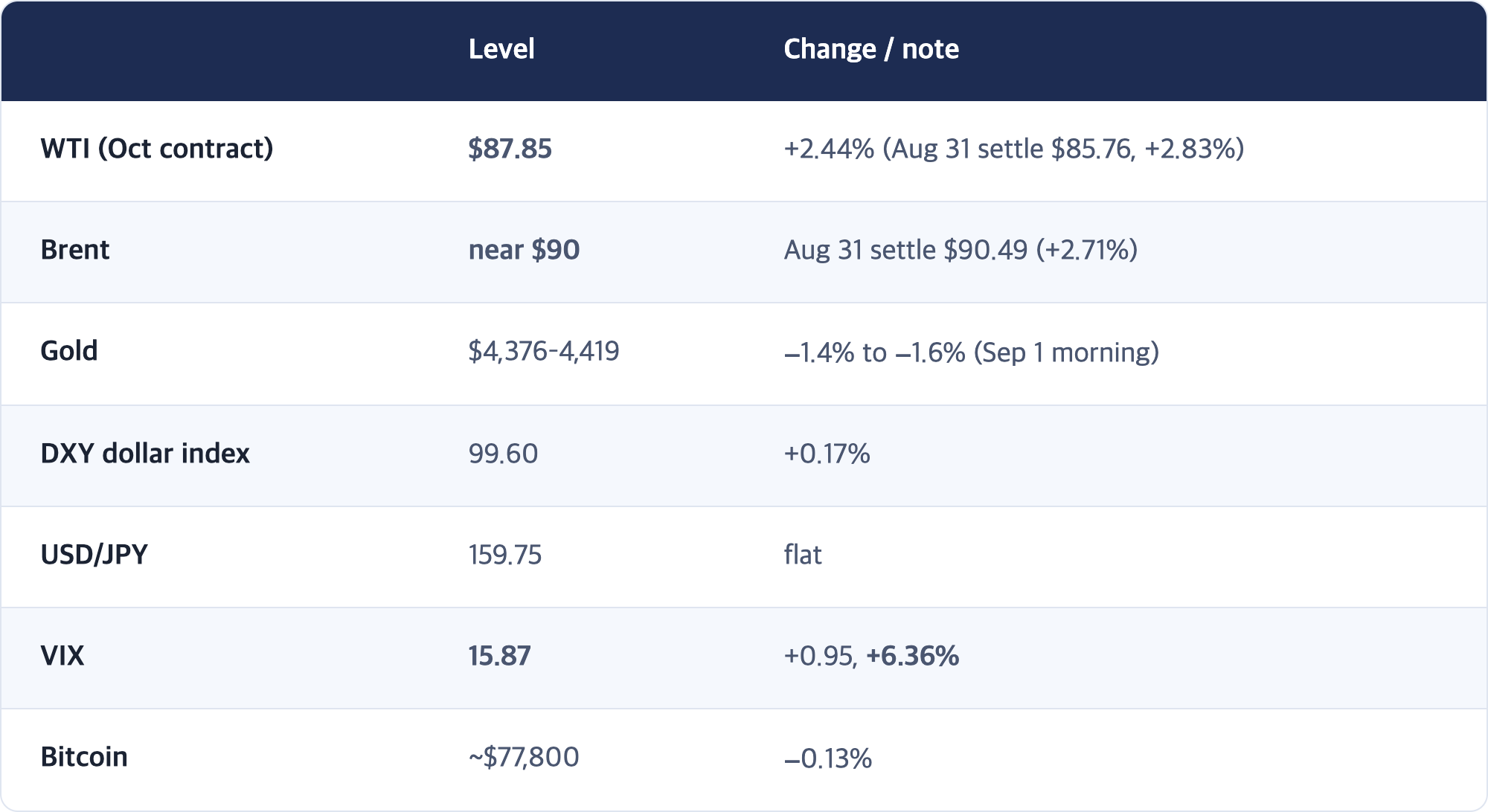
[Fact] — Geopolitics. Two supertankers carrying Saudi crude were struck within minutes of each other while transiting outbound through Hormuz late Monday. US forces hit an island in the strait; Iran struck back at the UAE and Jordan. It is the first exchange of fire in roughly a month.
[Interpretation] Today's causal chain is unusually clean: Hormuz → oil up → inflation expectations up → yields up → equities down, growth hardest. Four links, one line.
[Observation] Gold is not behaving as a safe haven. A war is escalating and gold is down 1.5%. Gold pays no interest, so rising yields raise the cost of holding it. Right now that outweighs the geopolitical bid — a useful thermometer for what the market is actually weighting.
[Observation] The VIX has reclaimed 15, from 14.92 to 15.87. The absolute level is still calm by historical standards, but the direction has turned.
5. Preview — four things to watch at the open
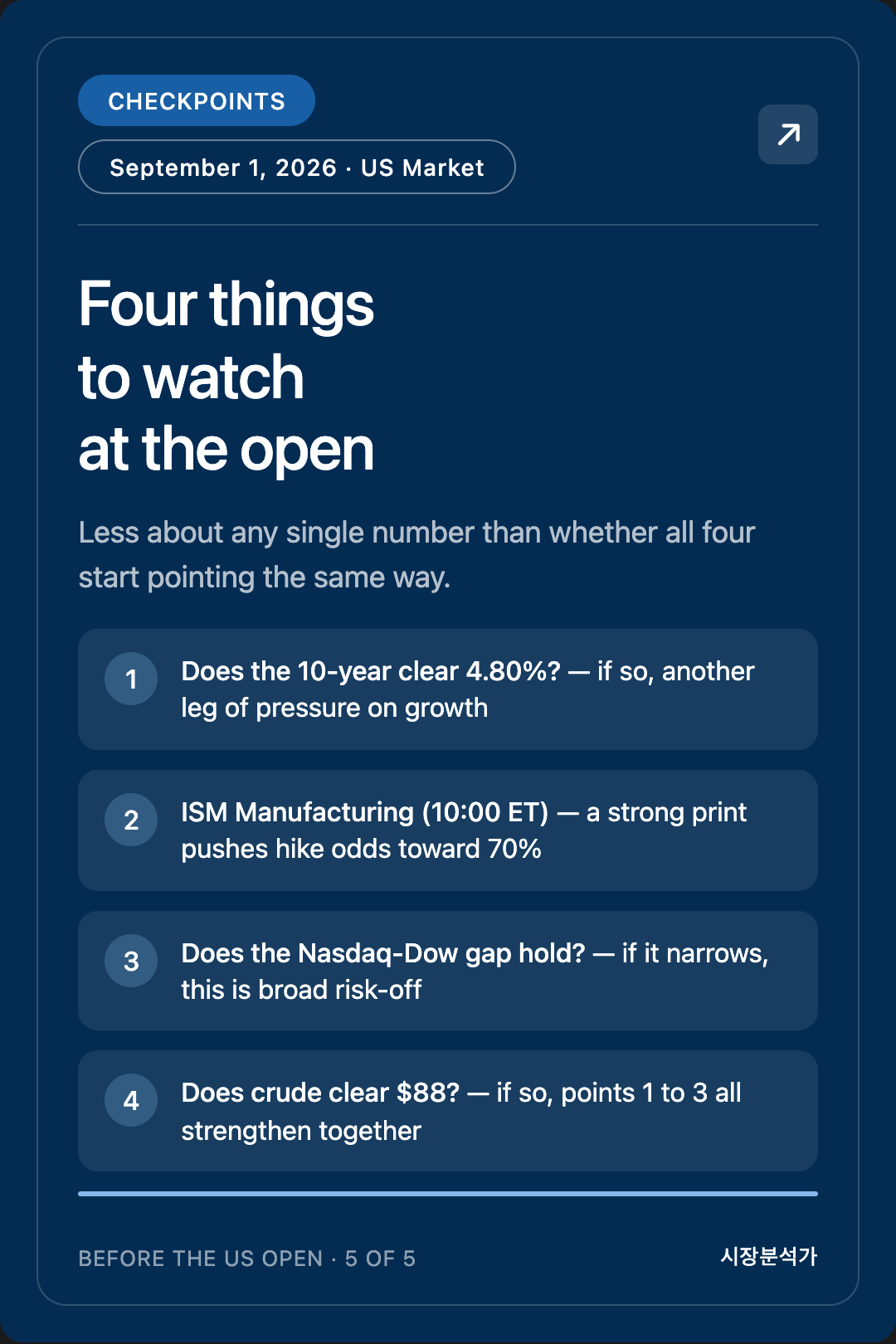
- Does the 10-year clear 4.80%? If it does, pressure on growth names steps up again. If a soft ISM at 10:00 pulls yields back, the Nasdaq is where the bounce shows first.
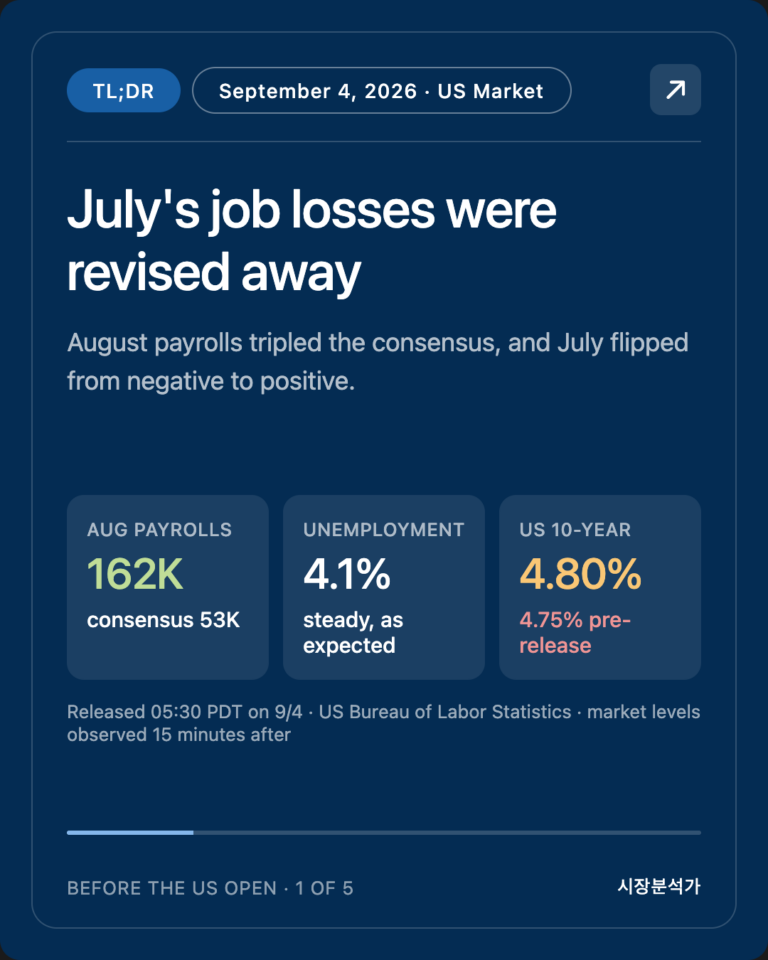
- ISM Manufacturing (10:00 ET, consensus 55.2). A strong print could push September hike odds into the 70s. Strength is currently a headwind for stocks.
- Does the Nasdaq–Dow gap hold? Pre-market it was −1.22% versus −0.65%. If it persists, the rates story owns the day. If it narrows, this has become broad risk-off instead.
- Does crude clear $88? If it does, points one through three all strengthen together.
[Interpretation] Keep August in view. For the month, the S&P 500 gained +2.6% and the Nasdaq +3.9% — the first monthly advance since May. It is easy to fixate on daily declines in a stretch like this, but August was an up month. September's reputation as the weakest month for US equities gets quoted a lot; seasonality is context, not a reason. What moved markets today was Hormuz and the bond market, not the calendar.
📘 Study note — why higher rates hit the Nasdaq first (duration)
The concept. Duration began as a bond term. It measures how far in the future, on average, an asset's cash is returned to you. The longer the duration, the more a small move in interest rates swings the price.
An analogy. Picture a seesaw. Sit near the pivot and a tilt barely moves you. Sit at the very end and the same tilt throws you up and down. The rate move is the tilt; how far out your earnings sit is where you're sitting.
Applied to equities. Stocks have duration too. Companies paying you now — banks, energy, telecoms, industrials — sit near the pivot. Stocks priced on what they will earn in five or ten years sit at the end of the plank. When rates rise, a dollar earned far in the future is discounted more heavily, so growth valuations fall further.
A live example — this morning. On a 3.5bp rise in the 10-year, growth-heavy Nasdaq 100 futures fell 1.22% while the industrial-heavy Dow fell 0.65%. Nearly a 2x difference in response to the same news — that is duration. The same logic explains a +0.23% KOSPI sitting alongside a −1.56% KOSDAQ.
What to do with it. Rising rates do not make growth stocks bad. But knowing in advance that they swing harder on identical news is different from being surprised by it. When rates are the driver, watch the Nasdaq–Dow spread alongside the index level; it tells you far more clearly what the market is reacting to.
Sources
- Seoul Economic Daily — KOSPI Closes 0.23% Higher at 6,835.80 (Sep 1, 2026)
- Businesskorea — [Closing Market] KOSPI Edges Higher Amid Mixed Trading (Sep 1, 2026)
- Asiae / Money Today — KOSDAQ close 821.25, −1.56% (Sep 1, 2026)
- CNBC — Dow futures fall 300 points to kick off September as global bond yields rise (Aug 31, 2026)
- Yahoo Finance — Stock market today: Dow, S&P 500, Nasdaq futures fall as inflation, Iran war weigh (Sep 1, 2026)
- TheStreet — Stock Market Today (Sept. 1, 2026): Dow futures slide on renewed U.S.-Iran hostilities
- TradingEconomics — US 10 Year Treasury Note Yield / Japan Stock Market / Gold (Sep 1, 2026)
- Bloomberg — Treasury 10-Year Yield Tops 4.75%, Highest Since January 2025 (Aug 31, 2026); Latest Oil Market News and Analysis for Sept. 1
- CNBC — Global bond yields hit multi-decade highs (Aug 18, 2026); Markets see Warsh endorsing a rate hike in September (Aug 31, 2026)
- FXStreet — Gold weakens below $4,400 as US Treasury yields surge, Fed rate hike bets rise (Sep 1, 2026)
- Korea Herald — Two tankers carrying Saudi oil attacked in Strait of Hormuz (Sep 1, 2026)
- ISM / BLS / New York Fed — US economic release calendar, September 2026
- CME FedWatch, Kalshi, Polymarket — September FOMC probabilities
This report interprets market flows and macro variables. It is not a recommendation to buy or sell any individual security.
📌 More market briefs
※ This post is market observation and organization intended to support your own judgment. It is not a recommendation to buy or sell any security. Figures are as of the time of writing and may differ between sources.
If this was useful, bookmark it or pass it along. It genuinely helps me write the next one.
I can survive. We can survive.