Sept 16, 2026 US Market Brief — Nasdaq and S&P 500 Before the Open
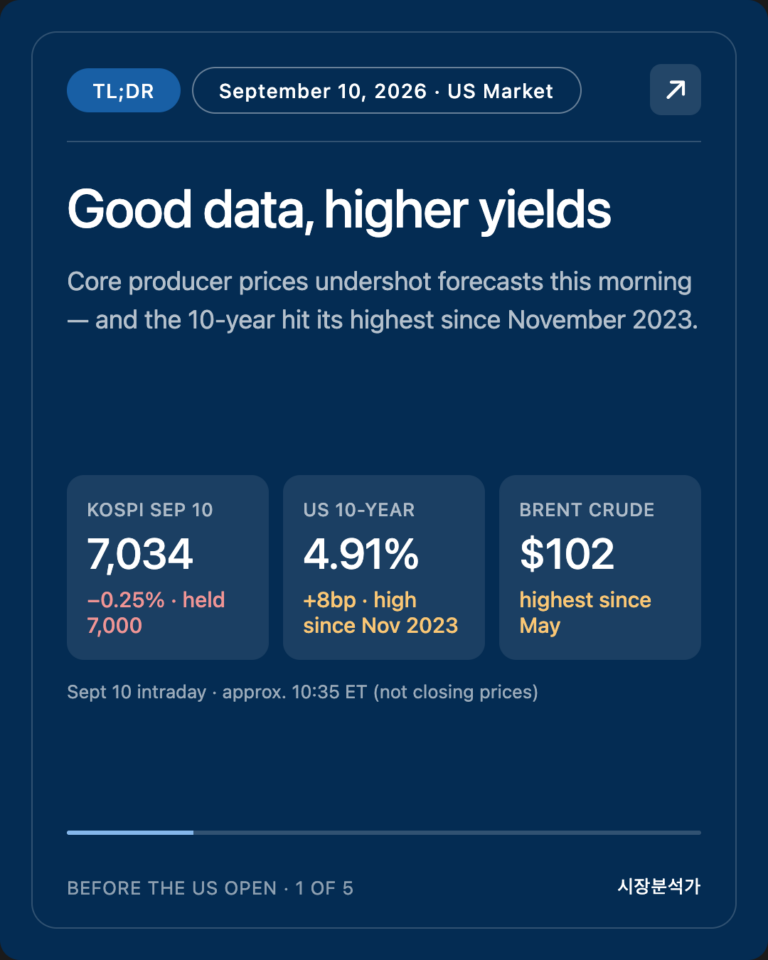
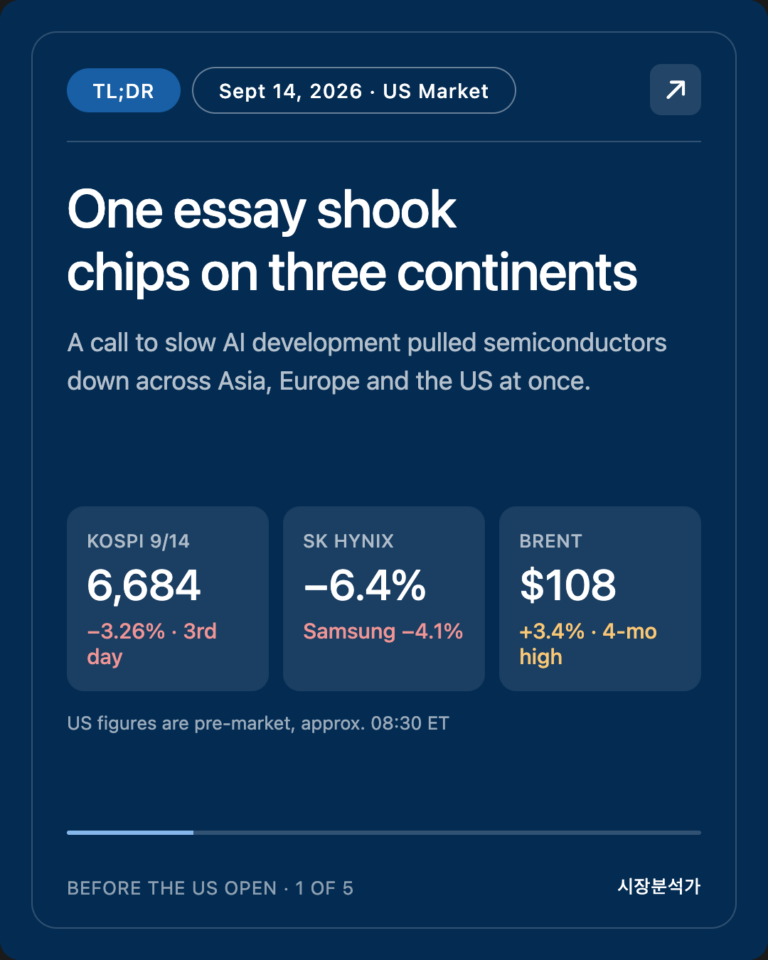
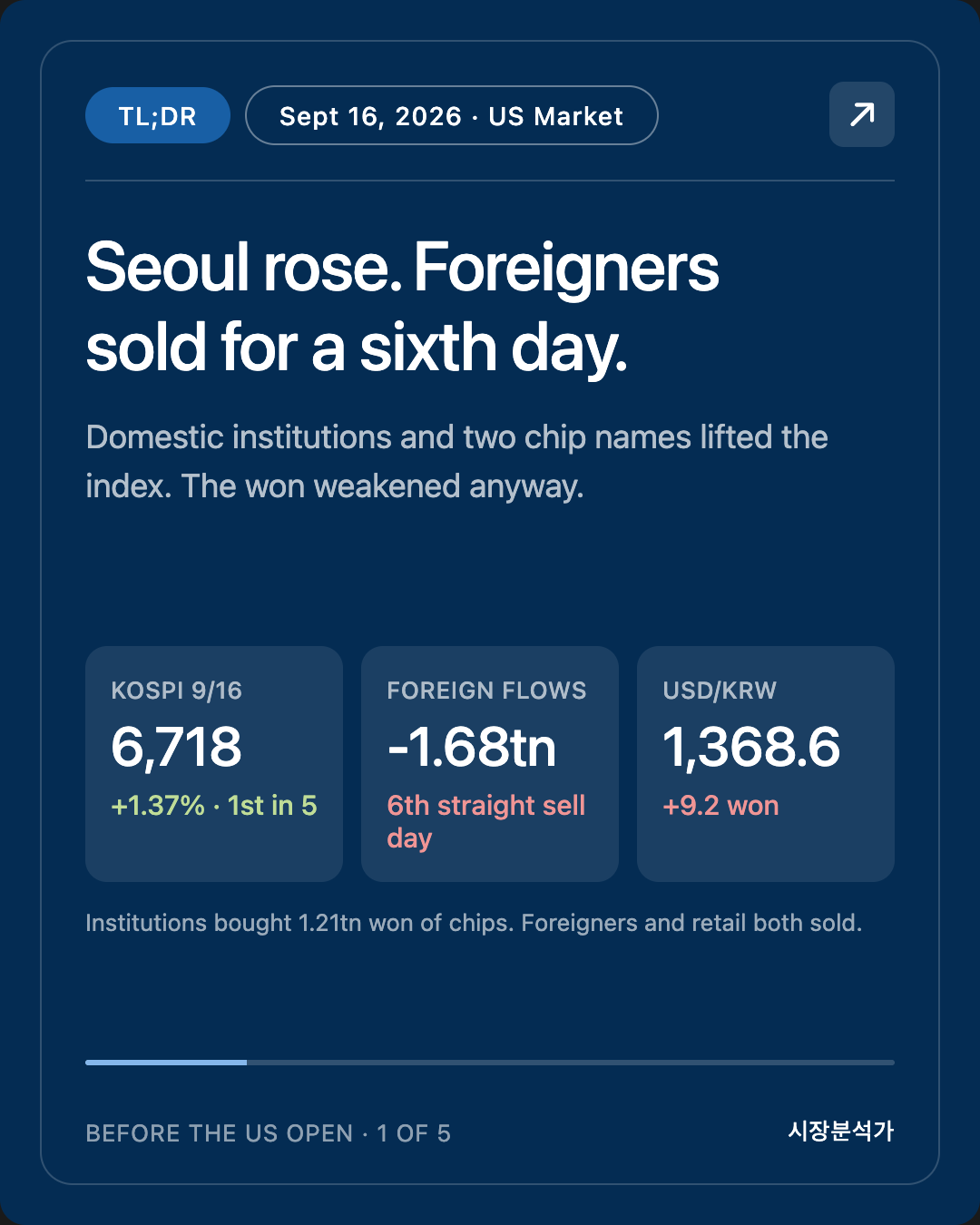
- The KOSPI rebounded after four straight down days, closing at 6,717.97 (+90.71, +1.37%). Domestic institutions bought 1.21 trillion won, concentrated in chips. Samsung Electronics closed at 253,500 won (+2.01%) and SK Hynix at 1,759,000 won (+4.08%).
- 🔴 Foreign investors sold for a sixth straight session, 1.68 trillion won. The won fell another 9.2 to 1,368.6/USD. They bought the chips; they did not buy Korea.
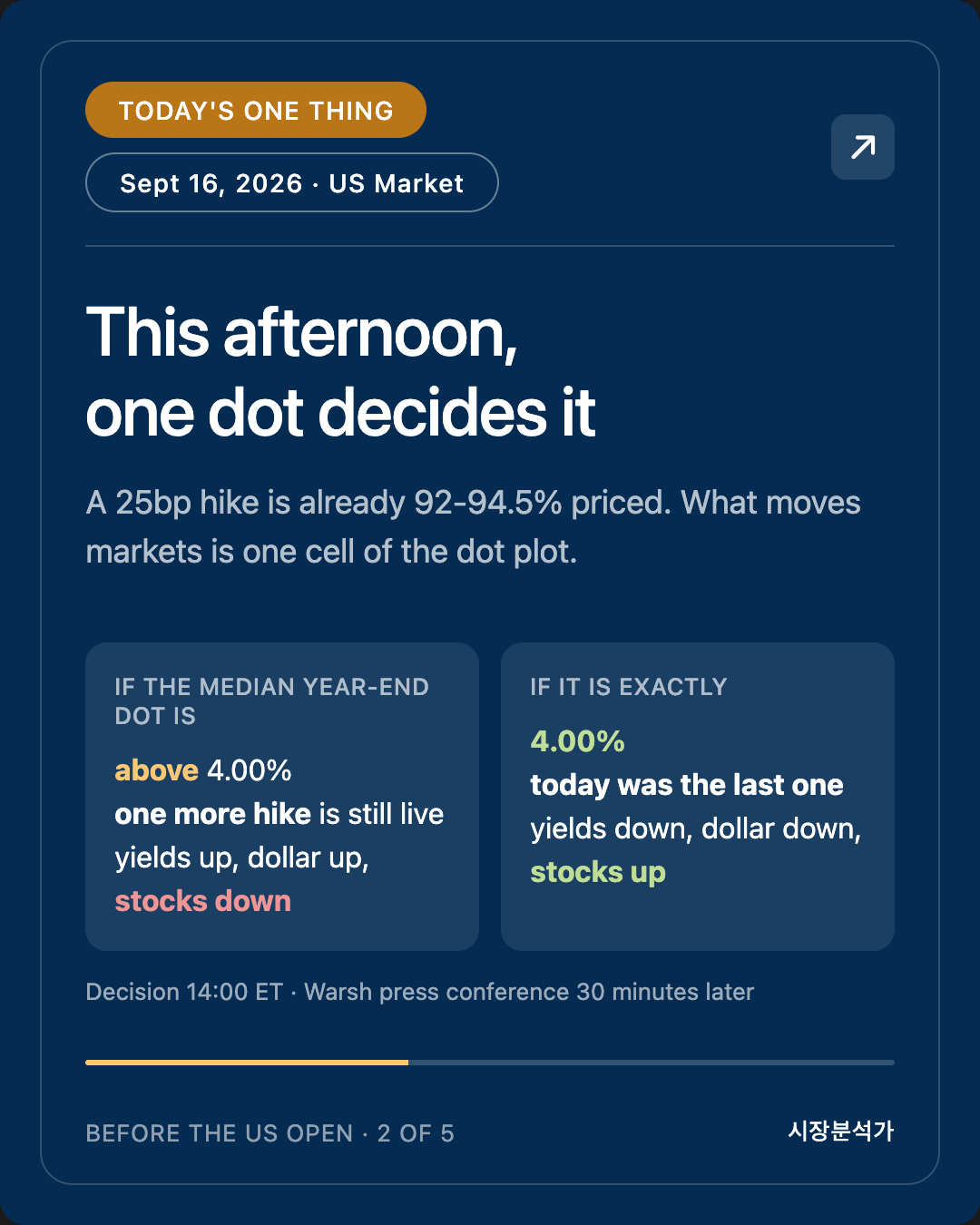
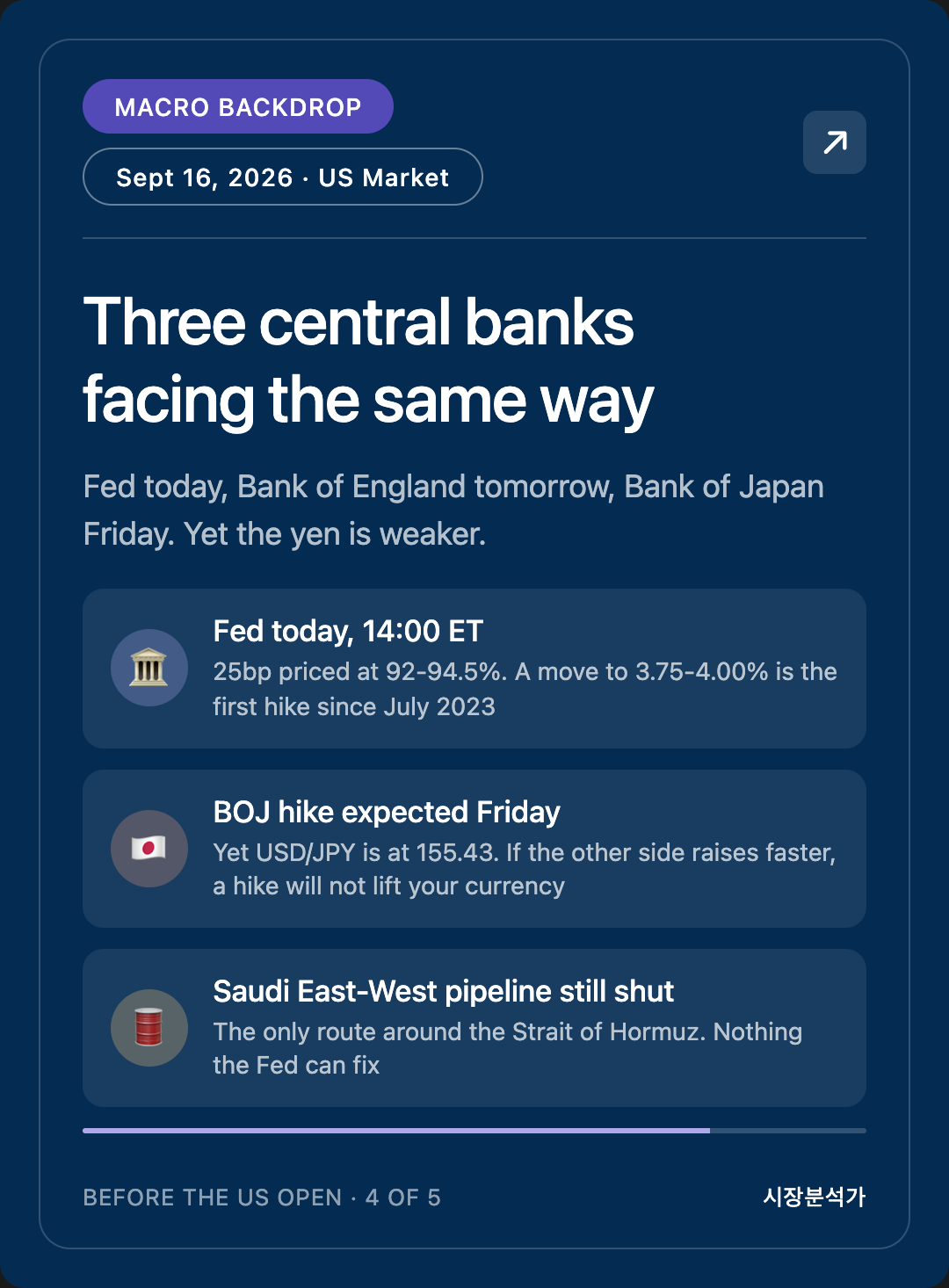
- Everything about today's US session happens at 14:00 ET. A 25bp hike is priced at 92–94.5% (CME), taking the target range to 3.75–4.00% and marking the first increase since July 2023. The hike itself is not news.
- The news is one line of the dot plot. If the median 2026 year-end dot prints above 4.00%, another hike is still live; if it prints exactly 4.00%, this was the last one. That single cell sets rates, the dollar and Korean flows at once.
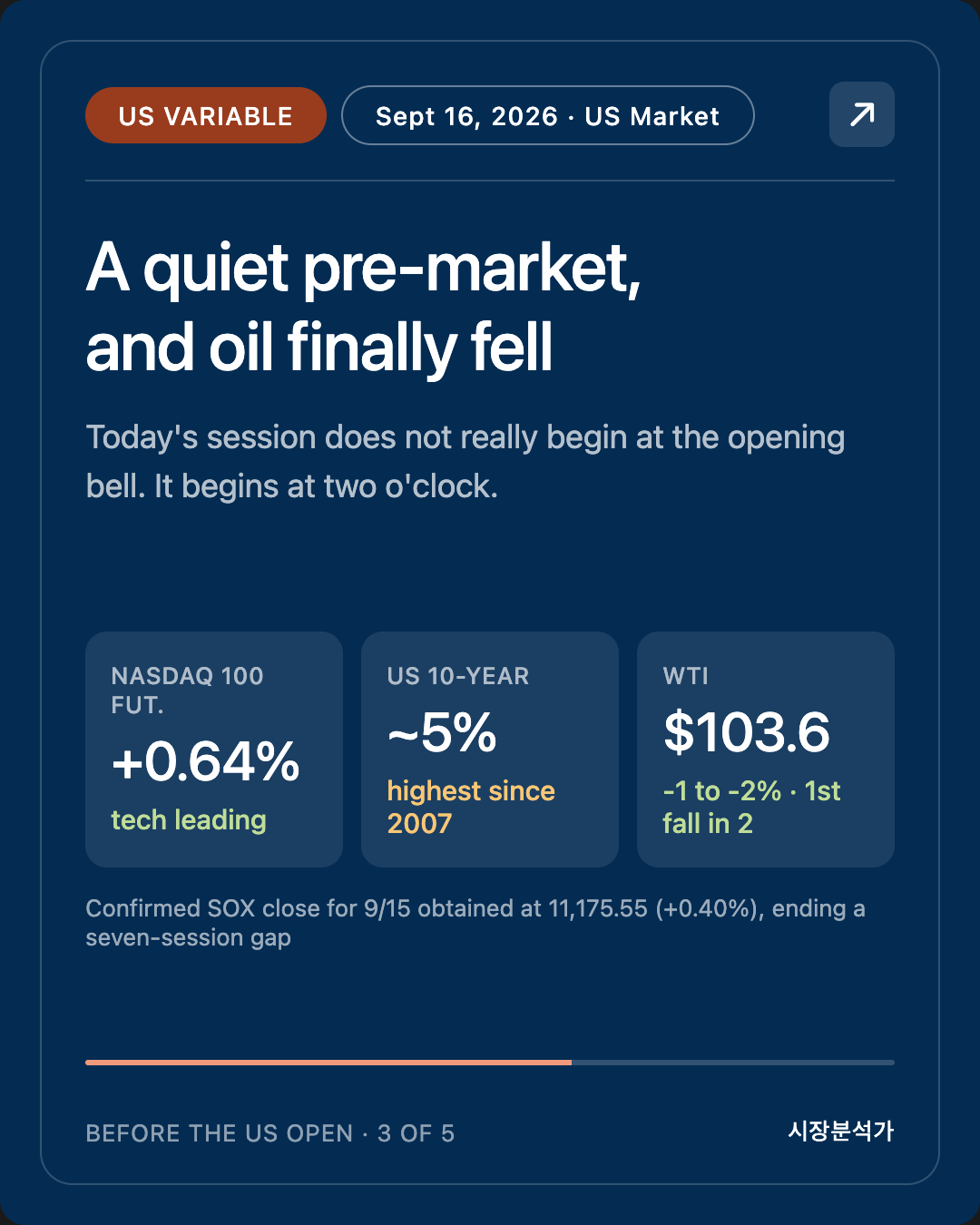
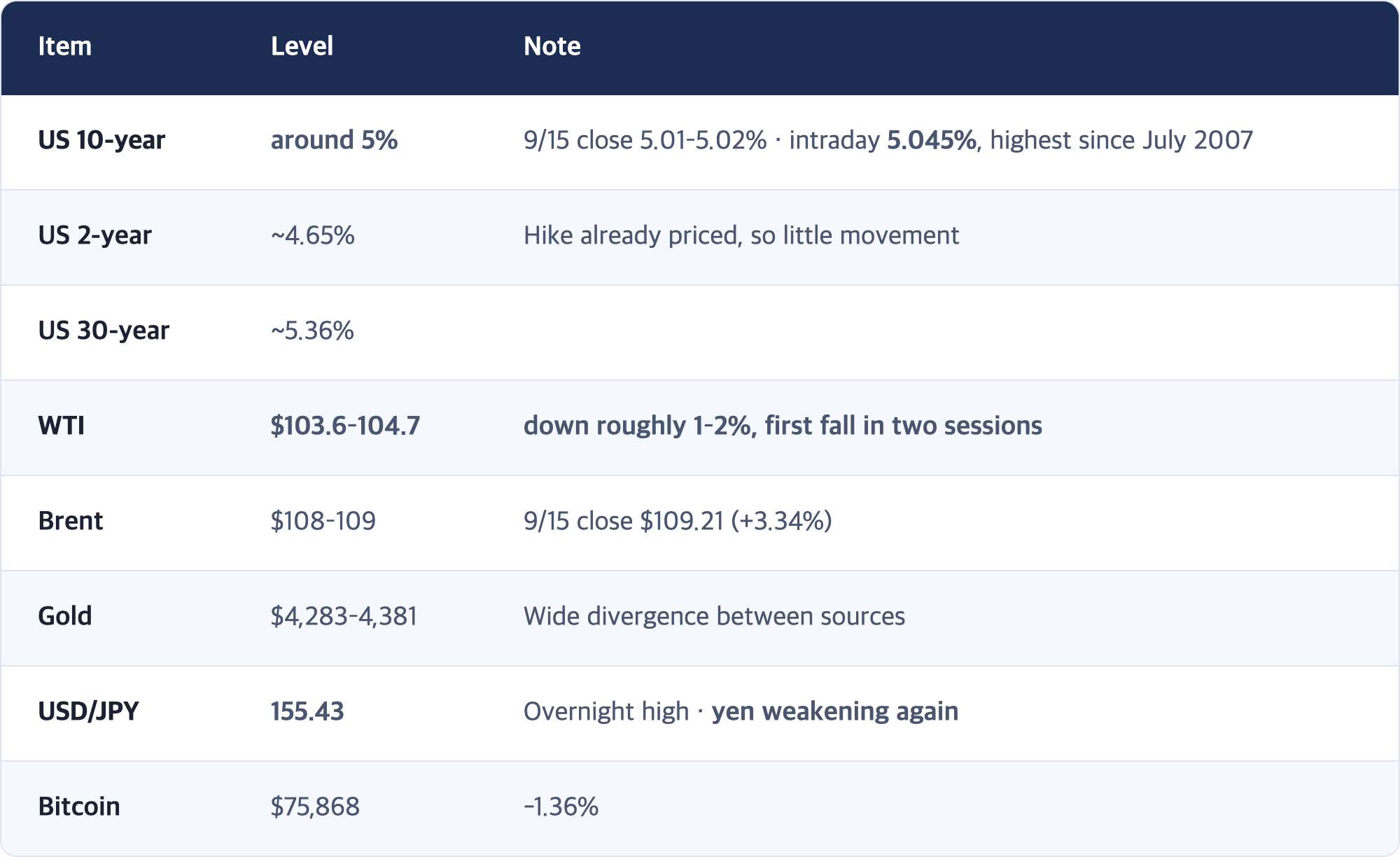
- Oil fell for the first time in two sessions. WTI $103.6–104.7 (down roughly 1–2%). Saudi Arabia's East-West pipeline is still shut, but crude finally took a breath above $100. US index futures are up 0.23–0.64%.
This is Mr. Can. Here is the Sept 16, 2026 brief ahead of the US market open.
Written: 2026-09-16 05:35 PDT (Seoul 9/16 21:35 KST)
Basis: Asia close 9/16 + European open + US pre-market (approx. 08:35 ET)
✅ On schedule. Slot 05:30 PDT, actual start 05:35 PDT. That is seven consecutive on-time runs (9/13 PM · 9/14 AM · 9/14 PM · 9/15 AM · 9/15 PM).
US figures below are pre-market. Today's FOMC decision lands at 11:00 PDT / 14:00 ET, hours after this report goes out.
SEO Intro
Yesterday this report put four questions to the Korean session. Would the KOSPI hold 6,600 and break a four-day losing streak? Would Korean government bond yields keep climbing? Would the won pass 1,365 to the dollar? Would foreign investors stop selling after five straight days?
The KOSPI broke the streak. 6,717.97, up 1.37%. First gain in five sessions.
But on the same day the won weakened another 9.2 to 1,368.6, and foreign investors sold another 1.68 trillion won, their sixth consecutive session of net selling.
Stocks up, currency down, foreigners still leaving. All three happened on the same day, and together they are the whole story of yesterday in Seoul.
The rebound was not foreign money coming back. Whether it does come back gets its first official answer this afternoon, from a single dot on a chart.
1. Scoring Yesterday's Checkpoints (Korea, Sept 16)
These are the four the September 15 PM report wrote down. The axis was: was Korea's weakness news arriving from America, or a price printed in Korea itself?
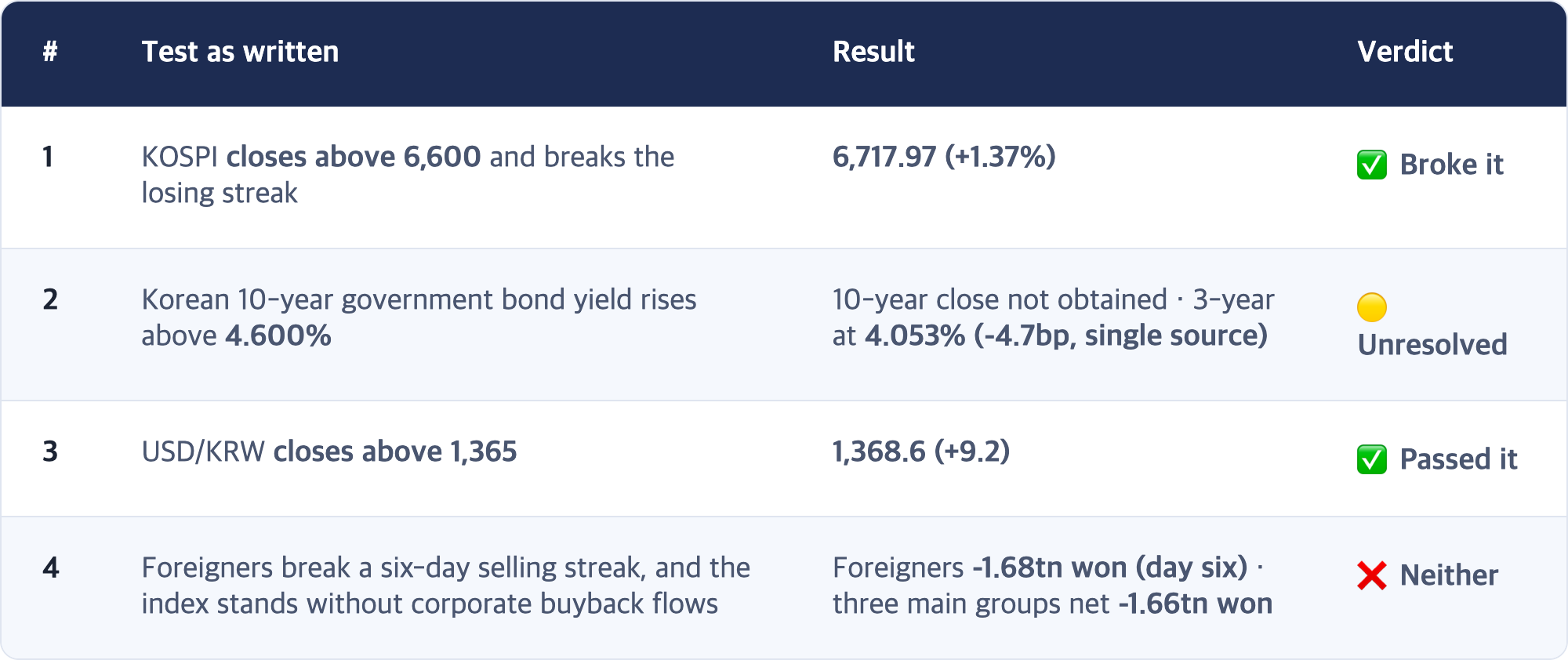
🔴 [Interpretation] Put the four together and they make one sentence
Read #1 alone and it was a good day. Add #2, #3 and #4 and it reads differently.
The KOSPI rose, but not because foreign money returned.
The flows say it plainly. Foreign investors sold 1.68 trillion won and retail investors sold 1.18 trillion won. The only net buyer was domestic institutions at 1.21 trillion won. Add the three and you get -1.66 trillion won of selling.
Yet the index gained 1.37%. [Observation, inferred] Someone absorbed that gap, and in recent sessions the group filling exactly this role has been corporate share buybacks. (We could not obtain the confirmed figure; the number is backed out from the three main categories.)
And on the same day the won broke through 1,365 to close at 1,368.6. A weakening won means dollars are still leaving won assets.
So yesterday Seoul held both "money that thinks chips look cheap" and "money that is leaving Korea." The index only showed you the first one.
[Interpretation] Which is why tonight's Fed decision actually matters here
Why foreigners have sold for six sessions is not a mystery. The US 10-year pays 5%. Against that, holding Korean equities needs a reason, and for six days they have not found one.
That means what brings them back is not a Korean earnings release. It is the direction of US rates. The dot plot this afternoon is the first official statement of that direction.
2. Today's One Thing: A Single Dot Decides It
[Fact] The schedule (PDT)
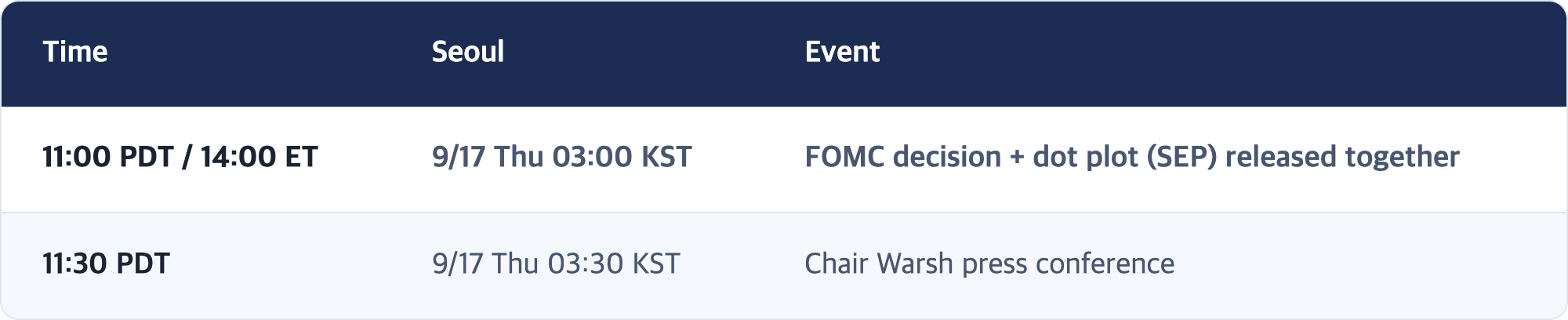
[Fact] What the market has already settled
CME FedWatch puts a 25bp hike at 92–94.5%. If it lands, the target range goes from 3.50–3.75% to 3.75–4.00%, the first hike since July 2023 and the first hike vote of Kevin Warsh's chairmanship.
When 92% is already in the price, the hike itself gives the market almost no reason to move.
🔴 [Fact] So the number that will actually move things is this one
The median 2026 year-end policy rate in the dot plot. Reading it is simple.
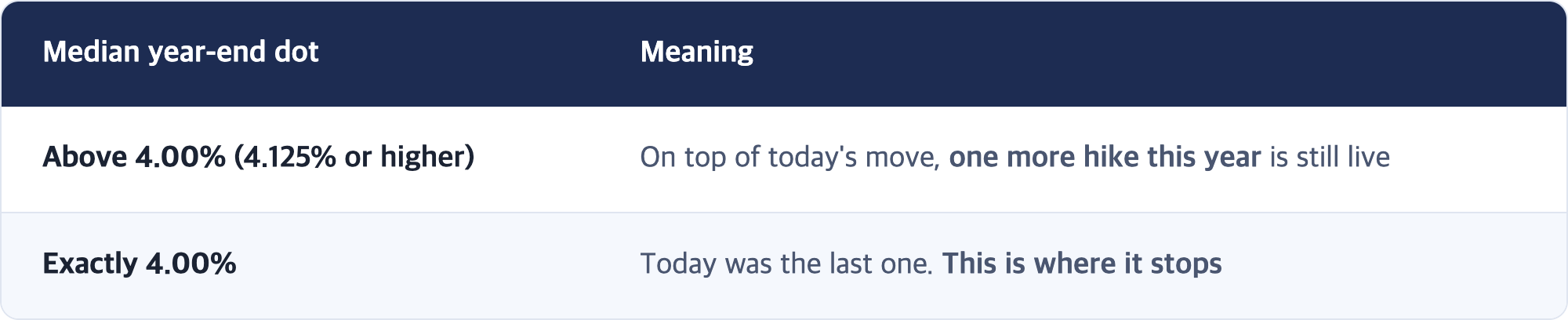
Today's hike takes the upper bound to 4.00%. So a median of exactly 4.00% says "we are done," and anything above says "not yet." One cell apart.
[Interpretation] Why that cell reaches Korea
Here the thread this project has been following for two days connects.
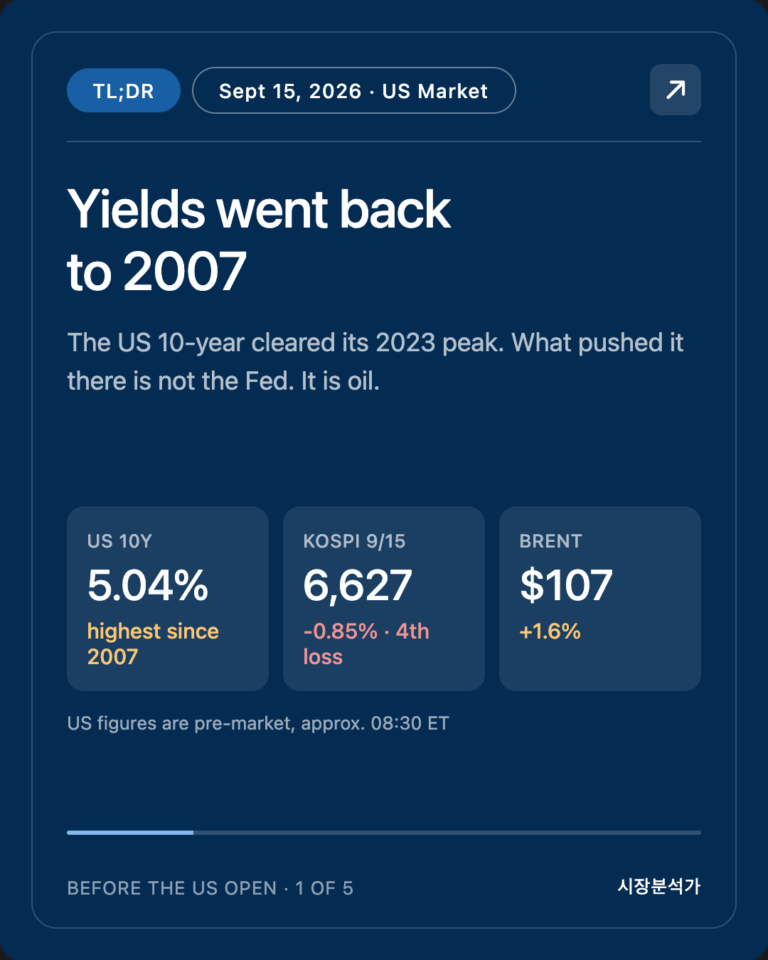
- Sept 15: the US 10-year touched 5.045%, its highest since July 2007.
- Same day: Korea's 3-year government bond hit 4.091% and the 10-year 4.600%, three- and four-year highs respectively. That was the day US rates printed directly onto Korean rates.
- Yesterday: the KOSPI rose, but foreigners sold for a sixth day and the won slid to 1,368.6.
If the dot plot says "one more," all three of those lines get worse by one notch. US rates rise, Korean rates follow, the won slides further.
If it says "we are done," Korea gets its first piece of material working the other way since this sell-off began, and the chips that domestic institutions bought yesterday acquire a reason for foreigners to look again.
One caveat. Consensus is not outcome. There are analysts in Korea arguing the Fed will not hike at all today. 92% is a high number, but it is not 100%.
3. The US Variable: A Quiet Pre-Market
[Fact] Futures (approx. 08:35 ET)
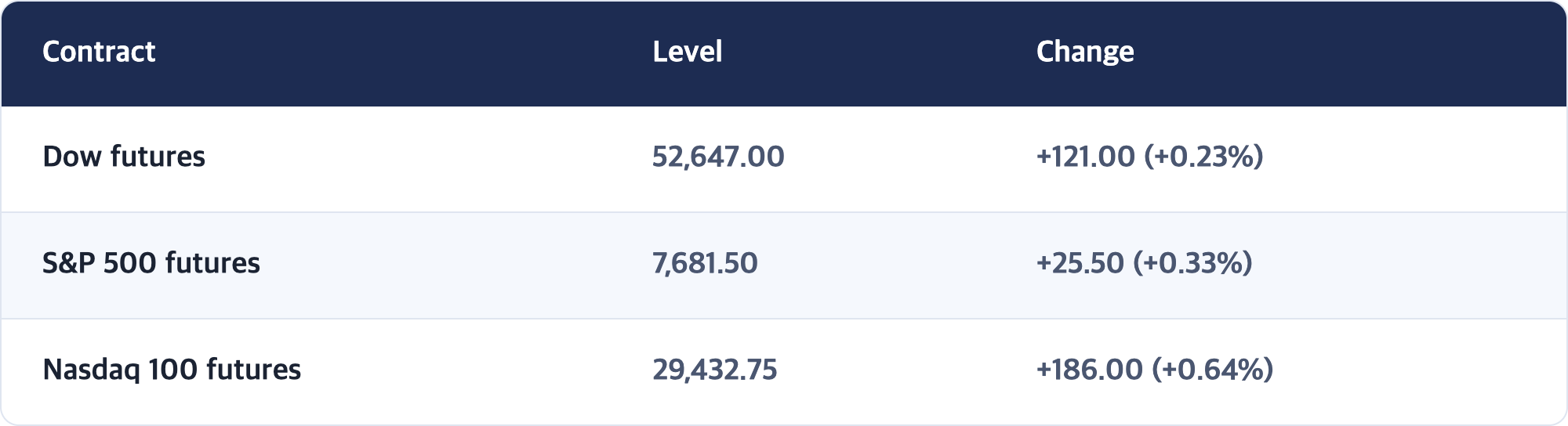
Tuesday's closes were Dow 52,093.11 (-0.63%), S&P 500 7,585.73 (-0.45%), Nasdaq 25,981.57 (-0.78%). This morning is giving part of that back, and tech is leading.
[Fact] Rates, commodities, currencies
🔴 [Interpretation] One number obtained today answered a week-old question
We finally have the confirmed September 15 close for the SOX (Philadelphia Semiconductor Index): 11,175.55, up 44.27 points (+0.40%).
That resolves two things at once.
- It retroactively scores the fourth checkpoint from the 9/15 AM report, whose line was "above 11,131.3." ✅ It cleared it. Yesterday's PM report had to leave that one unresolved.
- Seven consecutive sessions of failing to obtain a confirmed SOX close ends here.
And that 0.40% explains yesterday's Korean chip rally. On a night when the Nasdaq was the weakest of the three indices at -0.78%, semiconductors alone closed green. Nine hours later SK Hynix was up 4.08% in Seoul.
[Interpretation] The yen is weakening again
On September 8 this report flagged USD/JPY at 152.89 as a seven-month high for the yen and raised carry-trade unwind as a new variable. This morning it is 155.43. It has turned all the way back in roughly a week.
The Bank of Japan is expected to hike this Friday, and the yen is weakening anyway. The reason is simple: America is raising faster. If the gap between two countries' rates does not narrow, a hike by itself will not lift a currency.
That is worth noting in Korea too. A country that raises rates does not automatically get a stronger currency. It depends on how fast the other side is raising.
4. Asia and Europe (Sept 16)
[Fact] Asia close
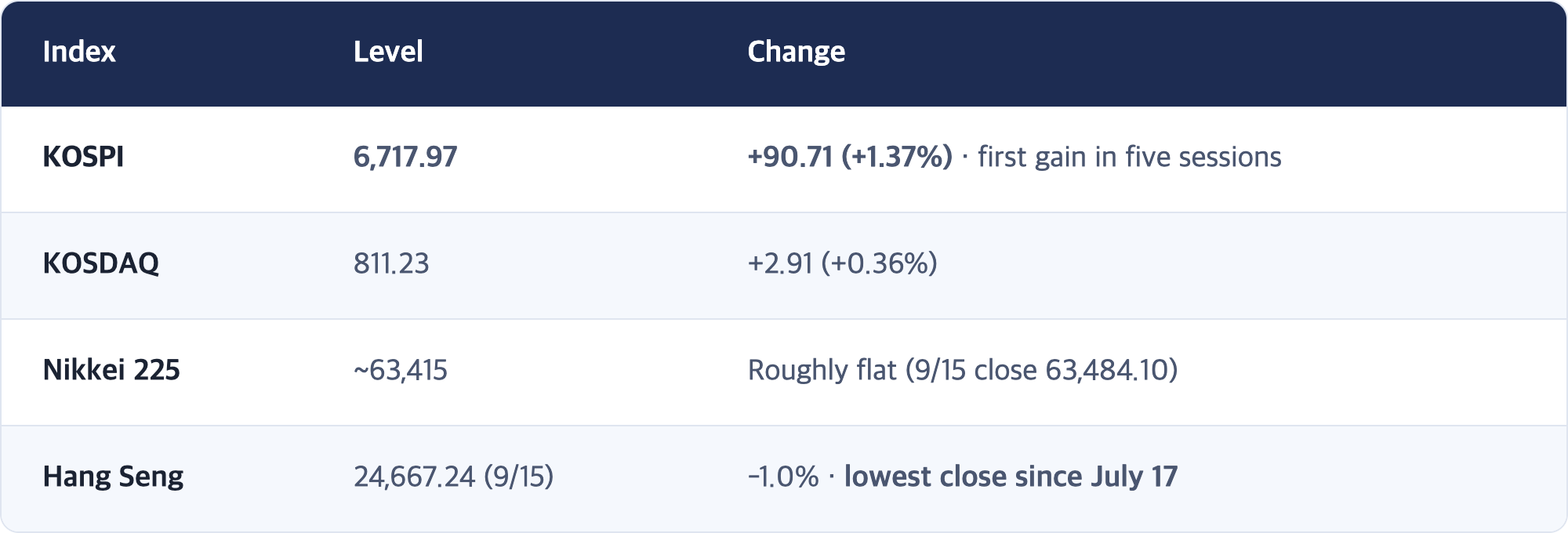
Asia was broadly in wait-and-see mode ahead of the Fed. Korea was the outlier, lifted by chips.
[Fact] Korea, September 16 in detail
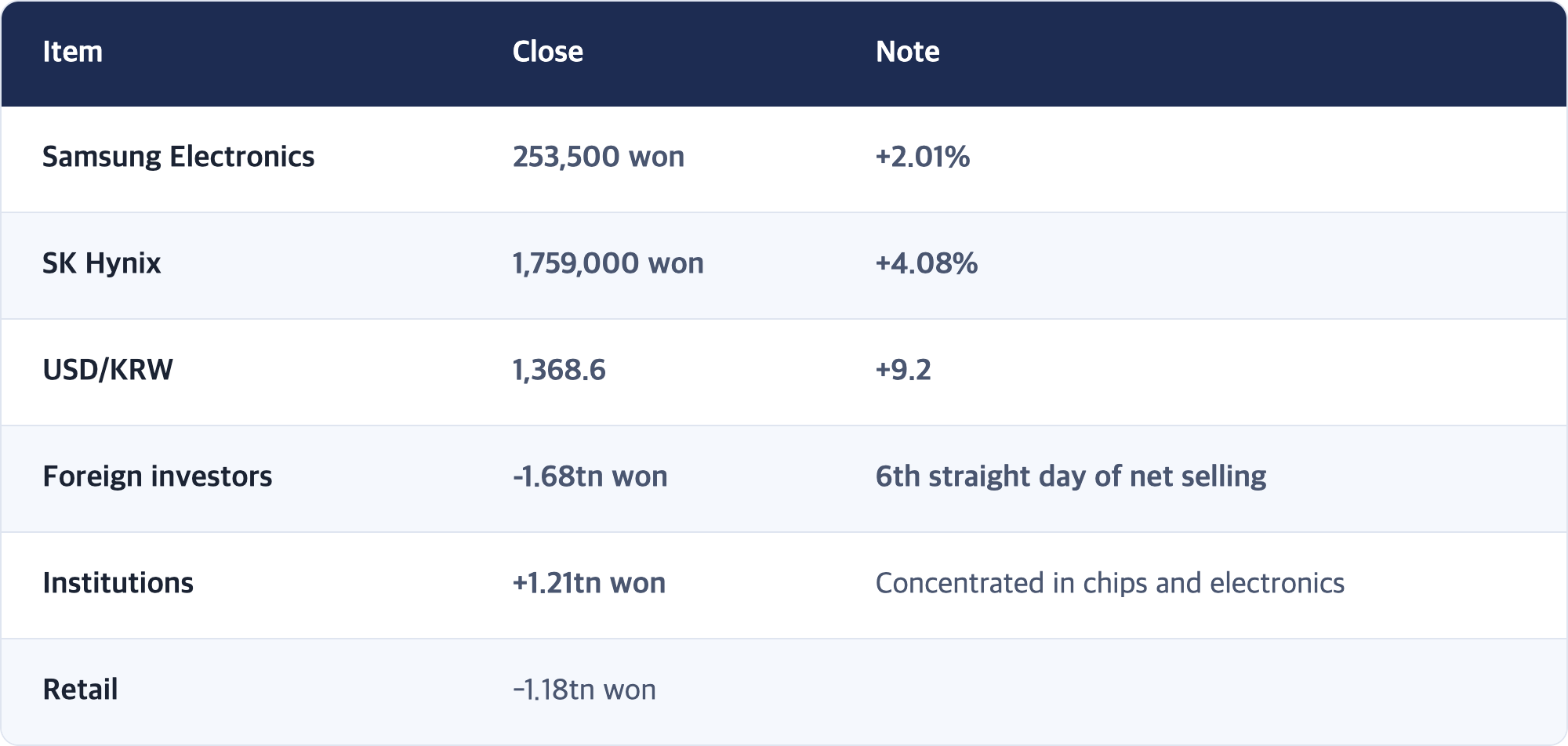
Intraday, decliners led advancers 574 to 288, roughly two to one. What lifted the index was not the market. It was two large chip names.
[Fact] Europe
Tuesday's closes were the STOXX 600 at 634 (-0.3%) and the Euro STOXX 50 at 6,236 (-0.4%). This morning the Euro STOXX 50 is near 6,258 (+0.31%).
Yesterday higher yields hit European banks, with UniCredit and Deutsche Bank both down more than 2%, while LVMH and Hermès fell close to 2.5% after Chinese retail sales missed expectations.
[Interpretation] One more line on Europe
High energy prices have European traders adding to bets on further ECB hikes this year. A hawkish Fed today would reinforce that.
Which is to say the world's major central banks are now moving in the same direction at the same time. In that kind of regime, what steers capital is not which currency is strong but whose rates are rising fastest.
5. Previewing Today's US Session (Sept 16 ET)
[Observation] The starting line
Dow 52,093.11, S&P 500 7,585.73, Nasdaq 25,981.57, with futures 0.23–0.64% higher. The 10-year sits near 5% and oil has fallen for the first time in two sessions.
[Interpretation] The shape of the day
Very little is likely to happen before 14:00 ET. Ahead of an event that is 92% priced, volume thins and direction locks up. The real start of today's session is not the opening bell. It is two o'clock.
After that, two paths.
If the dot plot says "one more": the 2-year jumps first, the 10-year sets above 5%, the dollar firms. Growth stocks take the worse of it, and Korea opens tomorrow with the won in the 1,370s.
If it says "we are done": yields fall and whatever was most beaten down bounces first. But if oil stays where it is, the relief is short. That is exactly what the last two sessions taught.
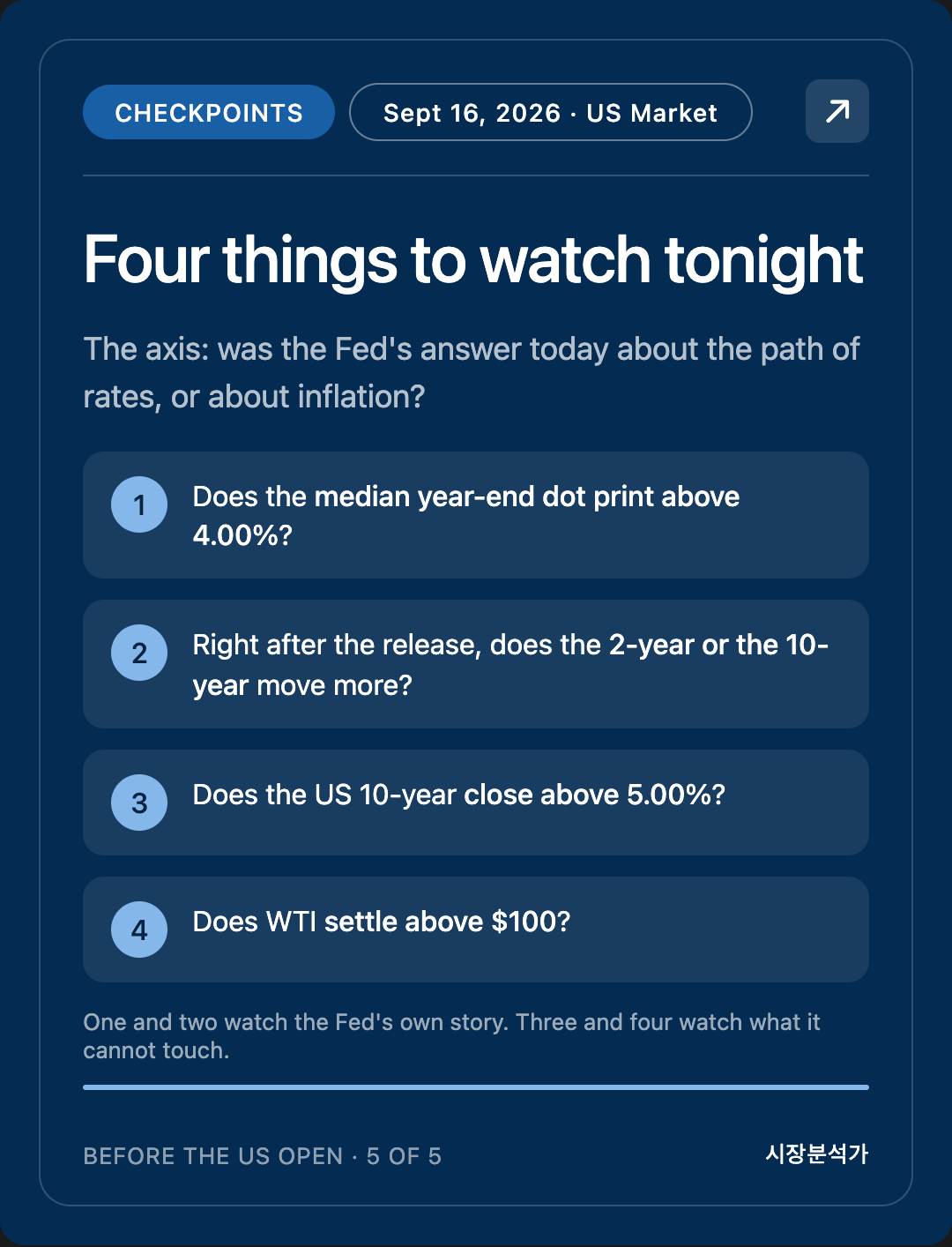
✅ Four Checkpoints for Today's US Session
- Does the median 2026 year-end dot print above 4.00%? At 4.125% or higher, another hike is live; at exactly 4.00%, today was the last one
- After the release, which moves more, the 2-year or the 10-year? More in the 2-year means the market re-priced the Fed's path; more in the 10- and 30-year means it re-priced inflation. The second case pulls Korean bond yields along again
- Does the US 10-year close above 5.00%? It closed at 5.01–5.02% yesterday. Staying above 5% after the decision keeps the answer of the last two sessions intact: this is not something the Fed can fix
- Does WTI settle above $100? It fell this morning for the first time in two sessions. This checks whether the variable the Fed cannot fix has started coming down on its own
Stating the axis. These four separate whether what the Fed answered today was about the path of rates or about inflation. One and two watch the Fed's own story; three and four watch what the Fed cannot touch. If one and two come out dovish while three and four get worse, the market is being run by oil, not by the Fed.
Yesterday's PM report recorded that we had picked the wrong axis three times (Sept 3, Sept 14, Sept 15). Since yesterday we have framed checkpoints as price against price rather than sector against sector, and the result was two clear calls, one unresolved and one clear miss. We keep that principle today.
6. Study Note: Why the Same 25bp Can Send Markets Opposite Ways
The Fed will almost certainly raise by 25bp tonight. And yet that identical 25bp can send stocks up or down. Here is why.
The concept
A rate announcement has two parts. ① How much they moved today, and ② what signal they gave about what comes next.
Part one is fully known in advance. That is what "92% is priced in" means. So the only thing left to move markets is part two.
Which gives us two terms:
- Hawkish hike: raising while saying "we may need to do more." → Yields up, dollar stronger, stocks down
- Dovish hike: raising while saying "that should be enough." → Yields down, dollar weaker, stocks up
Same 25bp, opposite outcomes. The split is not in the number. It is in the signal.
An analogy
A doctor gives you one injection. You knew about the injection when you booked the appointment.
What matters is what gets said while the needle goes in.
- "You may need another one of these" → you tense up (hawkish)
- "That's it, we'll just monitor from here" → you relax (dovish)
Same needle, and you walk out of the clinic feeling the opposite way. Tonight the market is that patient.
Where to look tonight, in order
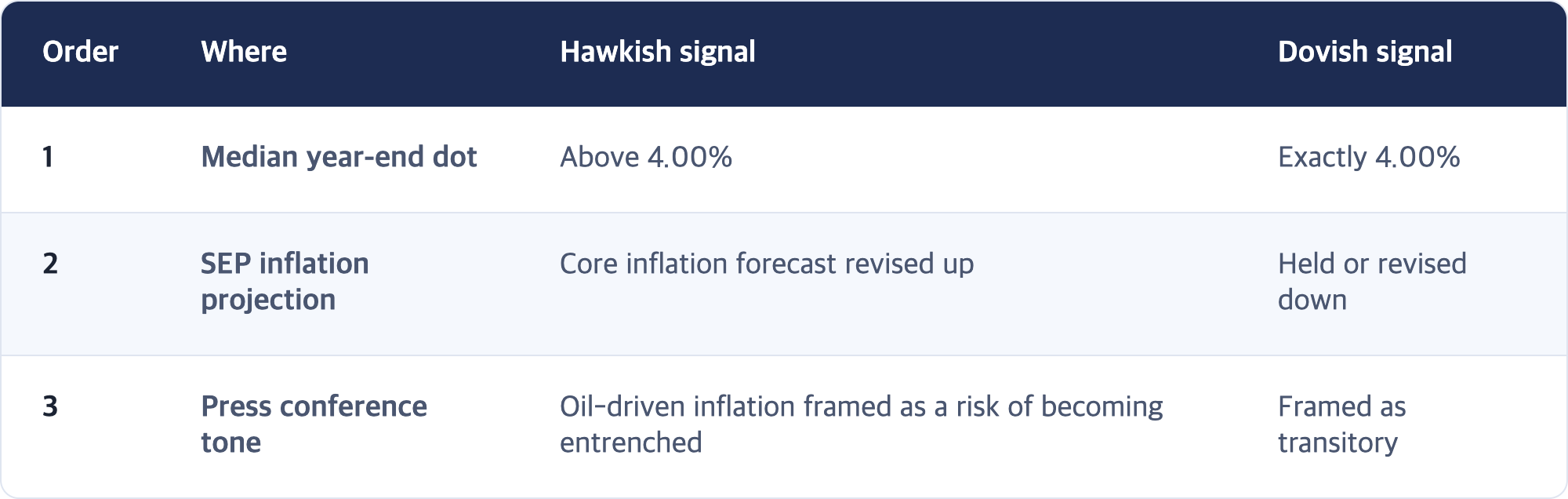
Number one is the fastest and the clearest because it arrives as a number the instant the statement drops. Number three comes thirty minutes later and people read it different ways.
Check your answer in the bond market
What it actually was gets confirmed by bonds, on the principle set out in yesterday's report.
- The 2-year moved a lot → the market re-priced the Fed's rate path
- The 10- and 30-year moved more → the market re-priced long-run inflation
The 2-year sits in the part of the curve the Fed controls directly. The 10- and 30-year are set by inflation and fiscal expectations.
One-line summary
Whether they hike is not news, it is already a price. The news is "what next," and it gets written in one cell of the dot plot and two segments of the curve.
7. Corrections and Open Items
✅ Two resolved
- Confirmed SOX close for 9/15 obtained: 11,175.55 (+44.27, +0.40%), from the official Nasdaq index page. Seven consecutive sessions without this number ends here. Accordingly, checkpoint 4 of the 9/15 AM report (line at 11,131.3) is scored retroactively as ✅ cleared. Yesterday's PM report had left it unresolved.
- CME as the single source for Fed probabilities, maintained. This edition again cites only CME FedWatch (92–94.5%).
Source discrepancies, three (adopted values stated)
![Item · Values seen · Adopted / WTI, 9/16 pre-market · $103.64 (-2.07%) [Yahoo] · $104.68 (-1.09%) [Trading Economics] · $103.6–104.7, roughly -1 to -2% / Gold, 9/16 · $4,283.48 (-0.20%) [Asian morning] · $4,381.10 (+1.11%) [pre-market] · $4,283–4,381 (unresolved since Aug 31) / Fed hike probability · 92% (CME via Yahoo) · 92.3% · 94.5% (CME FedWatch via Korean press) · 92–94.5% as a range](https://wecansurvive.ca/wp-content/uploads/2026/09/tbl_9-29.png)
Four open items
- 🔴 No confirmed September 16 close for Korean government bonds. This is why checkpoint 2 is unresolved. Investing.com shows the 3-year at 4.053% (-4.7bp), but we could not cross-check it against a Korean bond market wrap, and the 10-year was not obtained at all. Given that yesterday's report turned on "the US 5% printed onto Seoul's bond market," failing to see the follow-through is today's largest gap.
- 🔴 No confirmed close for the dollar index. Seventh consecutive session unresolved. We have only 99.6 as of 9/14, a two-week high
- No confirmed "other corporate" net purchase figure for 9/16. The +1.66tn won in the body is inferred by subtracting the three main categories
- No overnight NDF quote for the won. Third consecutive session
Sources
- Stock market today: Dow, S&P 500, Nasdaq rise ahead of crucial Fed interest rate decision — Yahoo Finance
- Yield on 10-year Treasury hovers above 5% as investors await Fed decision — CNBC
- Asia Market Quick Take — 16 September 2026 — Saxo
- Fed rate hike only half the story as Warsh faces dot-plot test — TheStreet
- What to Expect From Today's FOMC Meeting — Crypto Times
- September Fed Meeting: Live Updates and Commentary — Kiplinger
- SOX Index Overview — Nasdaq
- Korean market close, Sept 16 — Businesskorea
- KOSPI reclaims 6,710 as Samsung and SK Hynix rally — etoday
- Crude Oil — Trading Economics
- Brent Crude Oil — Trading Economics
- South Korea 3-Year Bond Yield — Investing.com
- Euro Area Stock Market Index — Trading Economics
This report interprets market flows and macro variables. It is not a buy or sell recommendation on any individual security.
📌 More market briefs
※ This post is market observation and organization intended to support your own judgment. It is not a recommendation to buy or sell any security. Figures are as of the time of writing and may differ between sources.
If this was useful, bookmark it or pass it along. It genuinely helps me write the next one.
I can survive. We can survive.