October 13, 2026 US Market Brief — Nasdaq and S&P 500 Before the Open
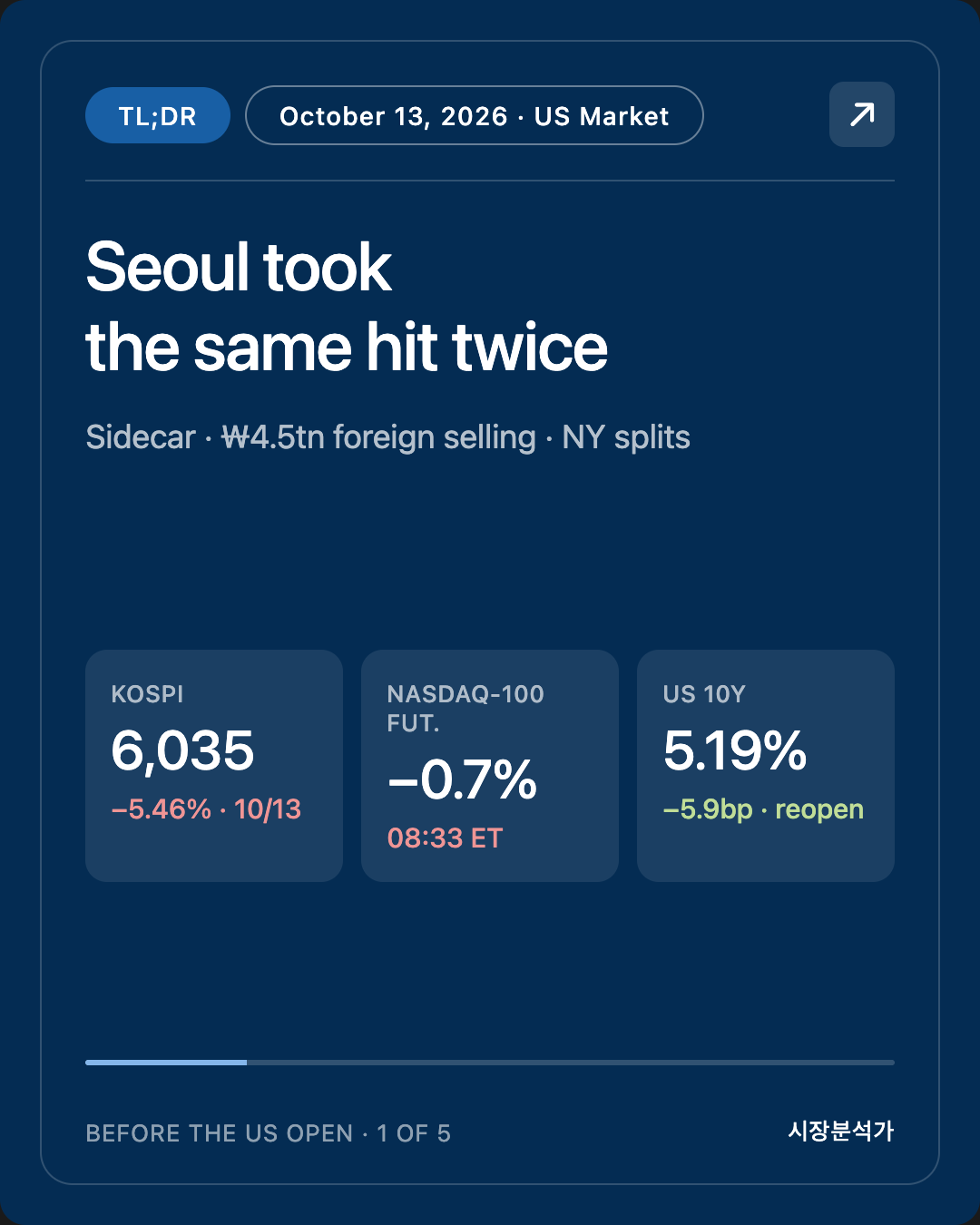
Seoul took the same hit twice. On Tuesday, October 13, the KOSPI closed at 6,035.35 (−5.46%) after touching 5,911.11 intraday. At 9:47 a.m. local time a sell-side "sidecar" kicked in, Korea's brake that pauses program trading when futures fall 5% (the first since August 19). SK Hynix fell 10.09%, Samsung Electronics 7.39%, and foreign investors sold a net ₩4.52 trillion (about $3.4 billion) in a single session. The index is now 13.8% below its October 2 close of 7,003.74, five sessions ago.
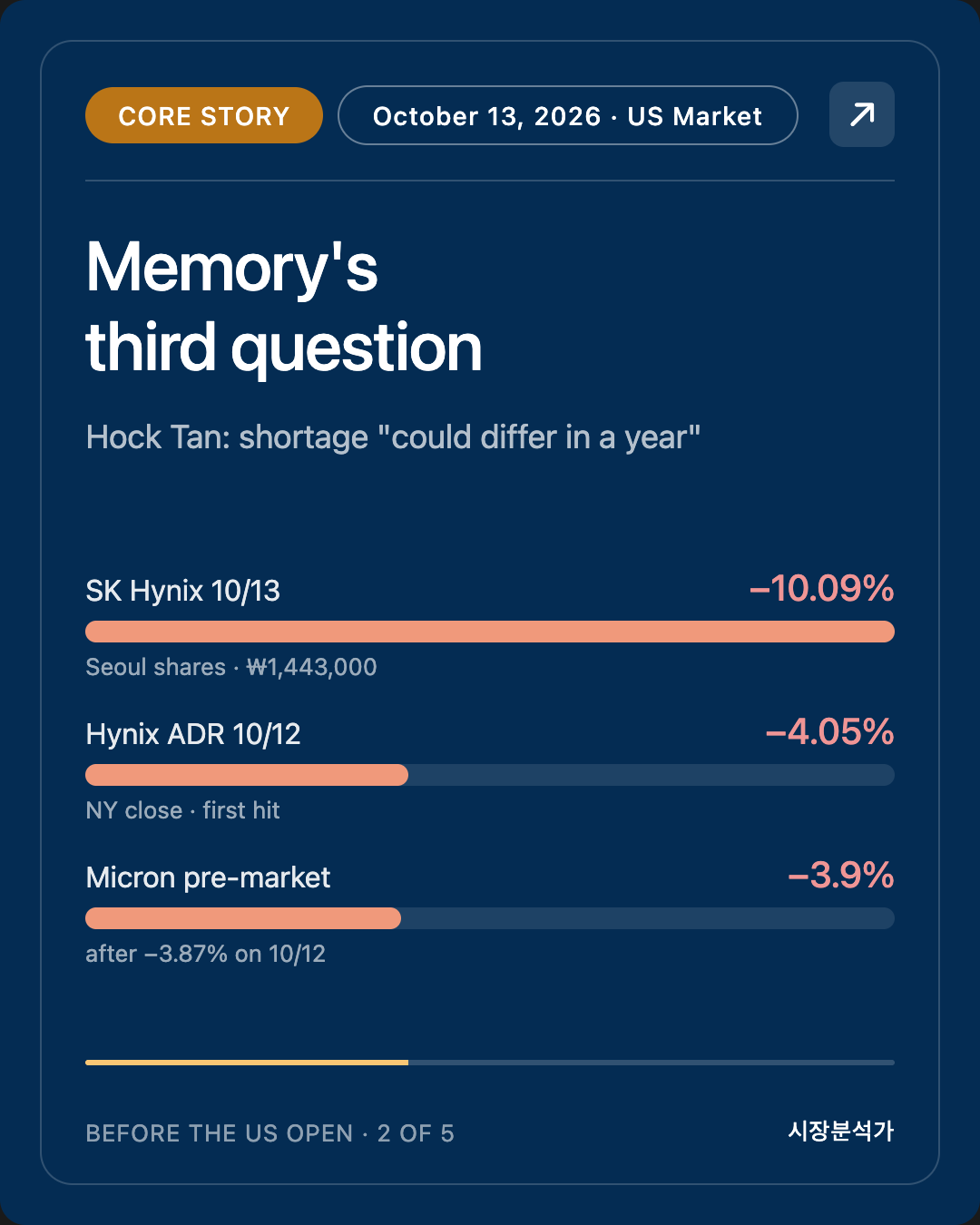
The new ingredient was a remark from Broadcom CEO Hock Tan in Singapore on October 12: today's memory shortage "could look different a year from now," and the biggest constraint may be capital (as summarized in press reports). After last week's OpenAI revenue reports (a demand question) and the weekend CXMT announcement (a supply question), this one asked something else: how long the shortage lasts.
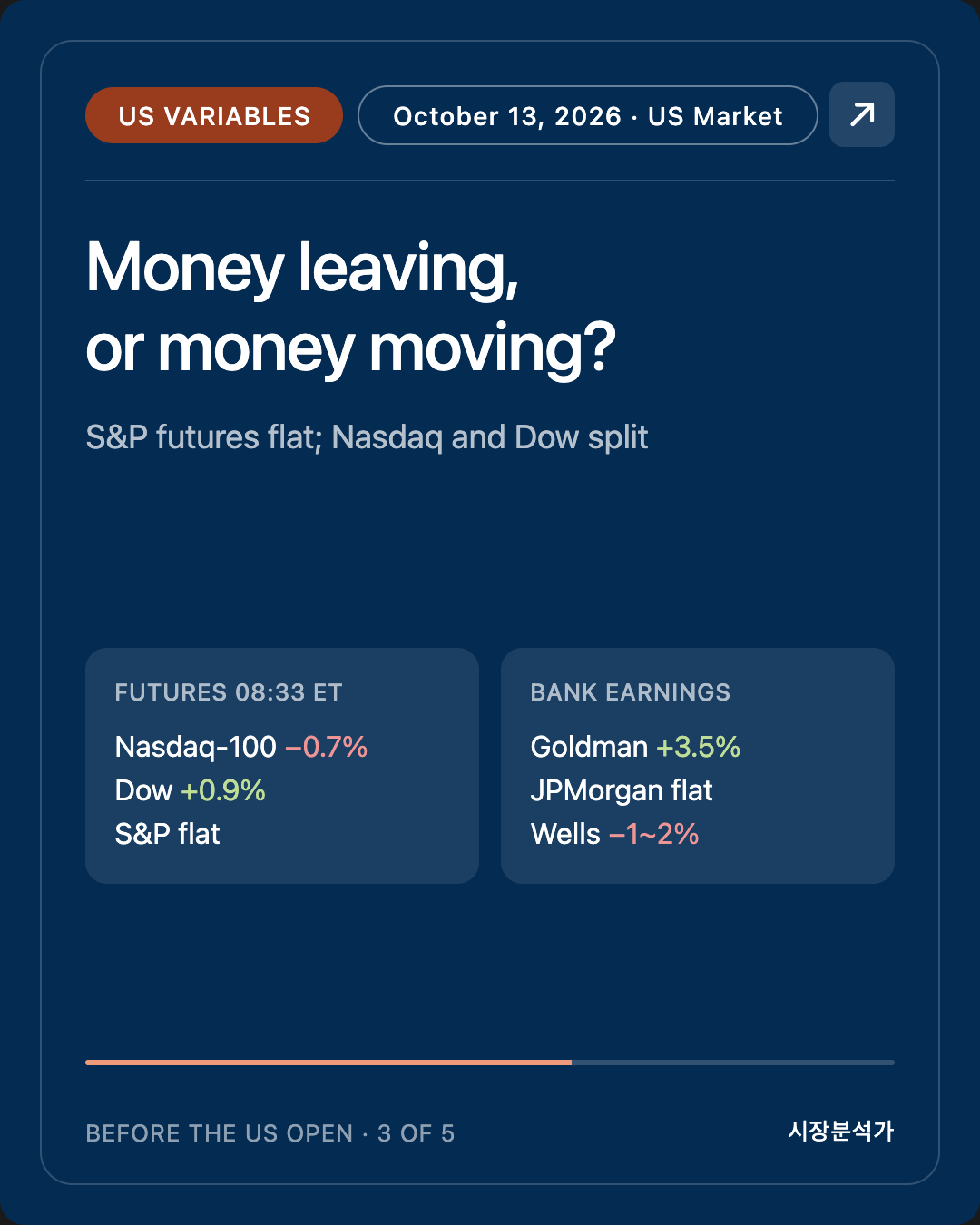
New York is splitting on top of that. As of 08:33 ET, Nasdaq-100 futures were down about 0.7%, Dow futures up about 0.9%, and S&P 500 futures flat. Micron was down about 3.9% pre-market after falling 3.87% yesterday, while Goldman Sachs was up around 3.5% on a big earnings beat. Today's US question: is money leaving memory rotating into banks and value, or leaving the market altogether?
This is Mr. Can. Here is the October 13, 2026 brief ahead of the US market open.
Written: 2026-10-13 05:55 PDT (Korea 10/13 21:55 KST)
Basis: Seoul and Tokyo closes on 10/13 + Europe intraday + US futures and pre-market (around 08:33 ET) + Treasury cash market just after reopening
🟡 Scheduled 05:30 PDT, started 05:43 PDT. US figures are pre-market and futures, not closing prices.
🟢 No missed editions. The previous brief was the 10/12 PM. The US bond market, shut Monday for Columbus Day, reopened today.
⚡ TL;DR
- ★ Seoul got hit twice. KOSPI 6,035.35 (−5.46%), sell sidecar at 09:47 KST, SK Hynix ₩1,443,000 (−10.09%), Samsung Electronics ₩232,000 (−7.39%), VKOSPI (Korea's VIX) 48.53 (+19.15%). Foreign net selling ₩4.52 trillion, the fourth straight session above ₩2 trillion.
- ★ Memory now faces three questions. Demand (OpenAI revenue), supply (CXMT's 4F² DRAM) and, this week, duration (Hock Tan's "could look different a year from now"). All three pillars behind record memory profits were questioned within one week.
- US pre-market is split in two. Nasdaq-100 futures −0.7% vs Dow futures +0.9%. Micron −3.9%, SanDisk about −6%, Nvidia about −1.3%. Banks: Goldman up ~3.5% (EPS $17.01 vs $13.02 expected); JPMorgan near flat after a rare miss, cushioned by a raised net interest income outlook.
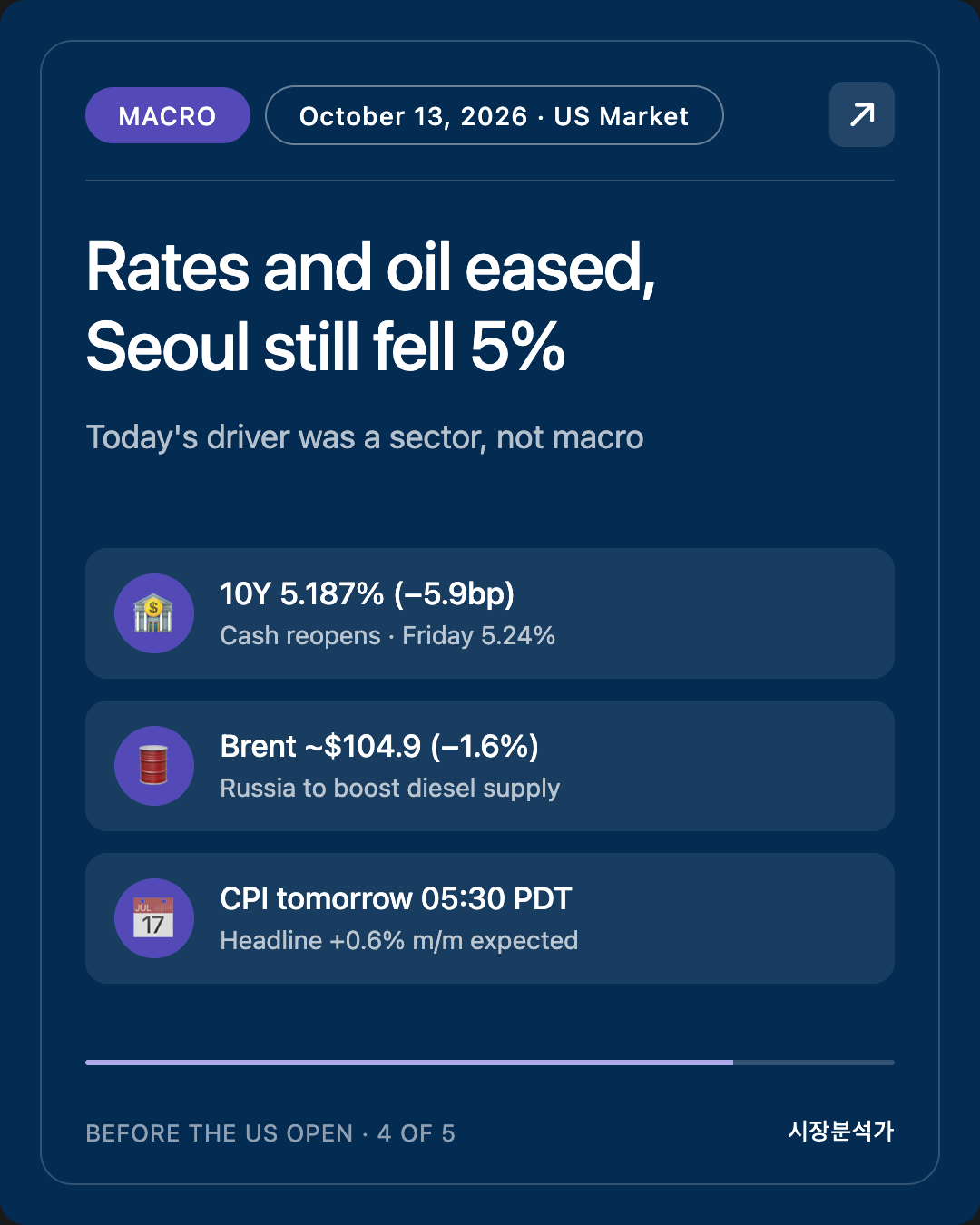
- Rates and oil actually eased. US 10-year 5.187% (−5.9bp), Brent about $104.9 (−1.6%), WTI about $92.5. Trump's comment that Russia will boost diesel supply weighed on crude.
- September CPI tomorrow at 05:30 PDT. Consensus is +0.6% m/m headline. Yields enter CPI lower than they left Friday.
1. Checkpoint scorecard
The four set by the 10/12 PM brief (due by Seoul's close on 10/13)
The question was: "After New York confirmed it, does Seoul take the same hit a second time?"
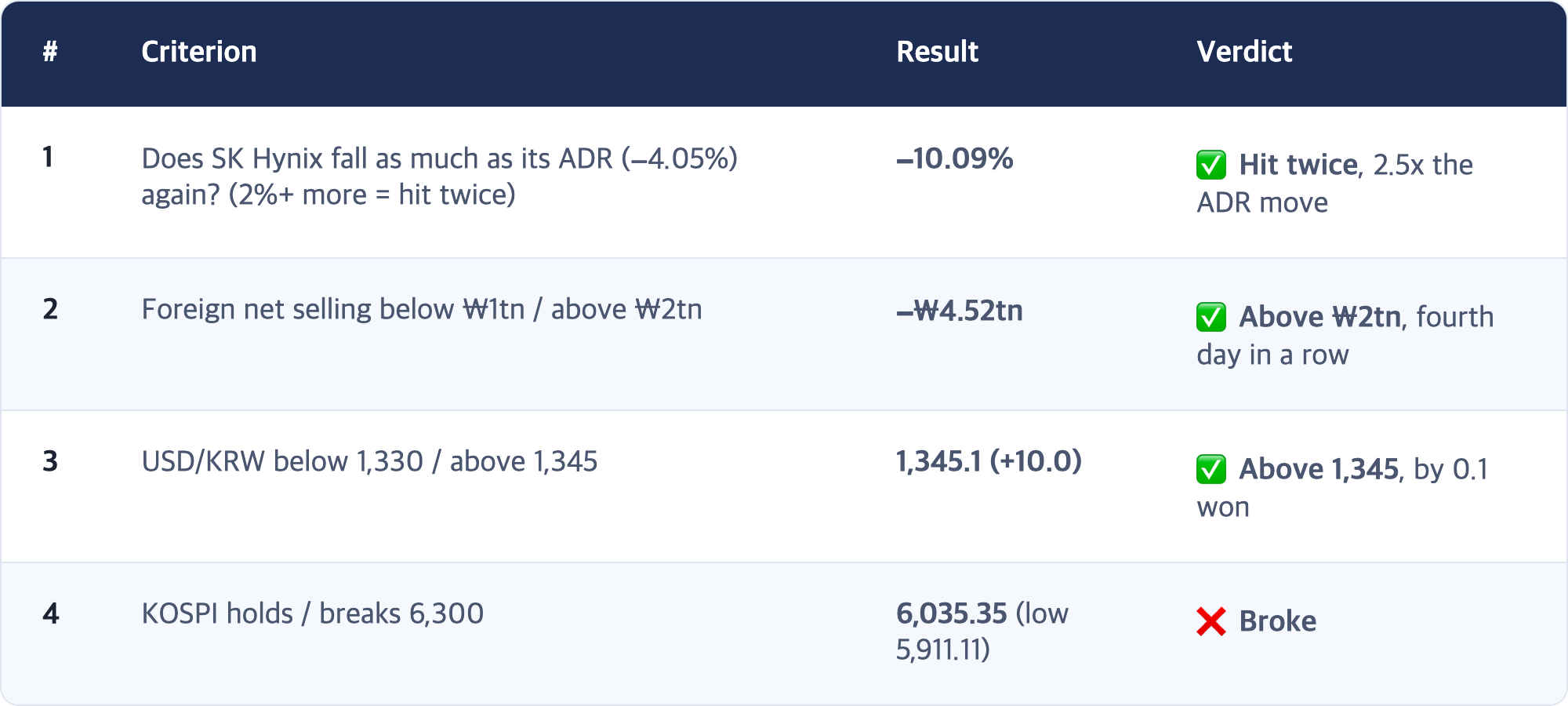
★ [Interpretation] All four went the wrong way, and the size of #1 explains why
The 10/12 PM brief left room for a "third path": if Hynix held flat but foreigners still sold over ₩2tn, the story would be foreign investors cutting Korea exposure, not chips. Instead, both happened at once. Chip worries and foreign flows did not diverge; they stacked.
Size matters. The ADR fell 4% in New York; the Seoul shares fell 10%. That means Seoul priced in not just New York's close but an overnight headline (Hock Tan) plus the mechanical selling a sidecar day brings. Program trading was a net −₩2.04 trillion.
#3 is the interesting one. On 10/12, the won strengthened even as foreigners sold (1,335.0). Today the won weakened too. That divergence closed in one day. With the dollar index lower, a weaker won suggests the currency was tracking money leaving Korean equities, not the dollar (observation).
2. Today's core story: a third question, "how long does the shortage last?"
[Fact] Seoul close, Tuesday 10/13
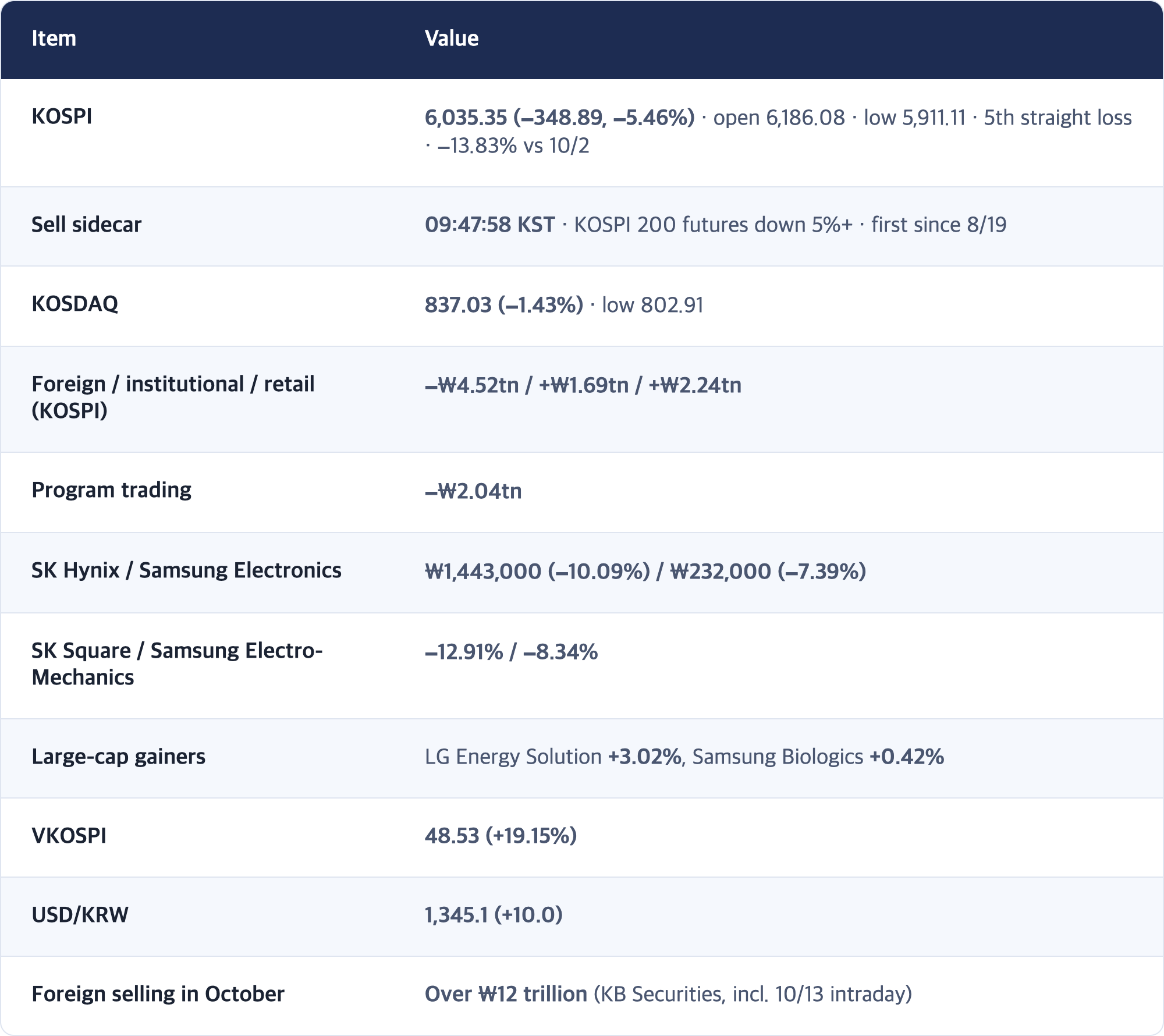
[Fact] Broadcom CEO Hock Tan (Singapore, 10/12)
- Said in substance that today's memory shortage could look different a year from now, and that the biggest constraint may be capital (Korean press summary).
- Reuters reported he likened some of the money flowing into the sector to "casino gambling."
- 🟡 We could not obtain a full transcript. The memory wording comes from secondary reports.
★ [Interpretation] Memory got the same question from three directions this week
Memory profits are price × volume, and today's record profits come from price. Each of this week's three headlines asks how long that price holds.
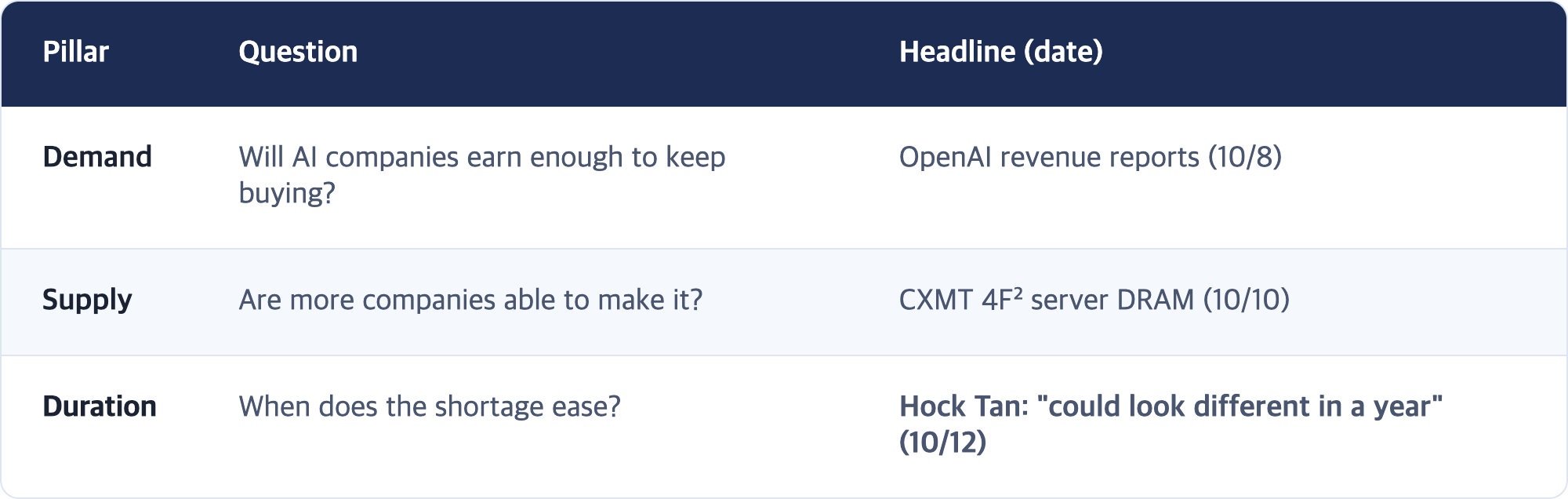
The third weighs more because of who said it. Broadcom designs AI chips and buys memory. When a major buyer says conditions may change in a year, markets tend to hear bargaining power shifting toward buyers.
[Observation] The counter-evidence is still alive. On 9/30 Micron said 2027 and 2028 supply-demand would be "much tighter" than 2026. A Samsung Securities analyst called today's drop "flows and sentiment rather than damaged earnings." Today's selloff reflects more questions, not new numbers. The numbers have not changed yet.
3. US variables: Asia split by chip exposure, and yields came back lower
[Fact] Asia and Europe, 10/13 (closes between 23:30 PDT 10/12 and 01:00 PDT 10/13)
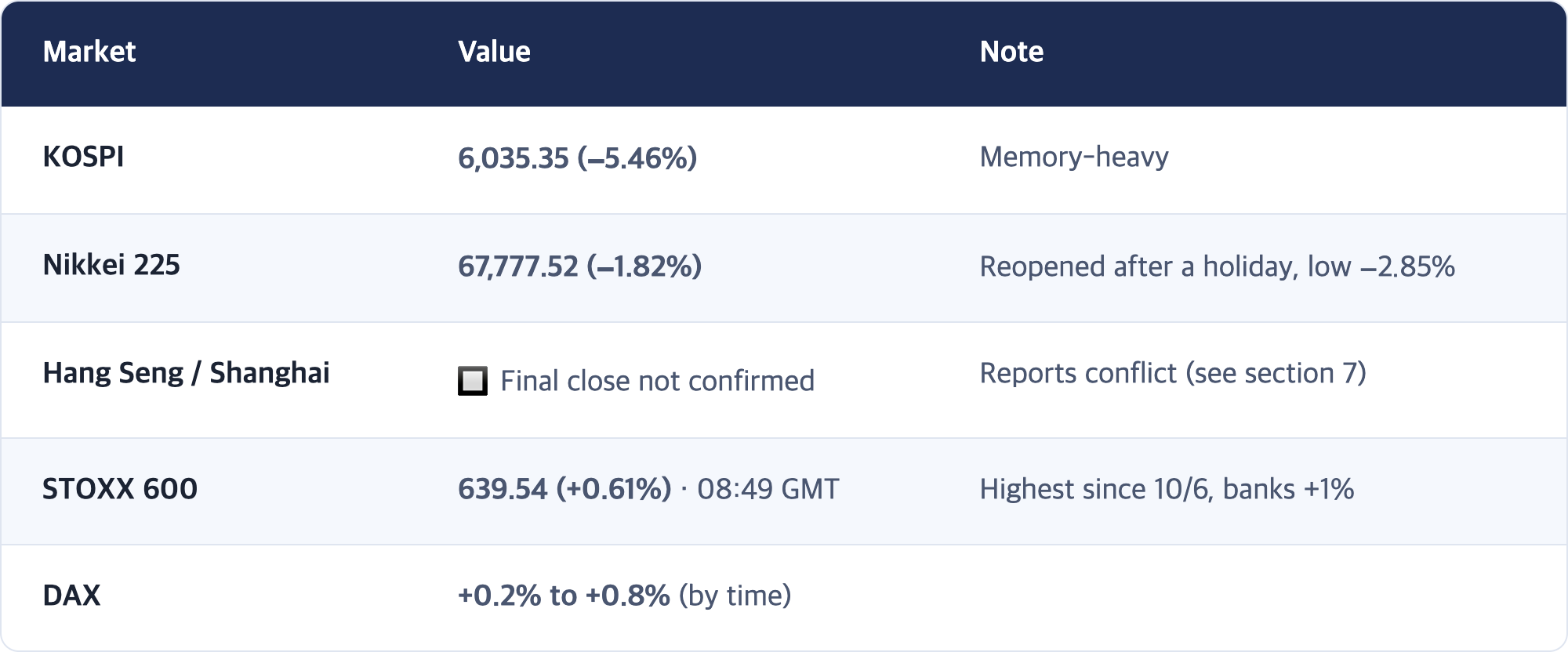
[Observation] The more chips in the index, the bigger the drop
Seoul (−5.46%) > Tokyo (−1.82%) > Europe (+0.6%). Europe, with little AI-chip weight, actually rose. Today's Asian slide was one sector's problem, not broad risk-off, and each index fell roughly in proportion to its exposure.
[Fact] US futures and pre-market (around 08:33 ET)
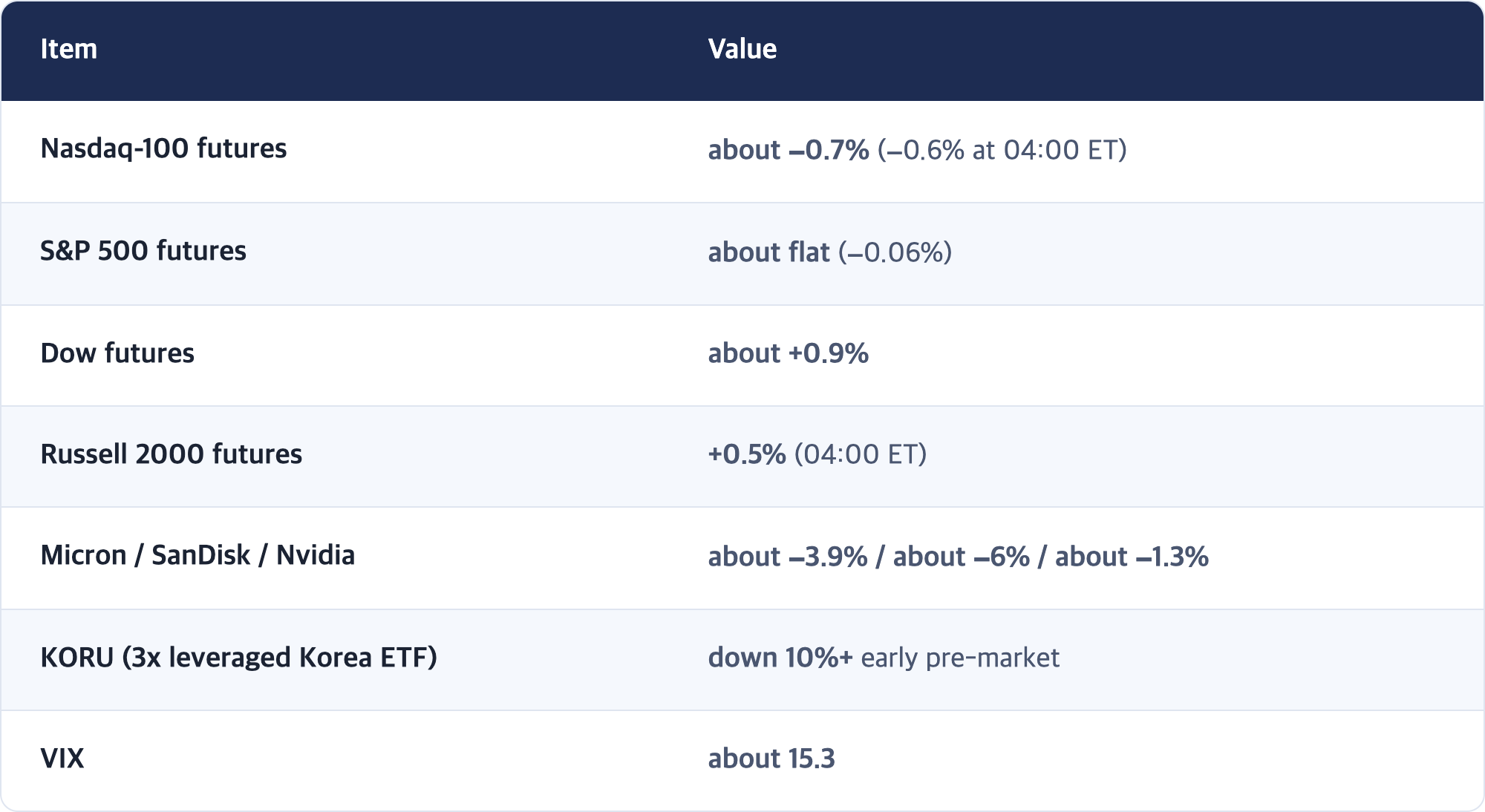
[Fact] Bank earnings (before the open)
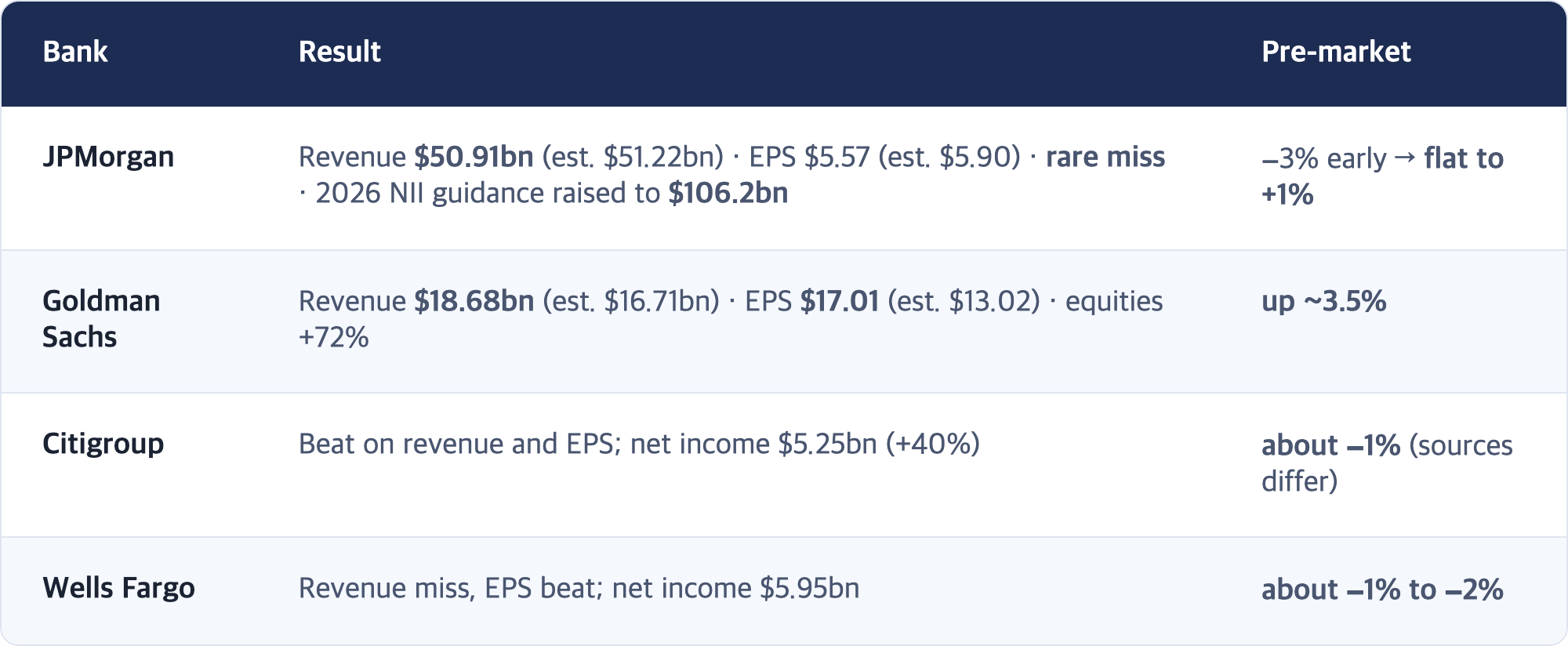
★ [Interpretation] Pre-market looks like money moving, not money leaving
Flat S&P futures with Nasdaq −0.7% and Dow +0.9% describe a rotation out of tech, not an exit from stocks. VIX sits near 15, against 48 for Korea's VKOSPI.
But pre-market is only an interim read. On 10/9, a +1.9% pre-market chip bounce vanished by the close. Today's verdict comes at the close.
4. Macro backdrop: rates and oil eased going into CPI
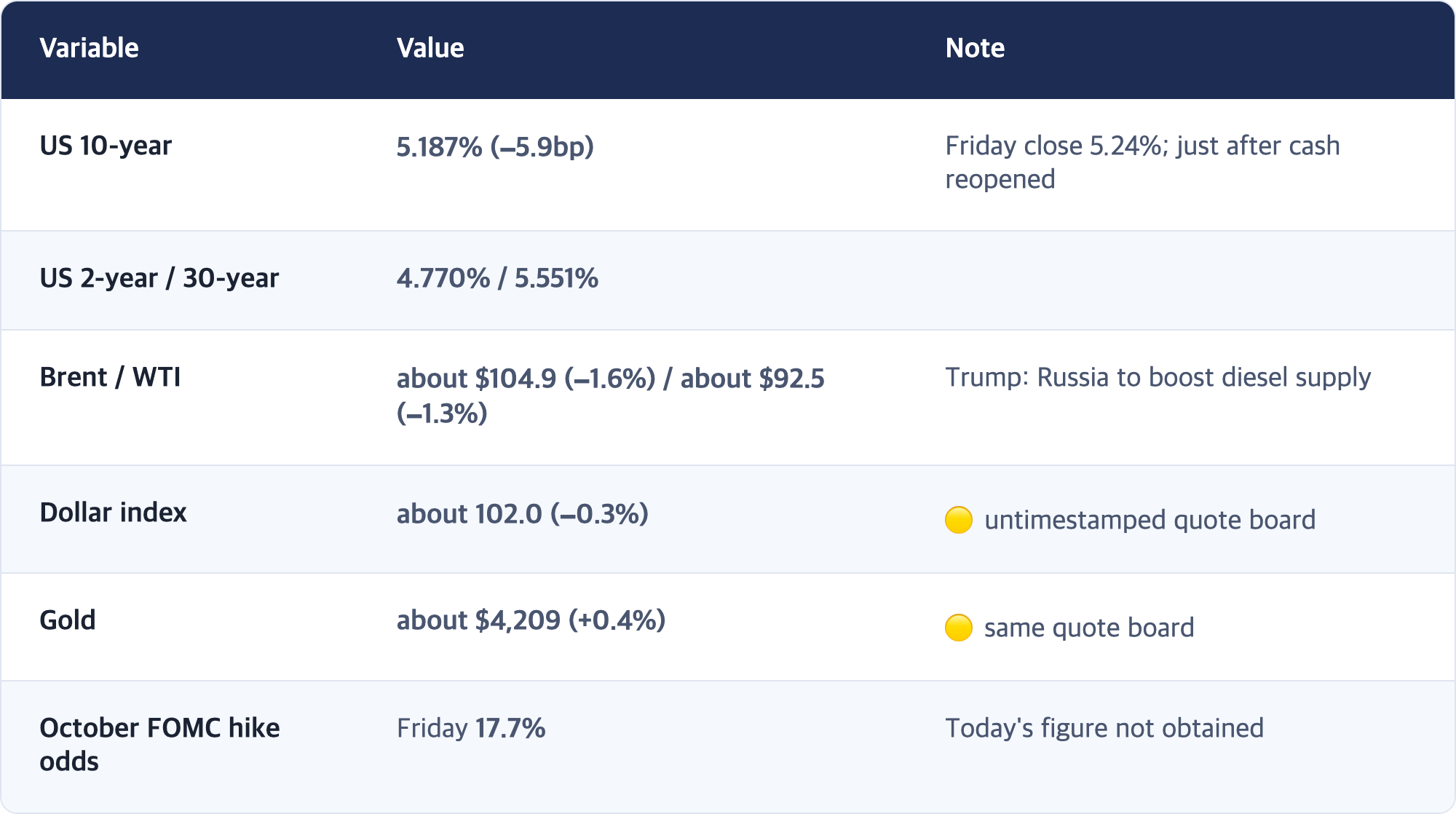
★ [Interpretation] Seoul's shock did not come from rates
In September, Seoul wobbled whenever the 10-year crossed 5%. Today yields fell nearly 6bp and oil dropped 1.6%, yet Seoul fell more than 5%. The driver was a sector (memory), not macro. That matters after CPI: even a benign print may move Seoul less if the memory questions stay open (interpretation/scenario).
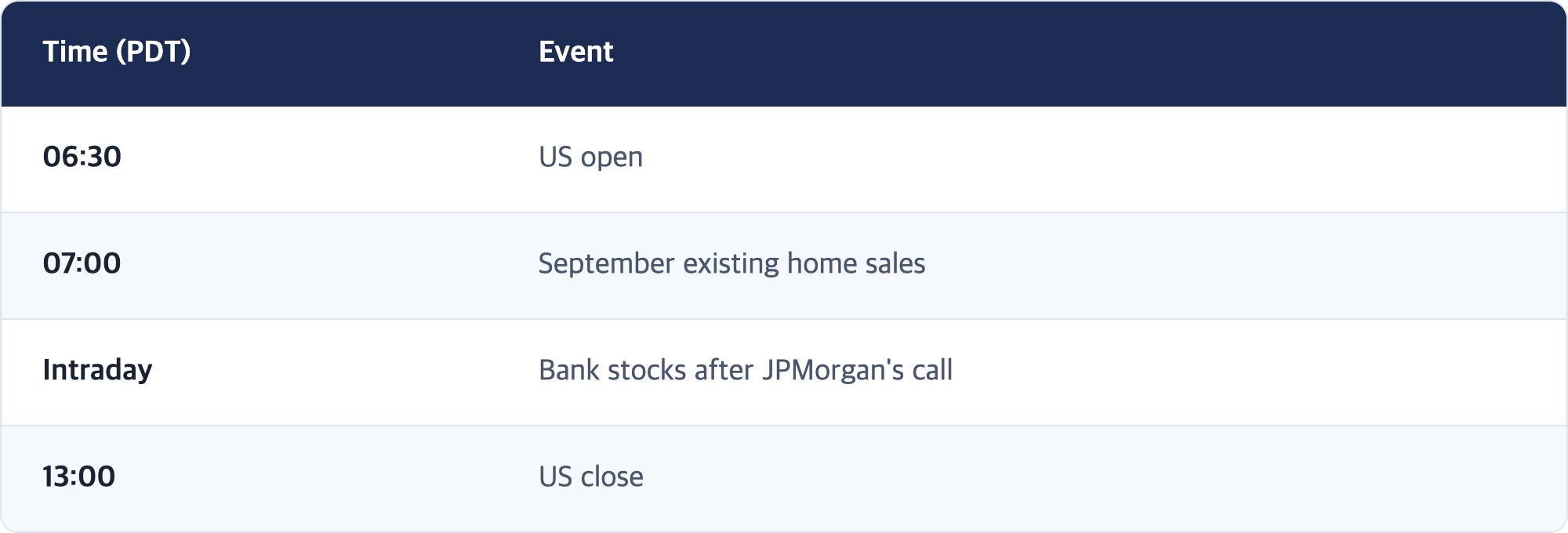
5. Today's US session (Tue 10/13, PDT)
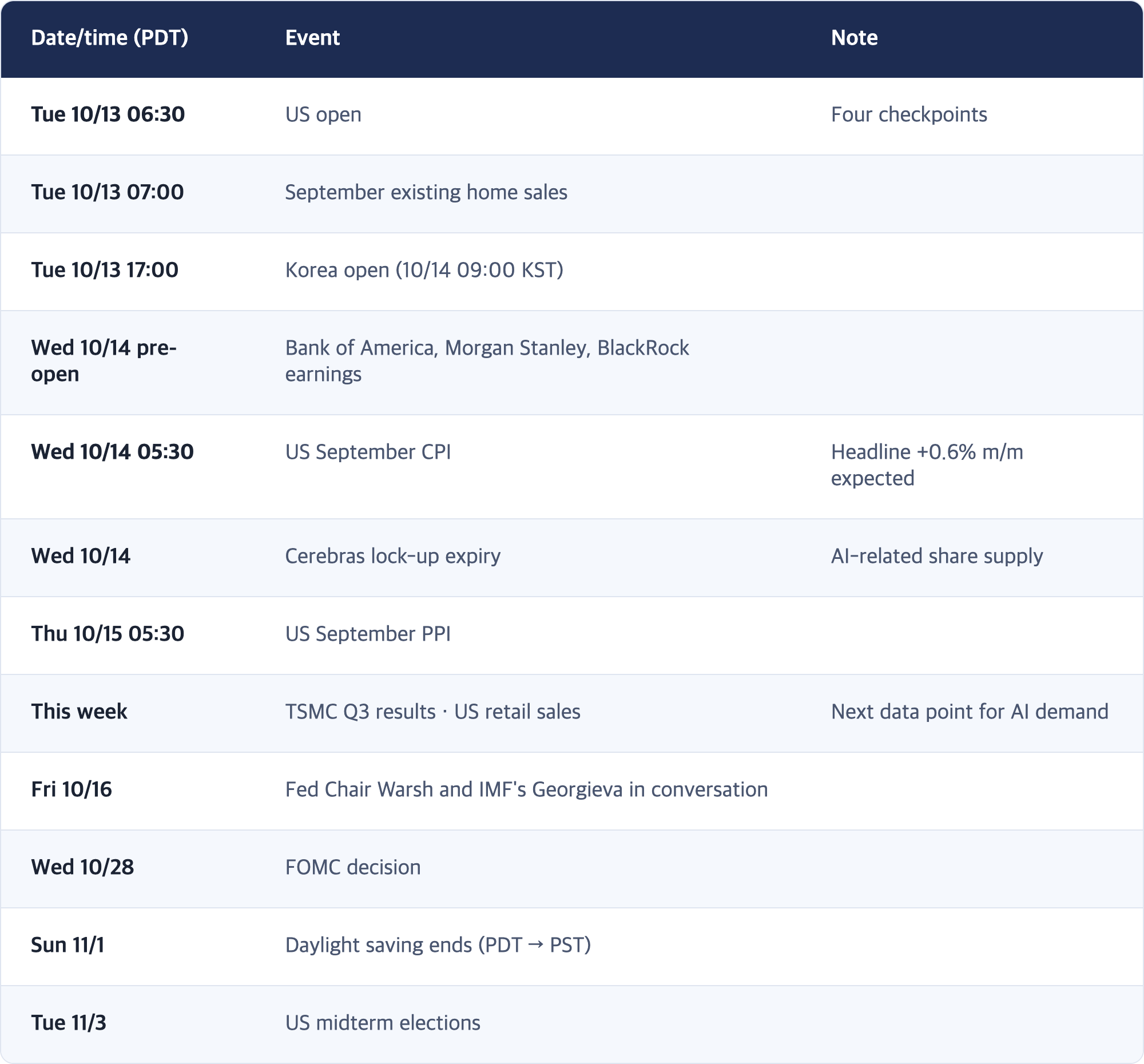
[Observation] Schedule (PDT)
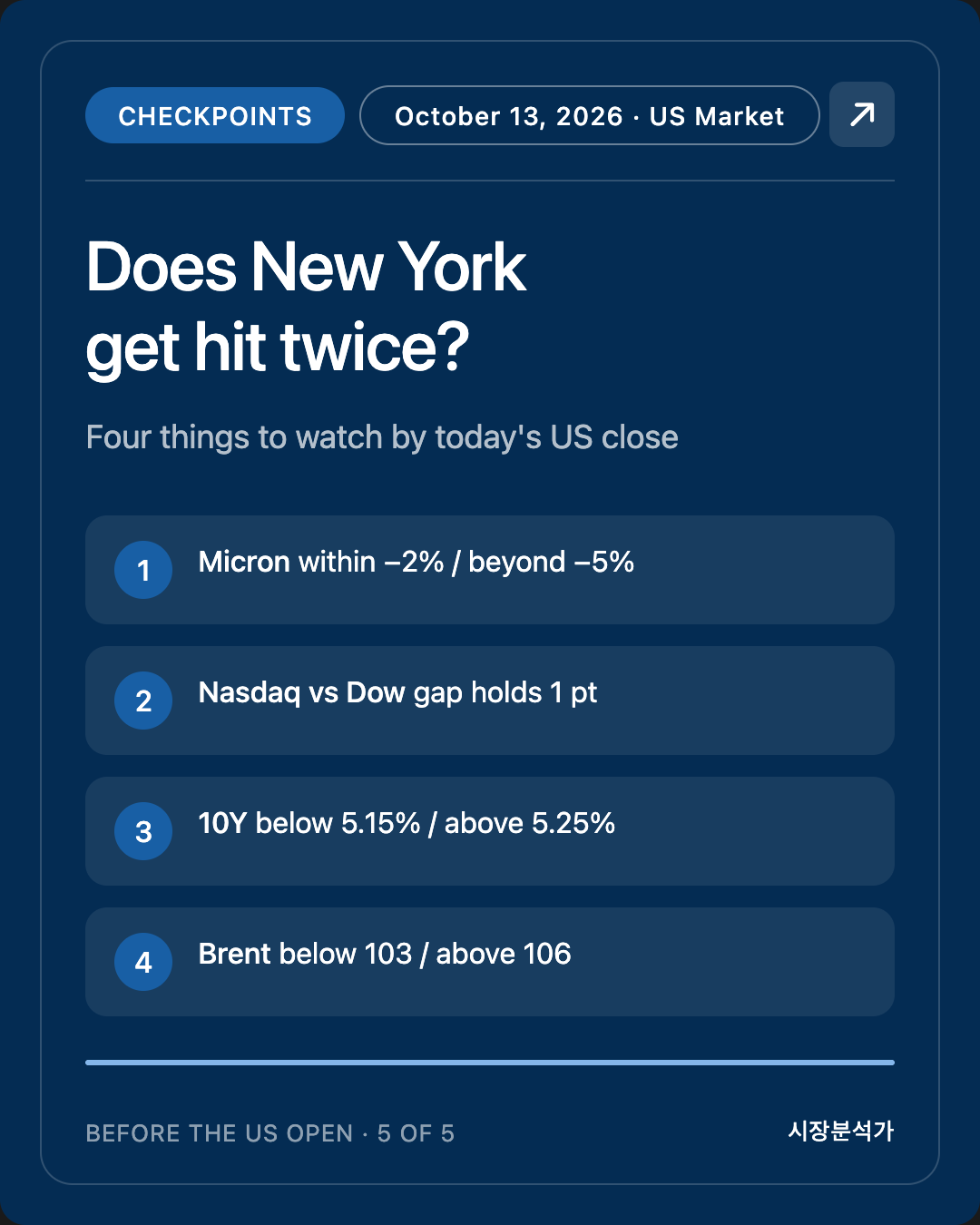
✅ Four checkpoints (by today's US close)
The question: "Is money leaving memory rotating within the US, or leaving?"
- Micron closes within −2% / beyond −5%. Within means New York already priced it yesterday; beyond means New York takes a second hit like Seoul. (Most important)
- Nasdaq–Dow gap stays at 1 point or more. About 1.6 points pre-market. Holding = rotation; both falling = exit.
- 10-year below 5.15% / above 5.25%. Where yields stand the day before CPI.
- Brent settles below $103 / above $106. Whether the Russian diesel comment lasts more than a day.
[Interpretation] If #1 lands beyond −5% while #2 holds, it is a "memory falls alone" day. Then tomorrow's question for Seoul shifts from flows to how memory stocks are valued.
6. Study note: what is a "sidecar," and why does it trigger?
Concept
Korea's sidecar pauses program trading for five minutes when futures move sharply. It triggers when KOSPI 200 futures move 5% or more from the prior close for one minute (6% for KOSDAQ), and only once a day. It is milder than a circuit breaker, which halts all trading when the index falls 8%, 15% or 20%.
Analogy
After a big crash on a highway, police briefly pull the trucks (program trading) onto the shoulder while cars (ordinary investors) keep moving. Trucks run on fixed rules, so stopping them for a moment can prevent a pile-up. Closing the whole road is the circuit breaker.
Real example (10/13)
- 09:47:58: KOSPI 200 futures down 5%+ → sell sidecar triggered.
- Yet program trading still ended at −₩2.04 trillion for the day. Five minutes did not change the direction.
- The index recovered part of the way, from a low of 5,911.11 to a close of 6,035.35.
One-line summary
A sidecar slows the market down; it does not turn it around. Read it as a thermometer of how urgent the selling was.
7. Corrections and open items
Corrections
- None. Checkpoint #3 from the 10/12 PM brief (USD/KRW above 1,345) passed by just 0.1 won, noted for precision.
Source differences (adopted value in bold)
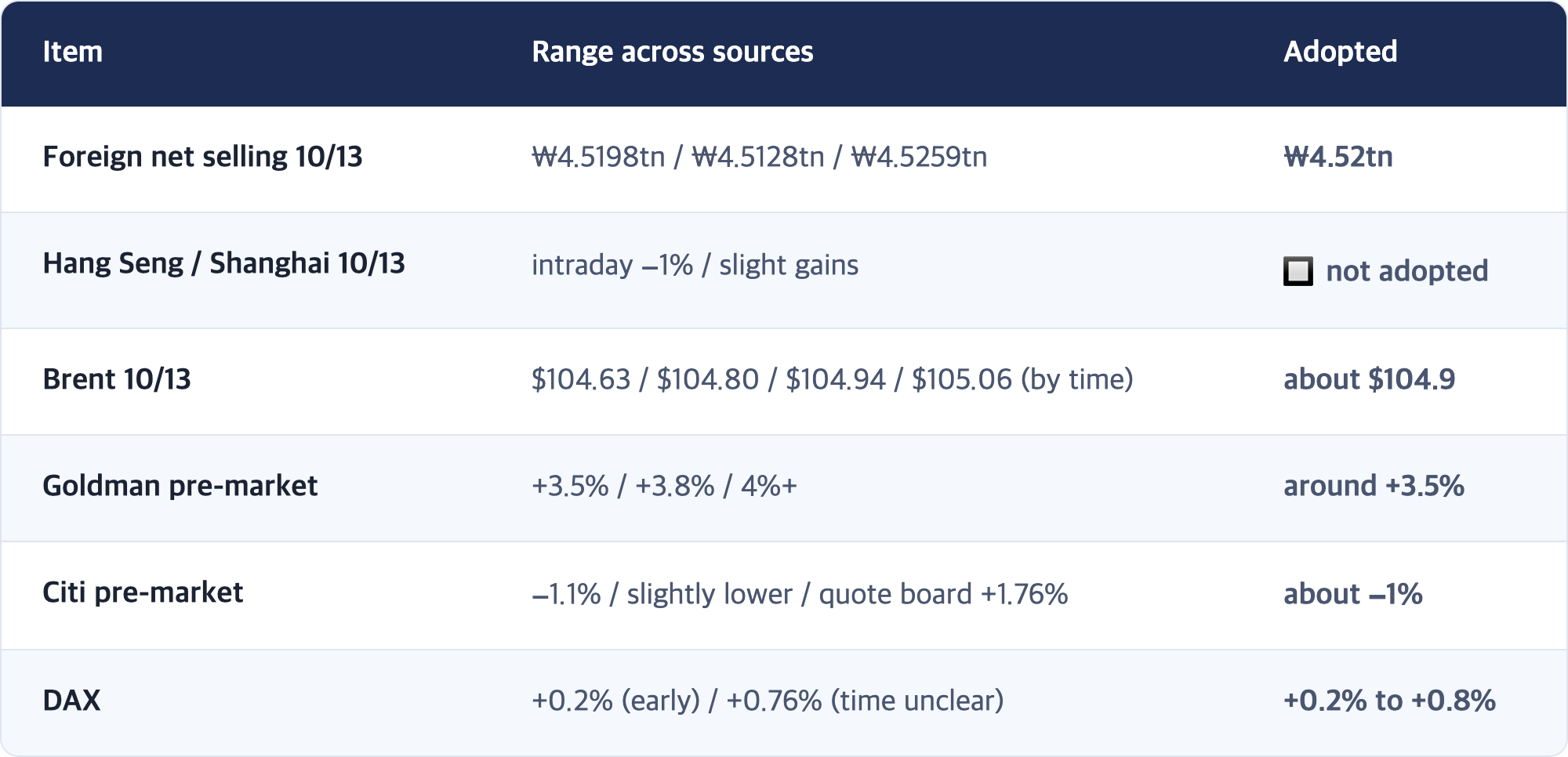
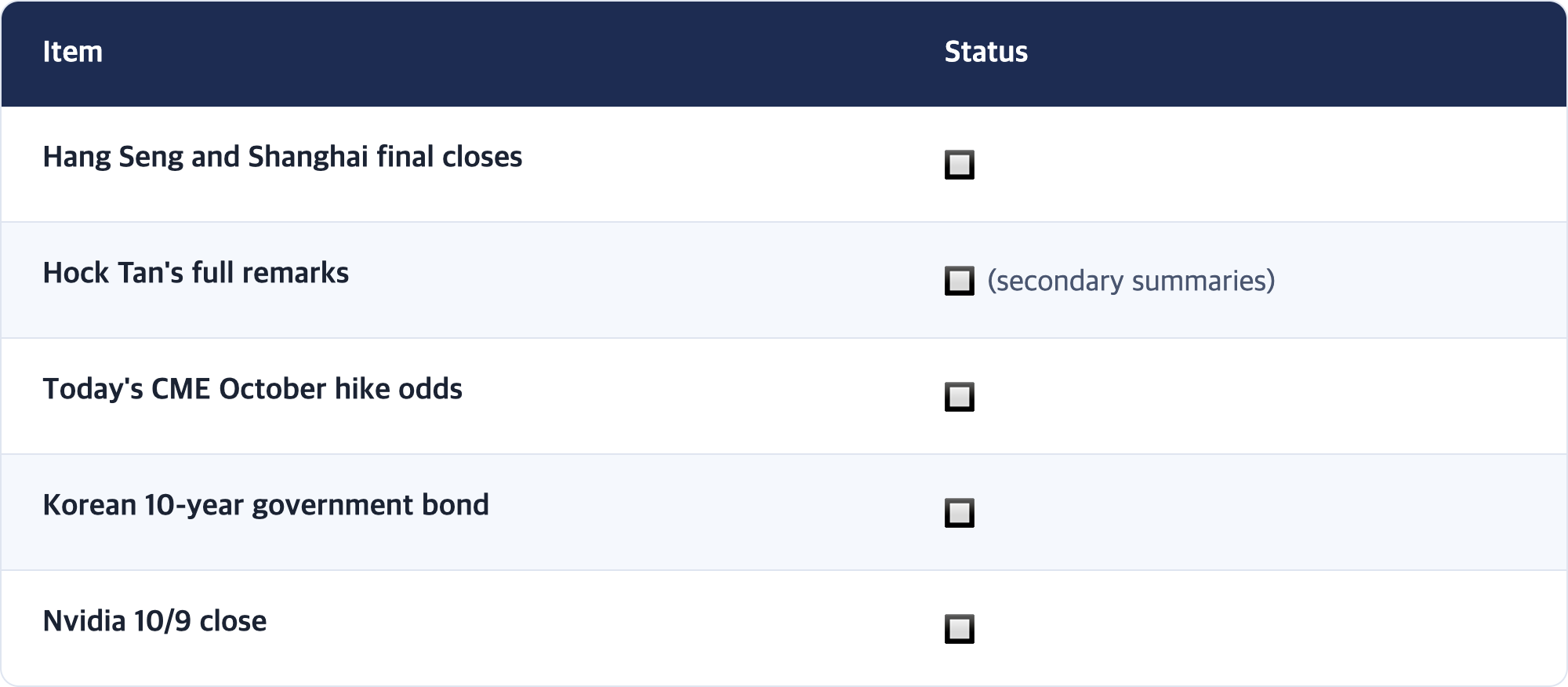
🔲 Unconfirmed
8. Event calendar (PDT)
Sources
- KOSPI "Black Tuesday," down 5.4%, foreigners dump ₩4.5tn | Digital Daily
- KOSPI closes at 6,035.35, down 5.46% | Seoul Shinmun
- KOSPI closes down 5.46% | Special Times
- Samsung −7%, Hynix −10% | The Public
- Foreigners sold ₩12tn in October | EBN via Investing.com Korea
- Won closes at 1,345.1 | Newsis
- Nikkei closes down 1.82% | Special Times
- S&P futures turn negative following bank earnings slate | Investing.com
- Nasdaq Futures Sink, Dow Rises Premarket As AI Chip Stocks Wobble | Stocktwits via TradingView
- JPMorgan's earnings miss … Morning Squawk | CNBC
- Bank earnings live updates | CNBC
- Goldman Sachs Beats Q3 Estimates, Shares Jump 3.5% | AskTraders
- Wells Fargo profit rises on robust loan growth | MarketScreener
- Micron and Sandisk Stocks Are Falling Premarket | TipRanks
- Micron Says Memory Supply Will Be Much Tighter in 2028 | Motley Fool
- U.S. Treasury yields fall as energy prices pull back | CNBC
- Oil prices fall as traders assess Russian diesel supply prospects | CNBC
- Oil Prices Today: Brent Falls to $104.80 | Arbiterz
- European stocks higher ahead of the close | MarketScreener
- European Stocks Advance Despite Global Technology Sell-Off | ADVFN
Market Analyst · We do not recommend buying or selling individual securities. This brief offers macro context and interpretation.
📌 More market briefs
※ This post is market observation and organization intended to support your own judgment. It is not a recommendation to buy or sell any security. Figures are as of the time of writing and may differ between sources.
If this was useful, bookmark it or pass it along. It genuinely helps me write the next one.
I can survive. We can survive.