September 3, 2026 US Market Brief — Nasdaq and S&P 500 Before the Open
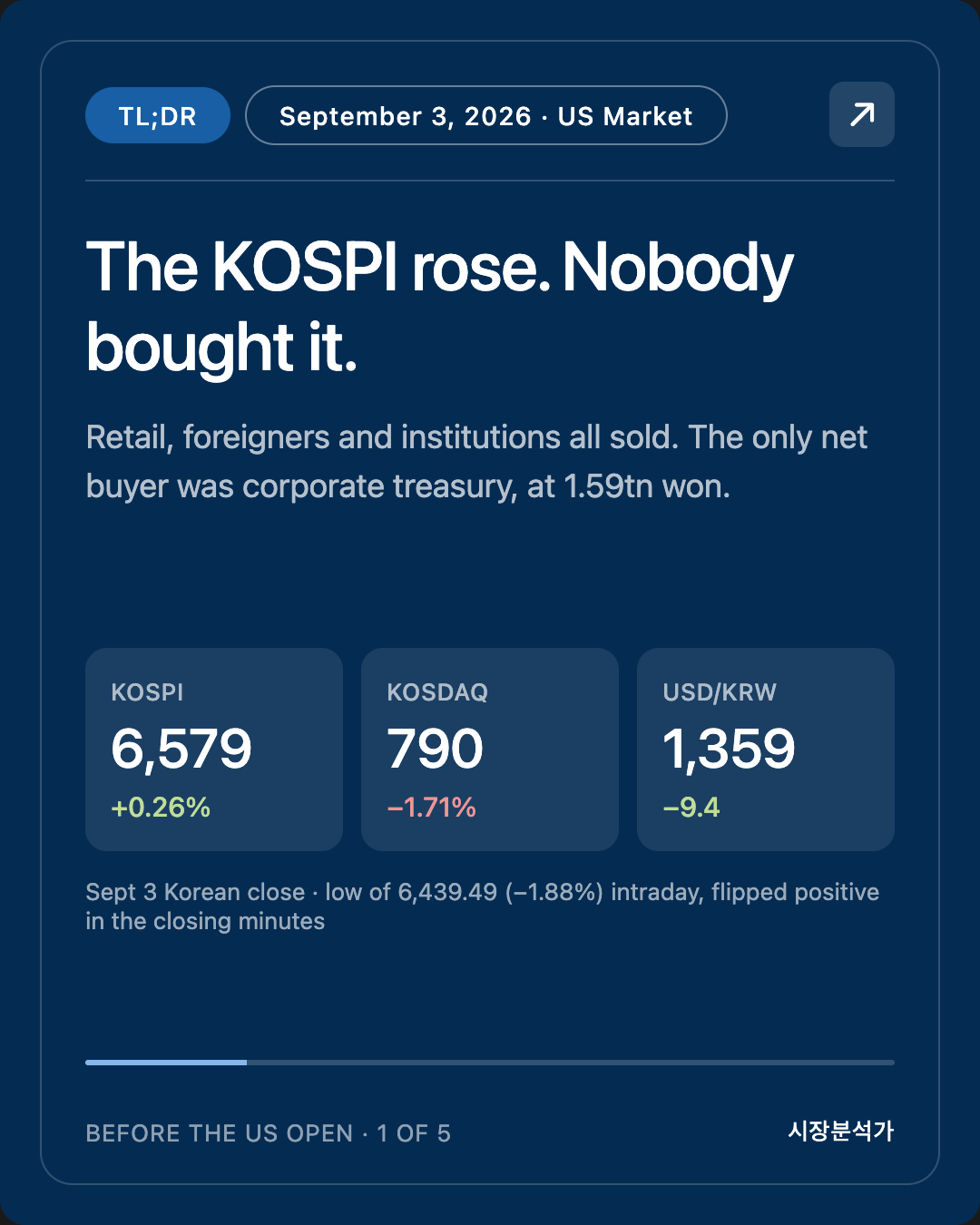
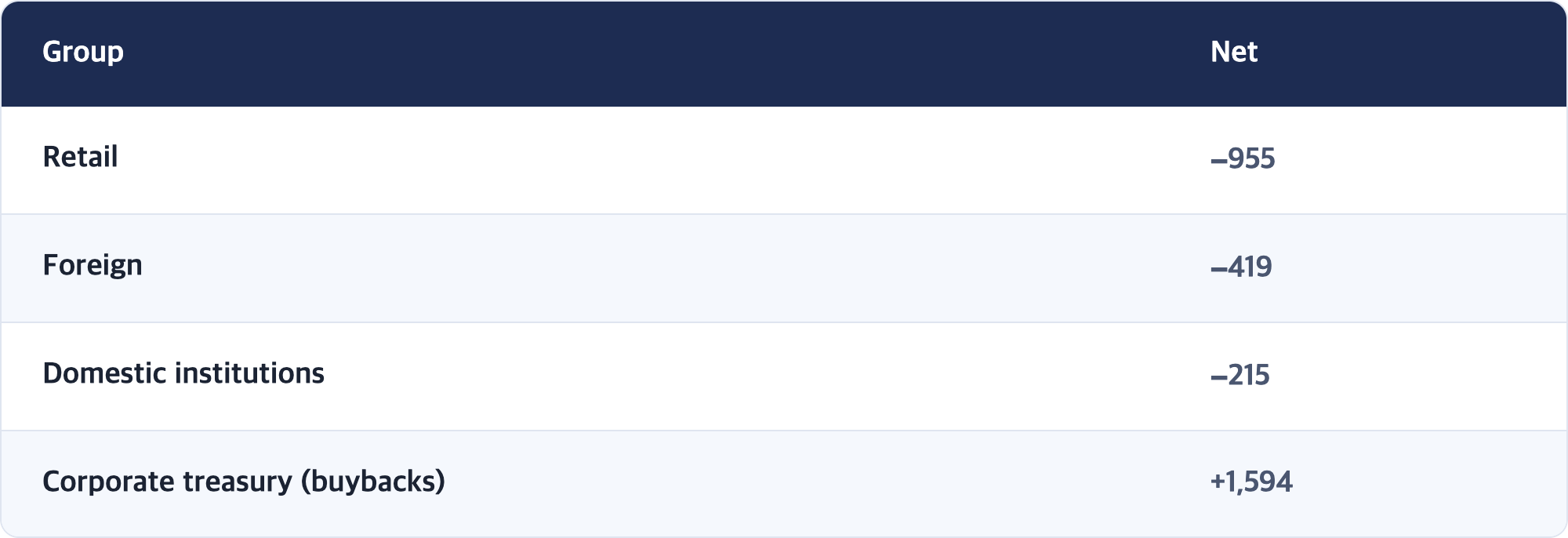
- The KOSPI rose, and nobody bought it. Sept 3 close 6,579.48 (+16.76, +0.26%). Retail −955bn won, foreigners −419bn, institutions −215bn — all three real investor groups net sellers — while corporate treasury (share buybacks) took +1.59tn won. The KOSDAQ fell to 790.21 (−1.71%), losing the 800 line.
- Wednesday's time-zone explanation only half held. Of Wednesday's 273.08-point drop, Thursday recovered just 16.76 points, or 6.1%. Our own test — set in the previous brief — was whether Korea could claw back half (6,699.26). It missed by 119.8 points. The index gapped up 1.33% at the open and gave every bit of it back intraday. What is left is Korea-specific.
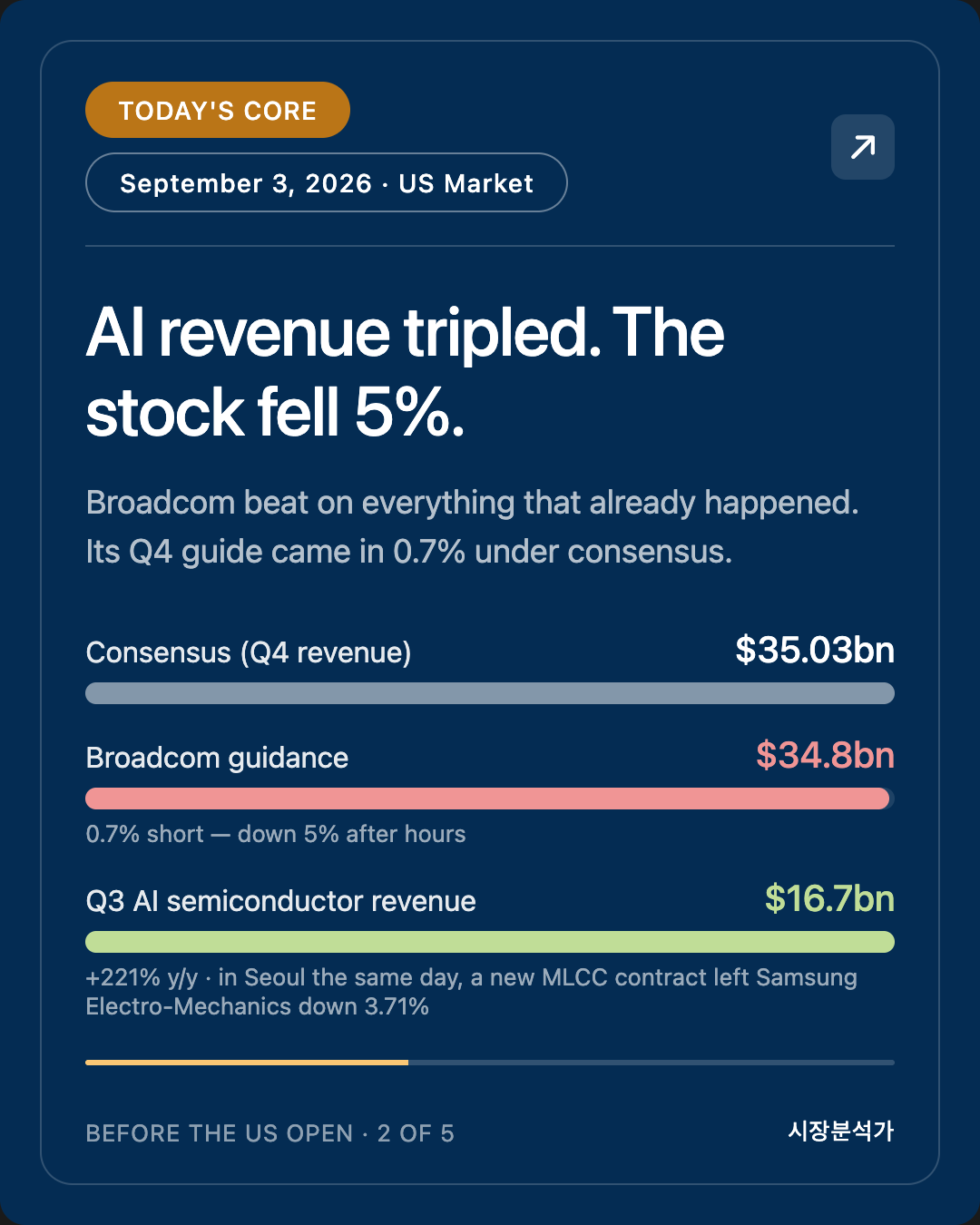
- Broadcom is the emblem of the day. Fiscal Q3 revenue $29.6bn (+86%), AI semiconductor revenue $16.7bn (+221%), both ahead of consensus. Q4 total revenue guidance came in at $34.8bn against a $35.03bn consensus — a 0.7% shortfall — and the stock fell 5% after hours, trimming losses to about −2% pre-market.
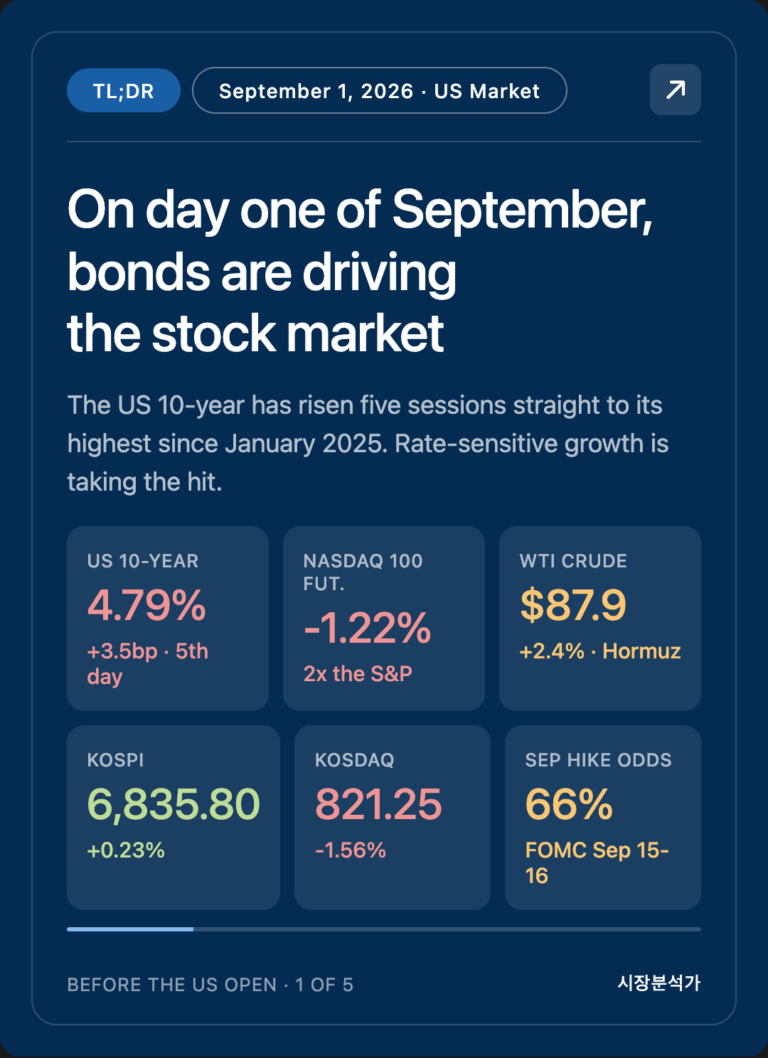
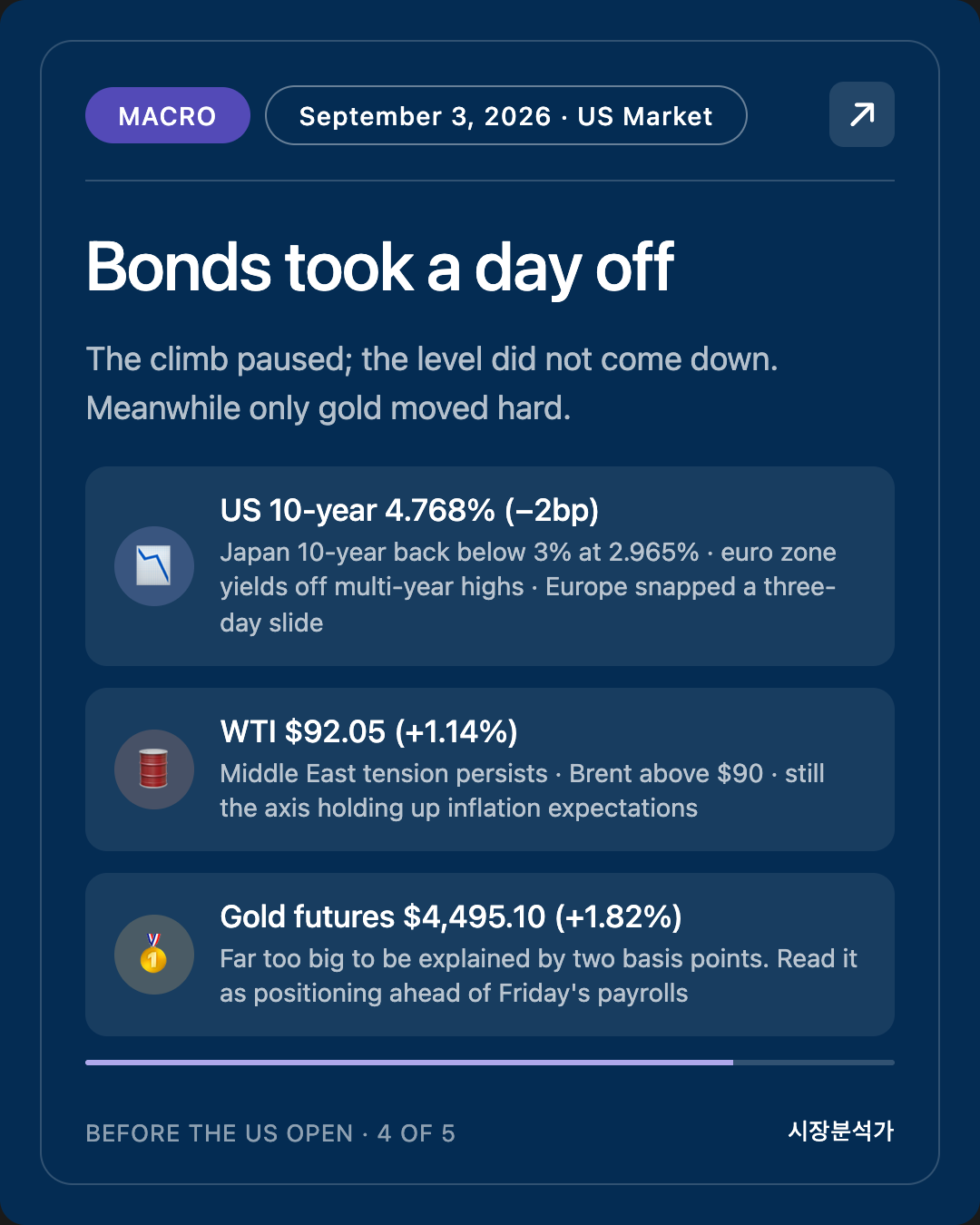
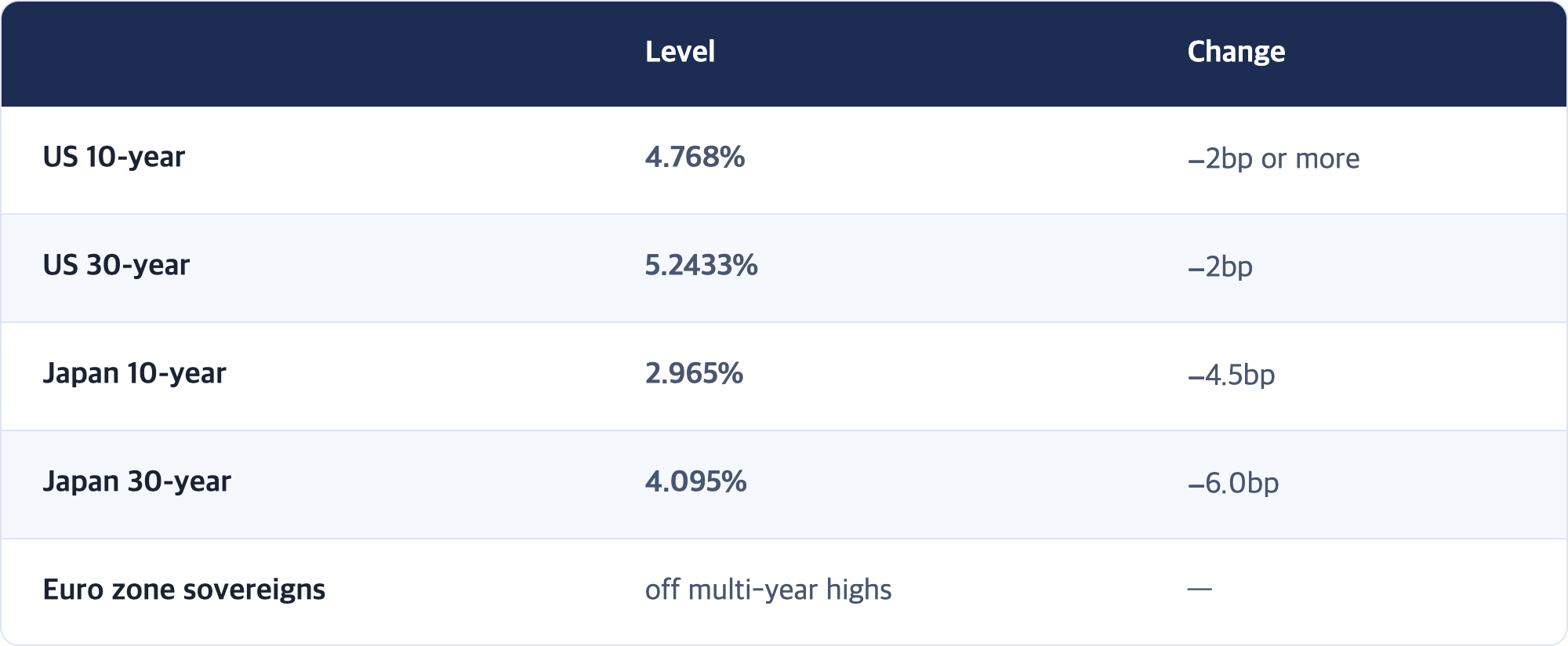
- Bonds took a breather. US 10-year 4.768% (−2bp), 30-year 5.2433% (−2bp), Japan 10-year 2.965% (−4.5bp), back below 3%. Euro zone yields eased off multi-year highs and European equities snapped a three-day losing streak.
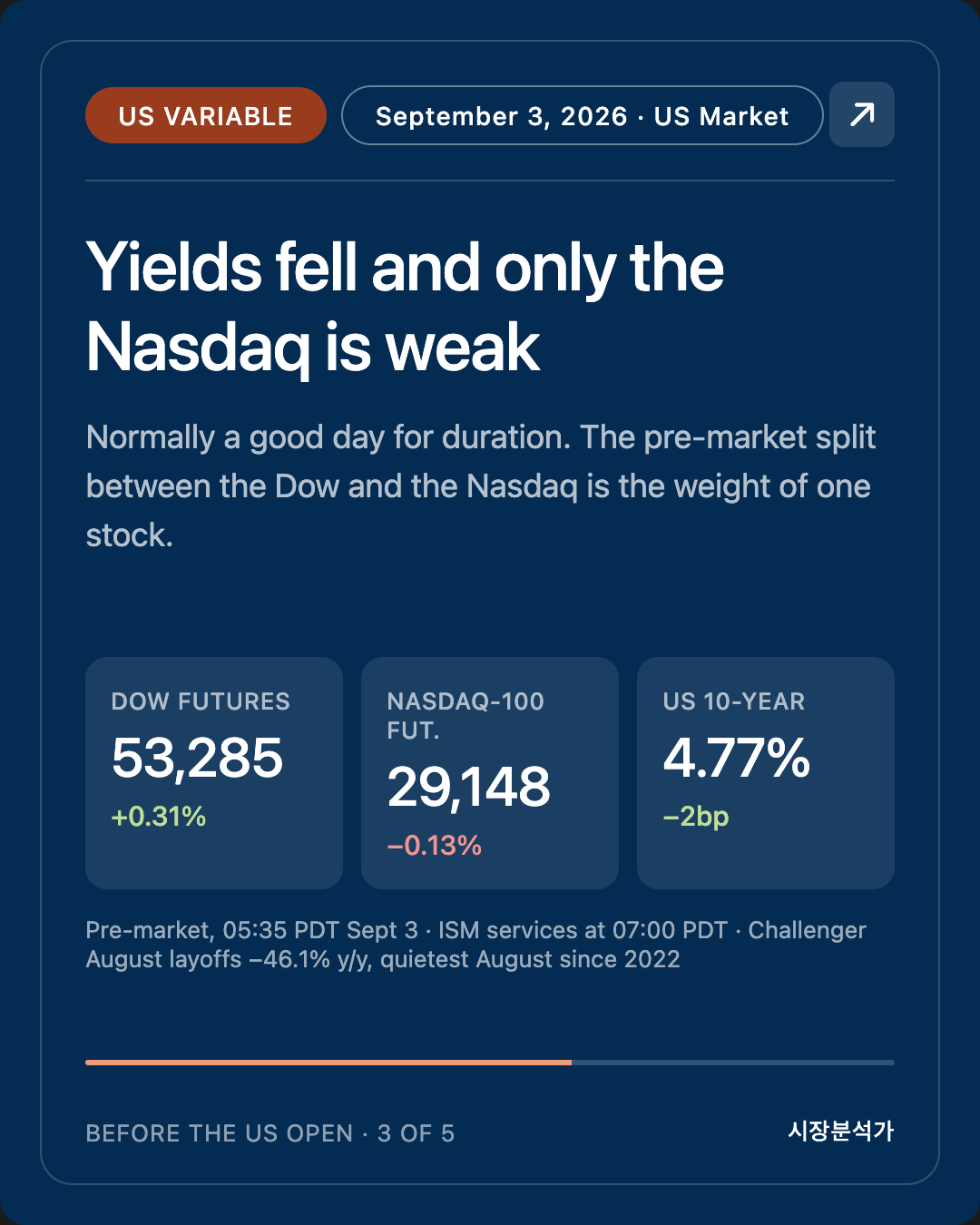
- Tonight's gate is ISM services; tomorrow's is payrolls. Pre-market has Dow futures +0.31% against Nasdaq-100 futures −0.13%. September FOMC hike odds sit in the low-to-mid 60s.
This is Mr. Can. Here is the September 3, 2026 brief ahead of the US market open.
Written: 2026-09-03, 05:35 PDT (Seoul: Sept 3, 21:35 KST)
Basis: Asian closes + European open + US pre-market, all Sept 3
SEO intro
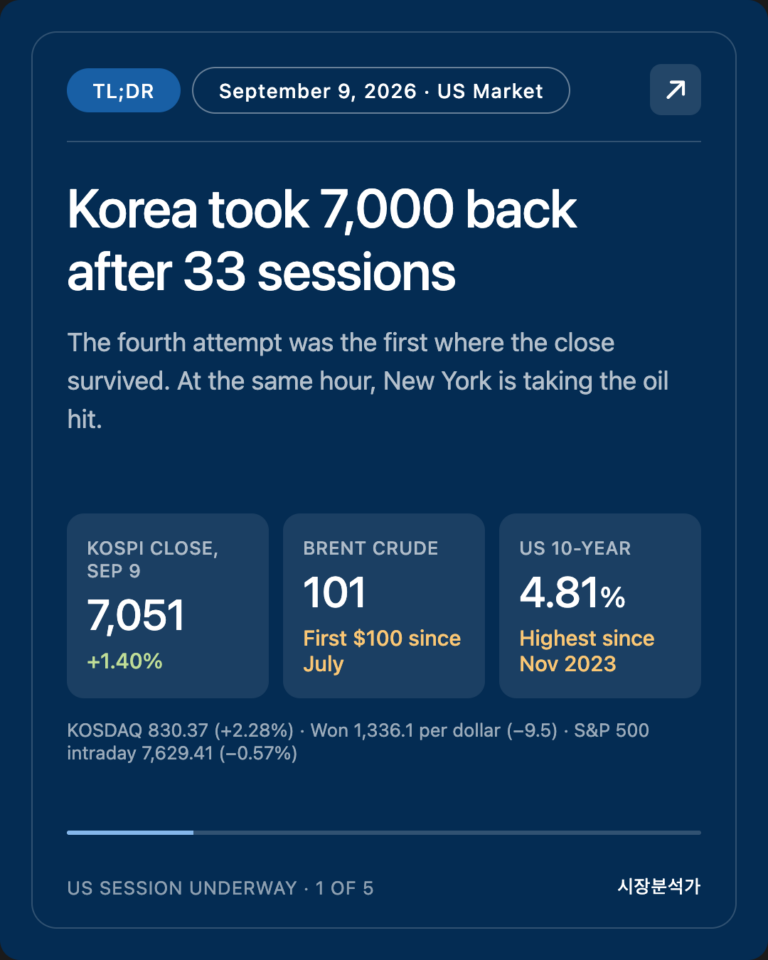
Korea's KOSPI finished Thursday up 0.26%. On the tape it looks like a quiet day. Inside it, the index swung more than 240 points, retail investors, foreigners and domestic institutions all sold, and the only net buyer was corporate treasury — Samsung Electronics and SK Hynix buying back their own shares to the tune of 1.59 trillion won. That same evening in New York, Broadcom reported AI chip revenue up 221%, beat on both the top and bottom line, and fell 5% after hours. Seoul and New York ran the same play. This is a market where good news has stopped being a reason to buy. The one piece of relief: bonds paused. The US 10-year eased to 4.77%, and Japanese and European yields backed off multi-year highs. Here is what to watch through tonight's ISM services print and Friday's August payrolls report.
1. Asia and Europe, September 3
[FACT] — Korea (Sept 3 KST close = Sept 2, 23:30 PDT)
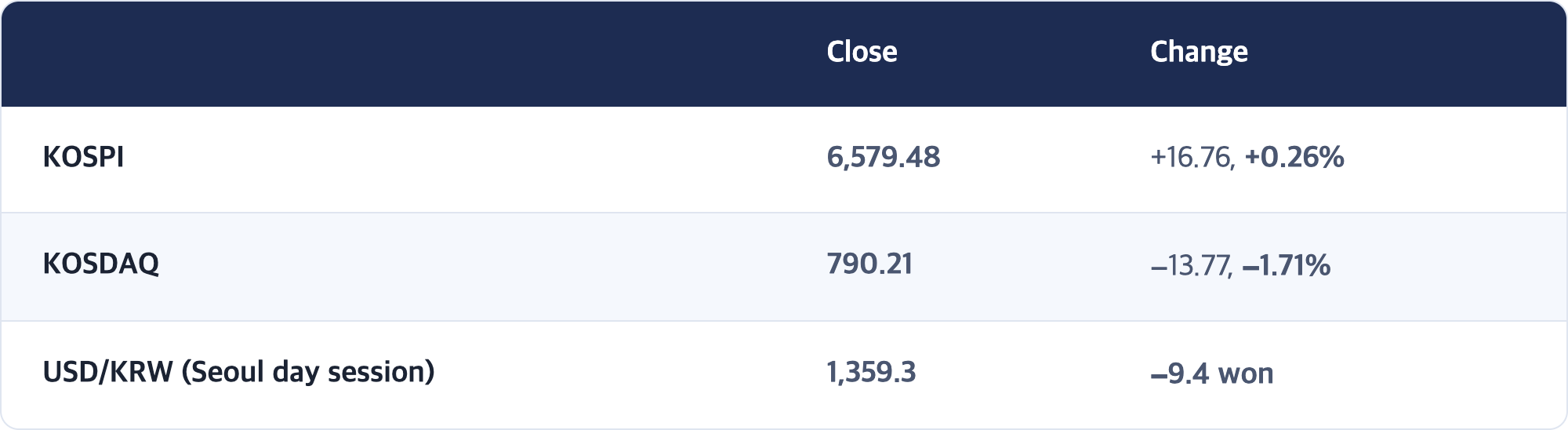
The path — opened at 6,650.33 (+1.33%), sold off hard around 2pm local, bottomed at 6,439.49 (−1.88%), then flipped positive in the closing minutes to finish at 6,579.48. High-to-low range 210.84 points; measured against the prior close the swing exceeded 243 points.
[FACT] — KOSPI net buying by investor type (bn won)
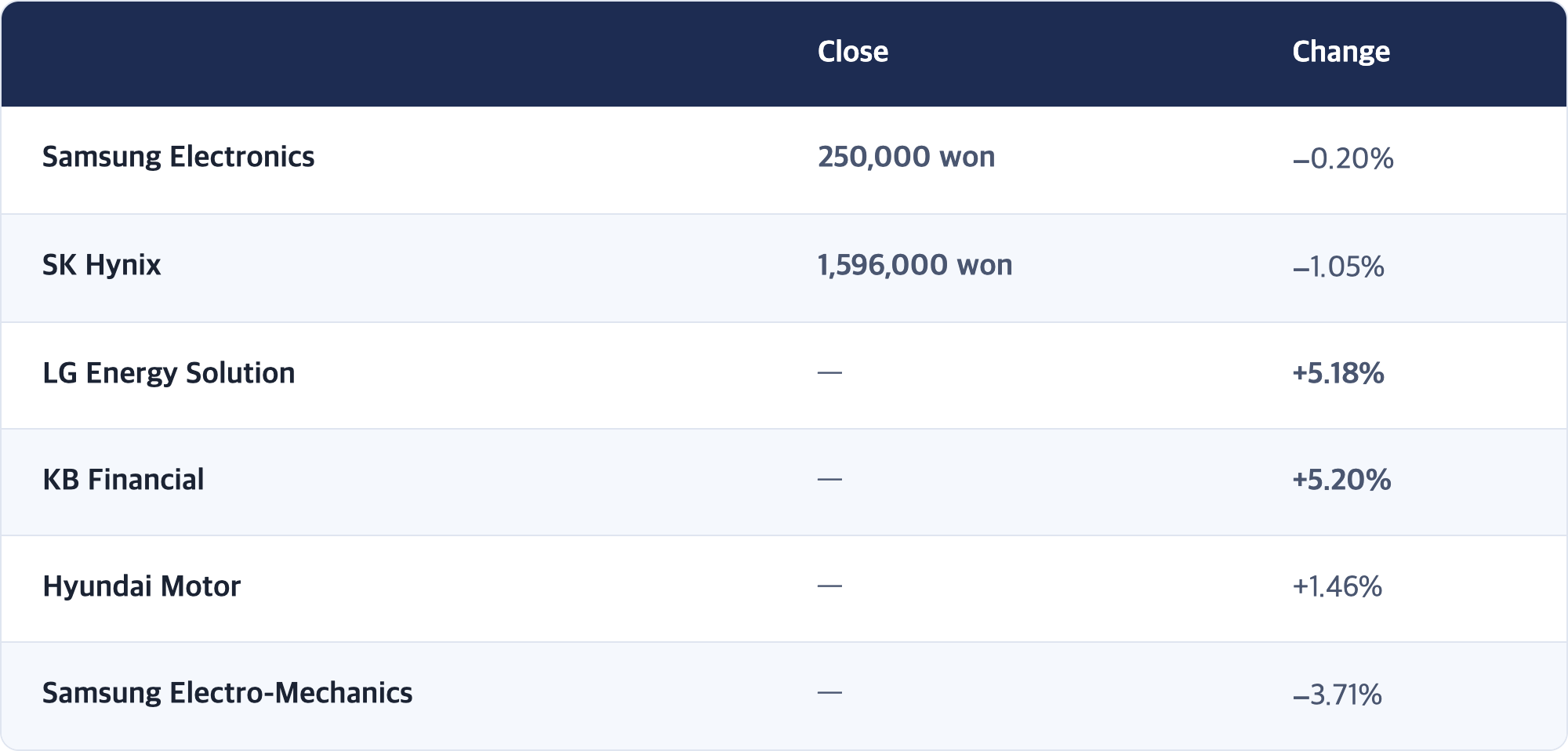
[FACT] — Key Korean names (Sept 3 close)
[FACT] — Asia and Europe
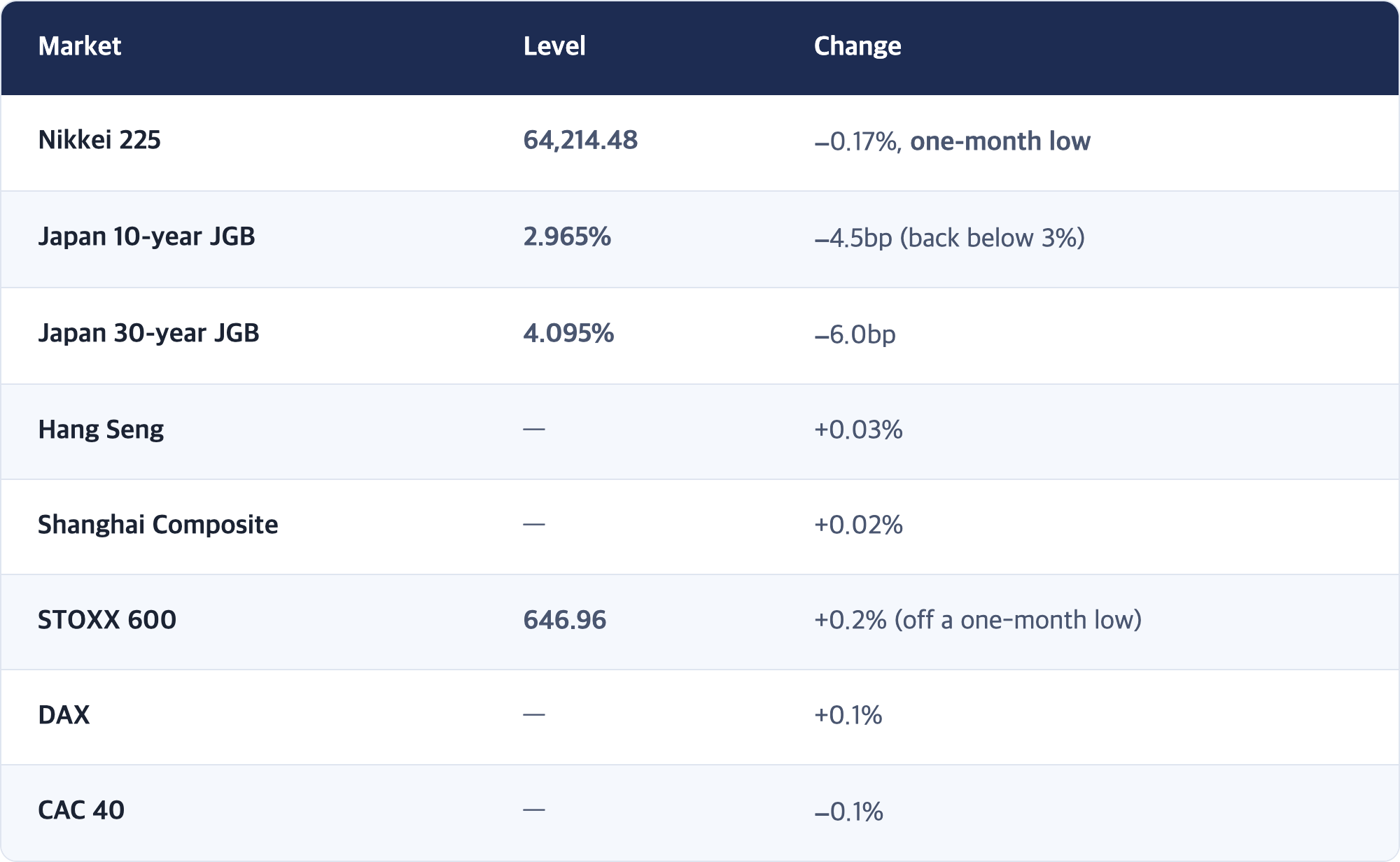
[OBSERVATION] Hong Kong and Shanghai were effectively flat. Neither wanted to commit ahead of the next round of Chinese stimulus signals.
2. The one thing that matters today — good news has stopped being a reason to buy
[FACT] — Seoul, September 3
The news flow was favorable. New York had rebounded the night before (S&P +0.46%), AI and semiconductor earnings were strong, and cooling US employment data had taken some pressure off rates. The KOSPI opened 1.33% higher on exactly that. Then it gave all of it back in the afternoon.
Kiwoom Securities' read on the afternoon slide: no new negative catalyst, domestic or foreign, could be identified. This was not a fundamentals problem at any company. It was that once you set aside the buybacks, the bid had simply gone. Company-specific good news that day — a new MLCC contract at Samsung Electro-Mechanics, a fuel cell contract at Doosan Fuel Cell — was used as an excuse to take profits. Samsung Electro-Mechanics closed down 3.71%.
[FACT] — New York, the same evening (after the Sept 2 close)
Broadcom's fiscal Q3:
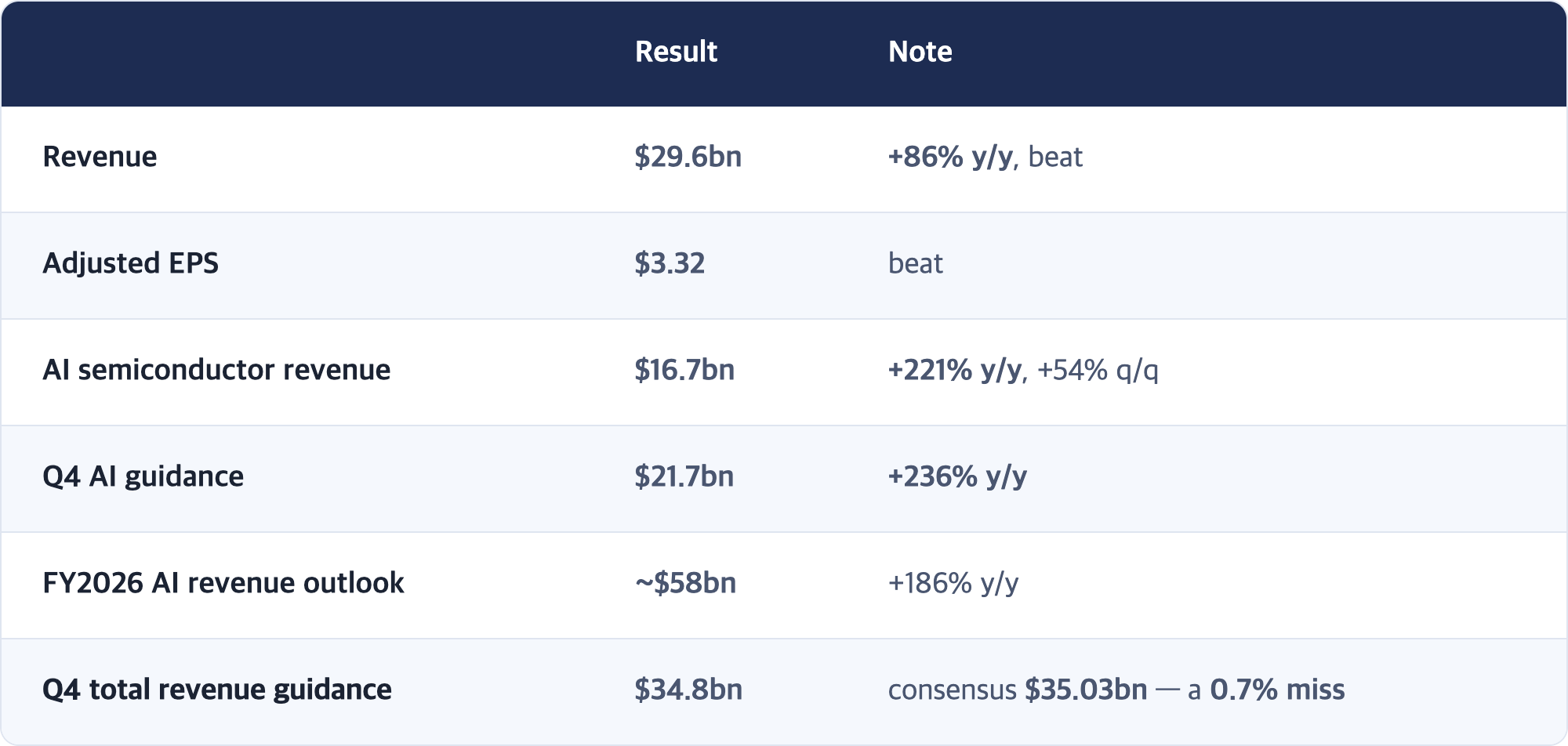
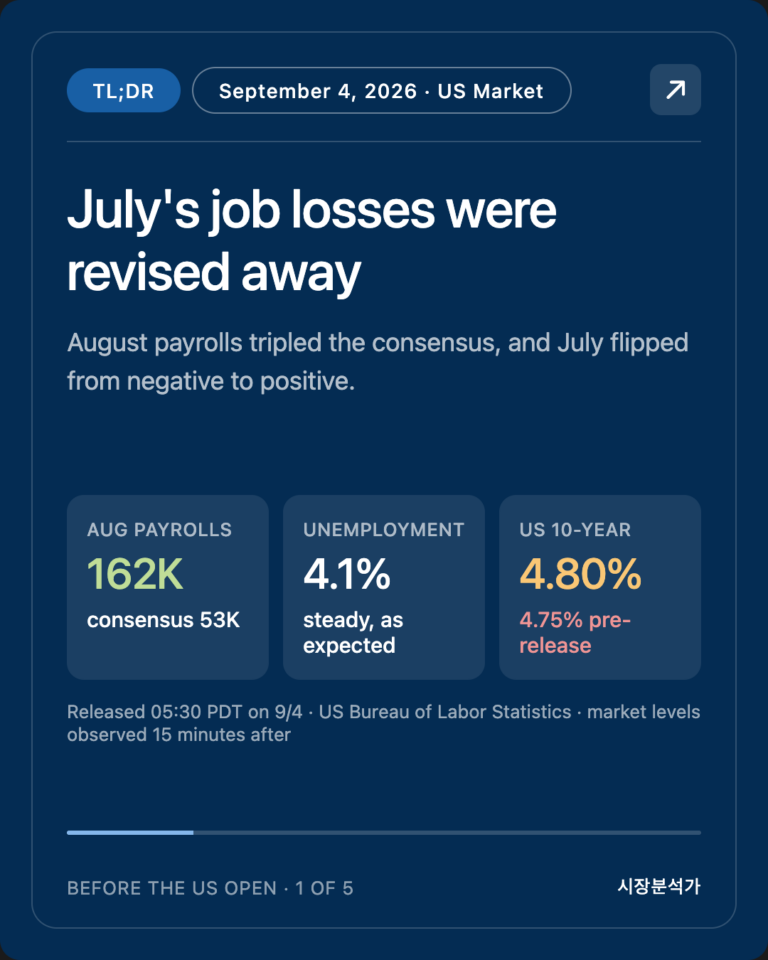
The stock fell 5% after hours, and was down about 2% pre-market before trimming the loss.
[INTERPRETATION] This is the single most important thing on the tape today. What happened in Seoul and what happened in New York look different and are structurally identical. Good news arrived, and the market used it as an exit.
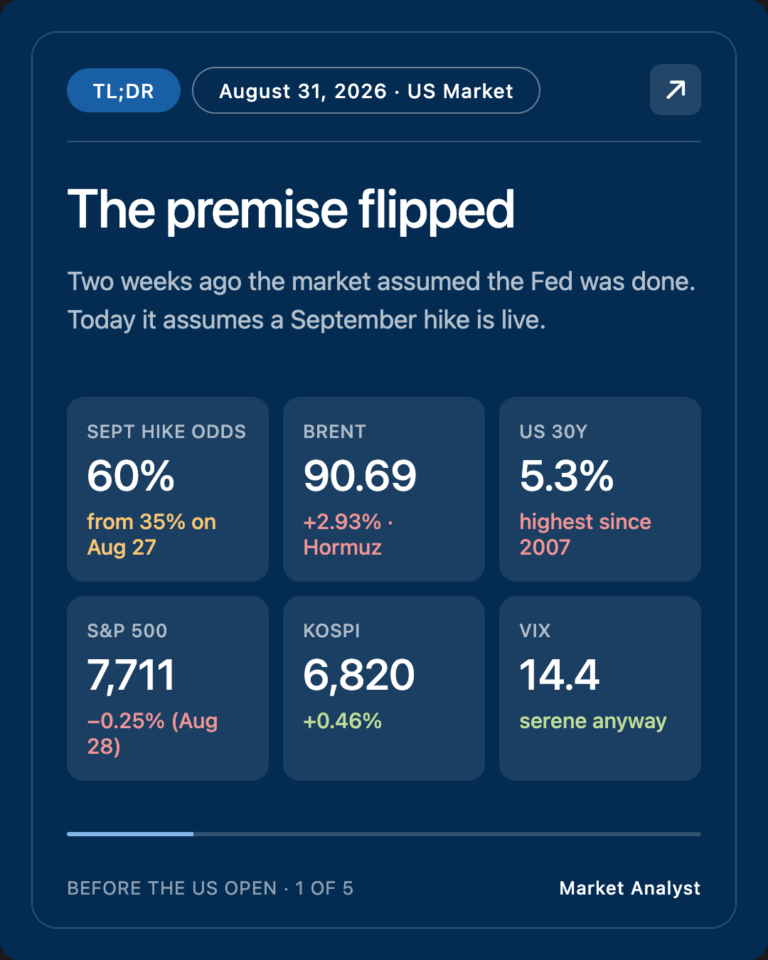
Why does a market get here? The answer is where this brief has pointed for several sessions running: rates. With the US 10-year near 4.8%, the Japanese 10-year at a 30-year high around 3%, and European yields at 15-year highs, the bar equities have to clear is simply higher. If a bond pays you 5% with no drama, a stock cannot merely be good — it has to be better than expected. Broadcom tripled its AI revenue and still lost 5% because its total revenue guide came in 0.7% light. That is what a raised bar looks like.
[INTERPRETATION] We watched the same scene on August 14. Applied Materials posted record revenue and record EPS and closed down 4% after hours. This brief filed that under "priced in — sell the news." Three weeks later the same structure repeated at a much larger company. Once is a company story. Twice is a market regime.
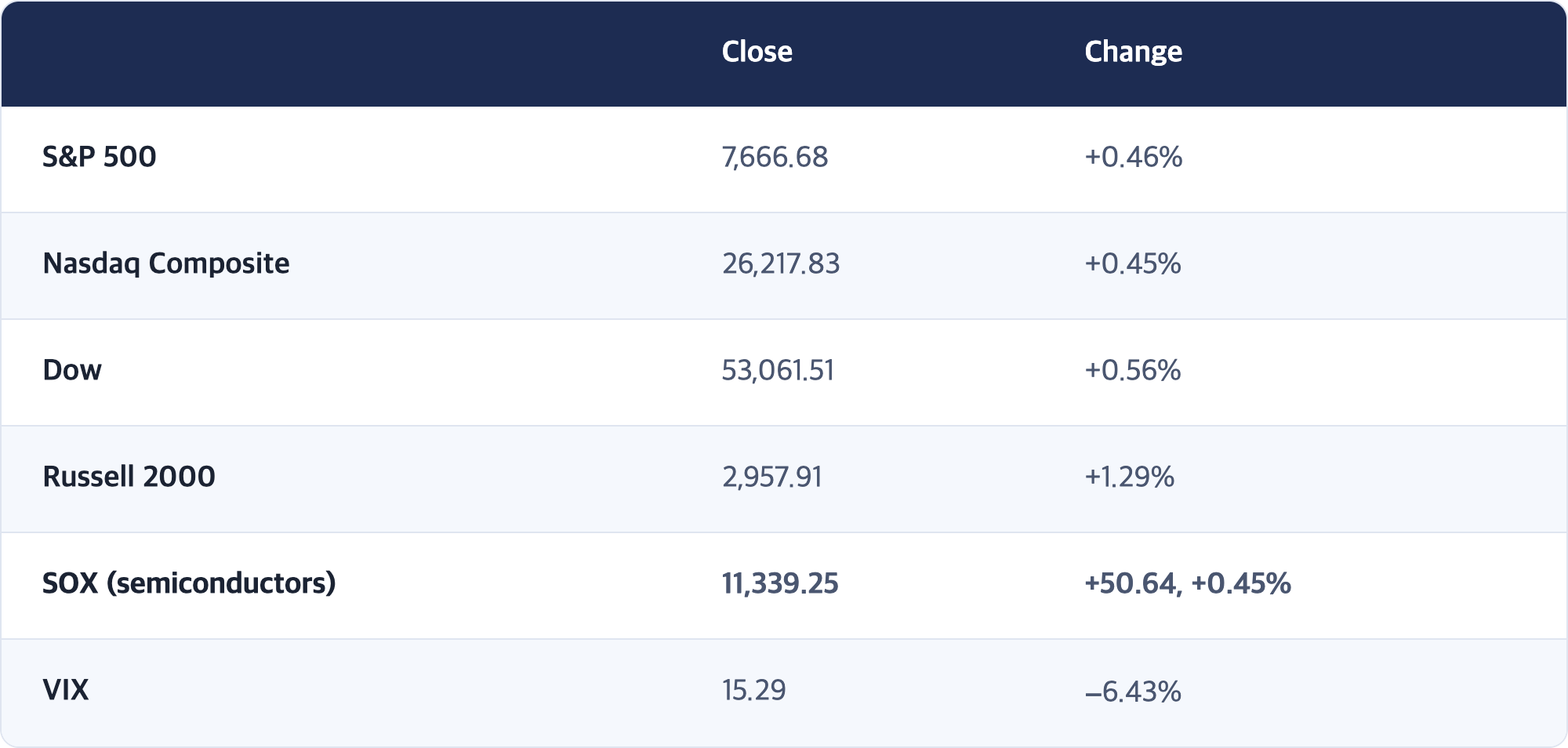
[INTERPRETATION] What it means for Korea. Broadcom tripling AI revenue is hard evidence that demand for HBM and high-end memory is intact. The Philadelphia Semiconductor Index (SOX) closed Sept 2 at 11,339.25, up 0.45%. Yet on Sept 3 in Seoul, SK Hynix fell 1.05% and lost the 1.6mn won level. The problem is not that demand is weak; it is that the price already contains the demand. What moves semiconductor equities right now is the discount rate and the expectations bar, not the demand headline.
3. The US variable — a split pre-market
[FACT] — Pre-market (as of 05:35 PDT, Sept 3)
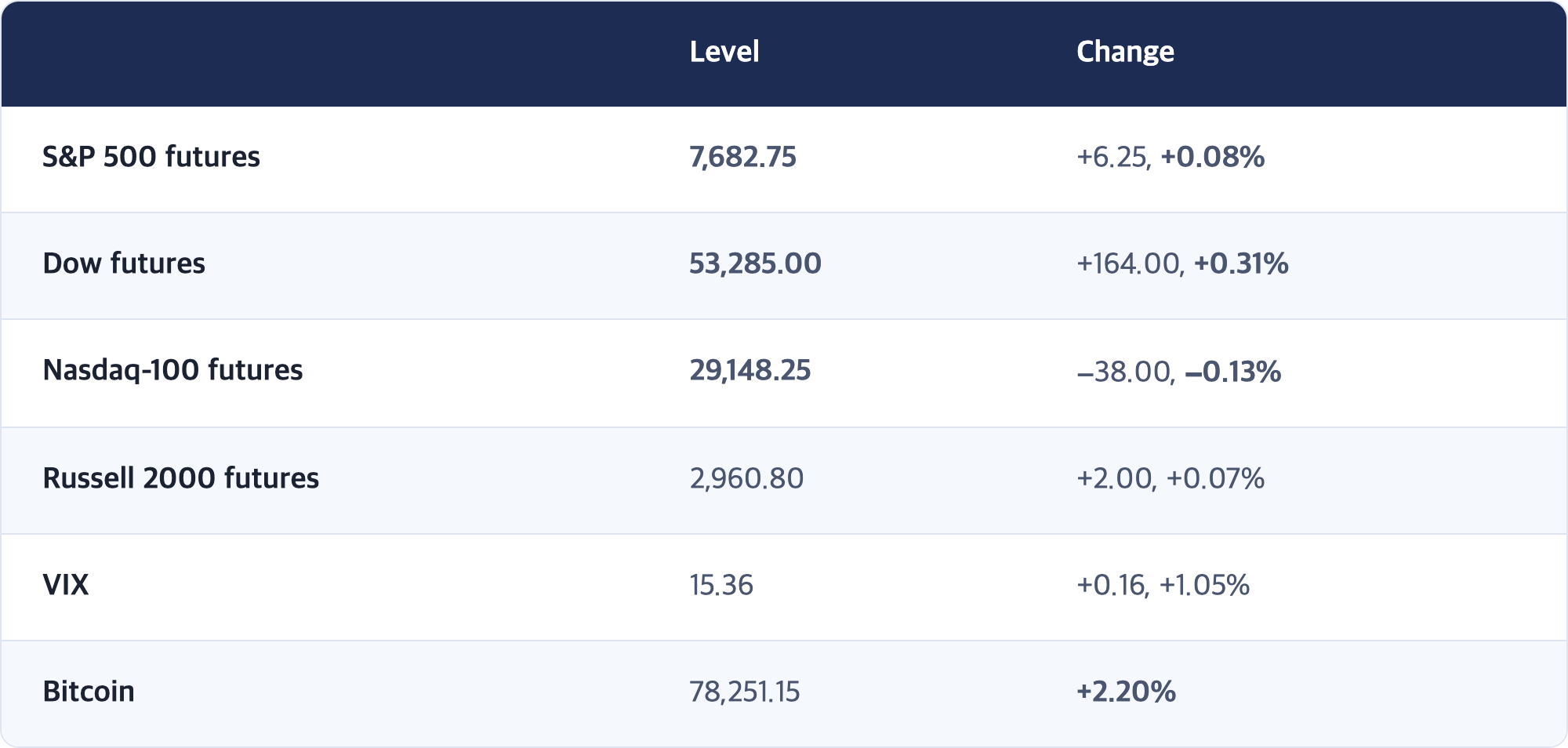
[OBSERVATION] The Dow is up and the Nasdaq is down on a morning when yields fell — normally a tailwind for long-duration tech. The straightforward explanation is the weight of one stock: Broadcom.
[FACT] — Confirmed Sept 2 US closes, for reference
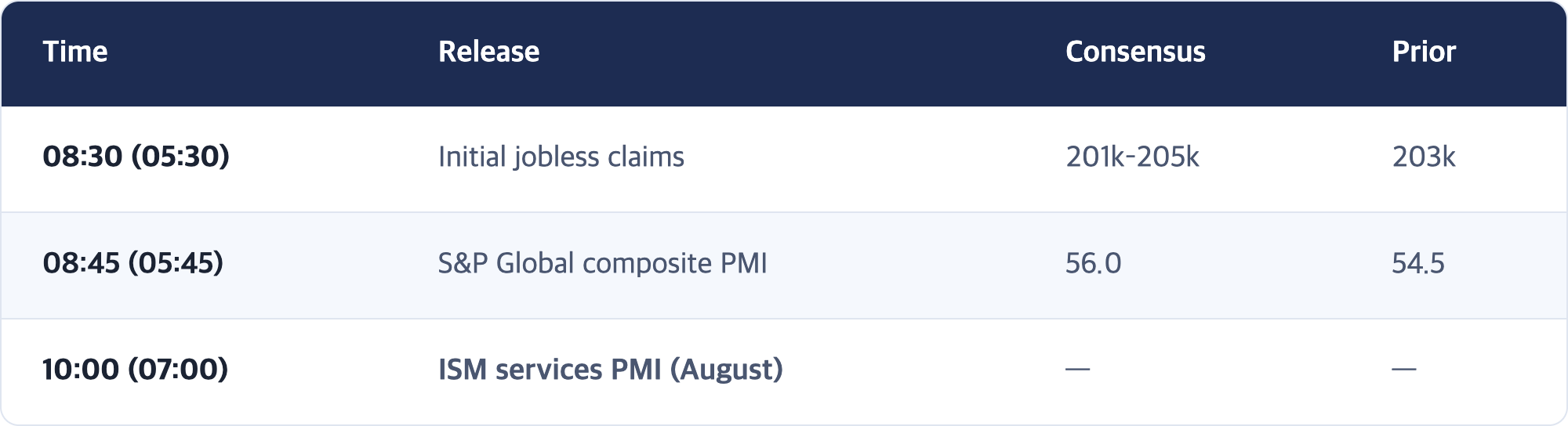
[FACT] — On today's calendar (ET, PDT in parentheses)
Already out — Challenger announced job cuts for August came in just under 53,000, down 46.1% year over year and the quietest August for layoffs since 2022.
[INTERPRETATION] Challenger says firing is rare. Wednesday's ADP print (38,000) says hiring is rare too. These are not contradictory — together they describe a frozen labor market, where employers neither cut nor add. That is an awkward state for the Fed: with unemployment not rising, there is no obvious reason not to tighten; with no hiring, there is no strong mandate to. Which is why Friday's payrolls report carries so much weight.
4. The macro backdrop — bonds took a day off
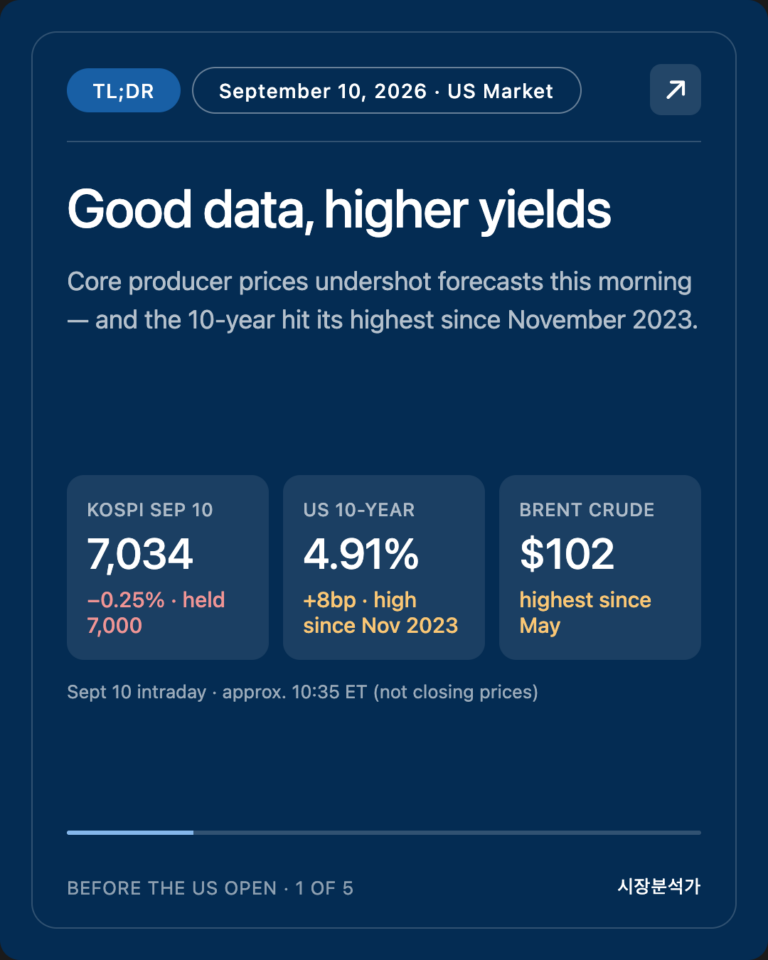
[FACT] — Yields (Sept 3)
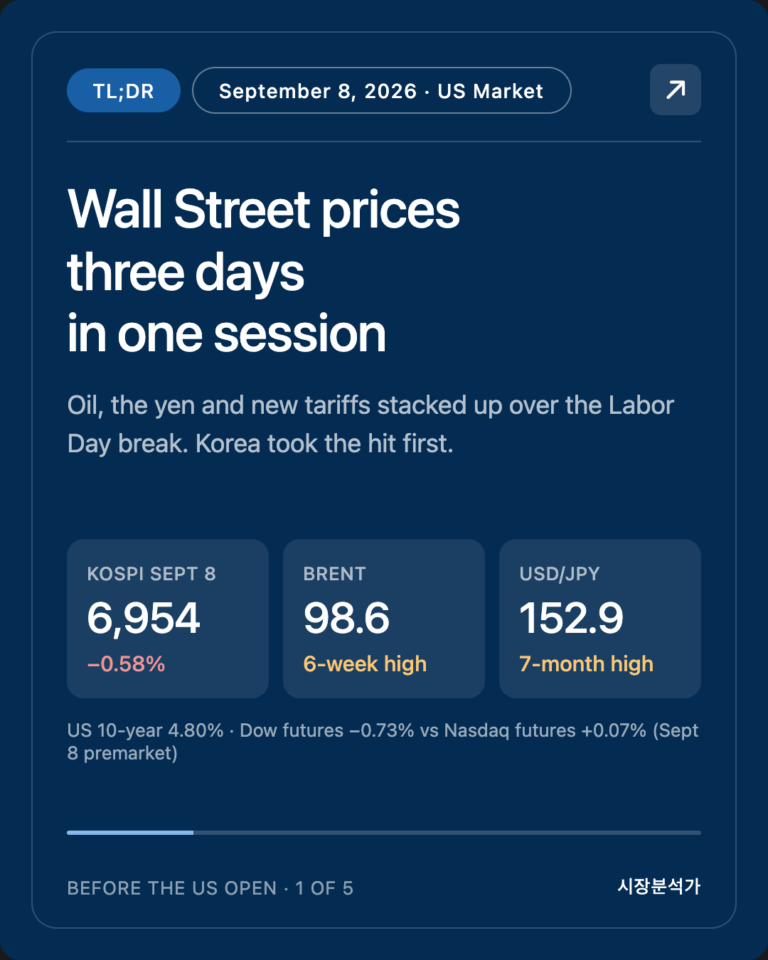
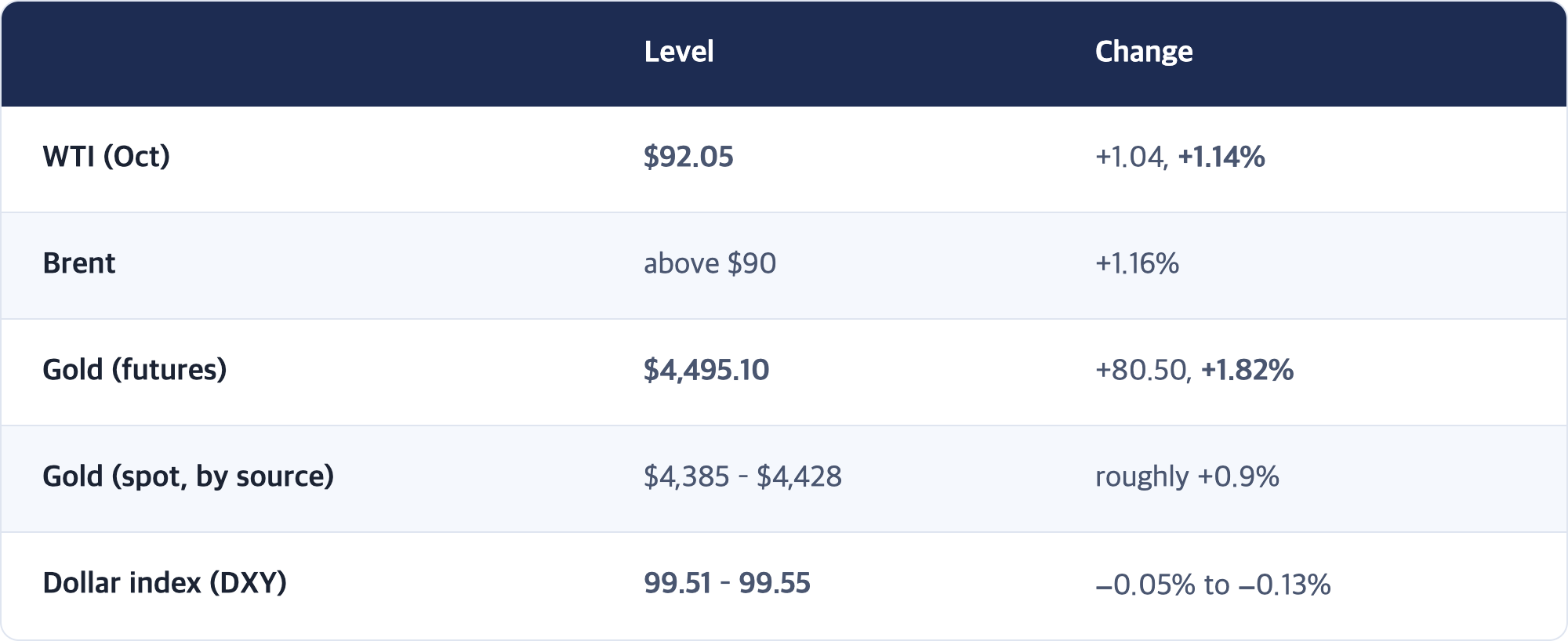
[FACT] — Commodities and currencies (Sept 3)
[OBSERVATION] — Europe
- The STOXX 600 rose for the first time in four sessions, off a one-month low.
- Markets expect the ECB to raise its policy rate to 2.5% at next week's meeting.
[INTERPRETATION] Two things need separating here.
First, bonds calmed, but the level did not come down. A US 10-year at 4.77% is still near the highest since late 2023. Japan's 10-year merely slipped back under 3% and remains at a 30-year high. A pause in the climb is not a descent. Yesterday's brief put it this way: what can be unwound is the fear; what has not been unwound is the level of rates. That still holds.
Second, the move in gold tells you what kind of day this is. Falling yields are usually good for gold — but a 1.82% jump in gold futures is far too large to be explained by two basis points. Oil back at $92, continuing Middle East tension, and above all the instinct to be in something safe before Friday's payrolls report are doing that work. When stocks and bonds are quiet and only gold moves hard, the market is not relaxed. It is waiting.
5. Previewing the September 3 US session — what to watch
[INTERPRETATION] — Four things
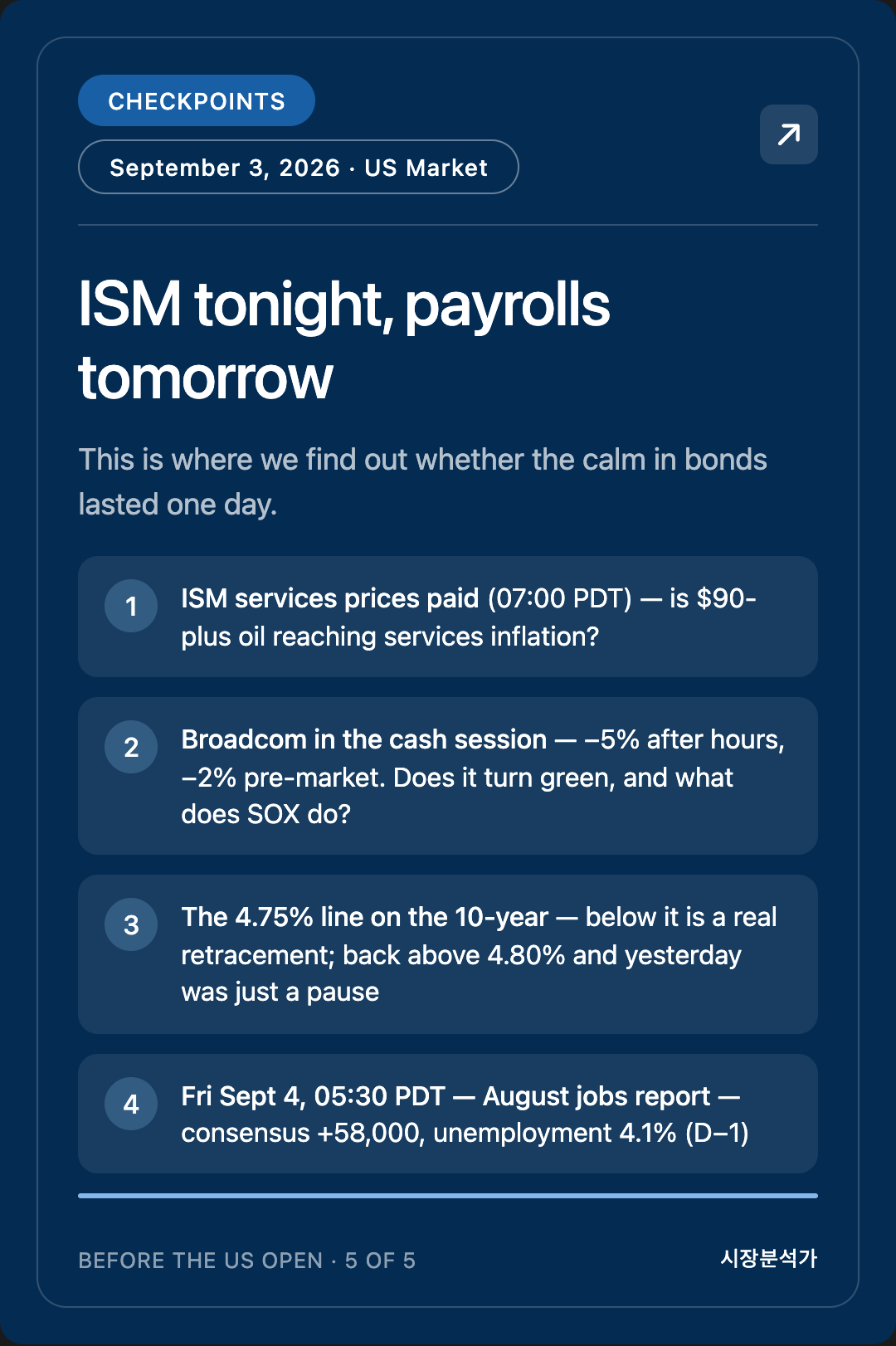
- The prices-paid component of ISM services (07:00 PDT). It matters more than the headline. This is the first place you can see whether $90-plus oil is starting to feed into services inflation. If it rises, the case for a September hike strengthens and yesterday's calm in bonds turns out to have been a one-day affair.
- Broadcom in the regular session. Down 5% after hours, down about 2% pre-market and improving. If it turns positive in the cash session, the market is still willing to pay for AI earnings; if it widens the loss, the August 14 Applied Materials pattern hardens into a rule. Watch SOX alongside it.
- The 4.75% line on the 10-year. We are at 4.768% today. Settling below it would mark the start of a genuine retracement of the last five sessions; back above 4.80% and yesterday's relief was just a pause for breath.
- The Dow-versus-Nasdaq gap. Pre-market has them 44 basis points apart. Whether that gap narrows during the session is what separates a Broadcom problem from a tech problem.
[OBSERVATION] — Event calendar (D−N)
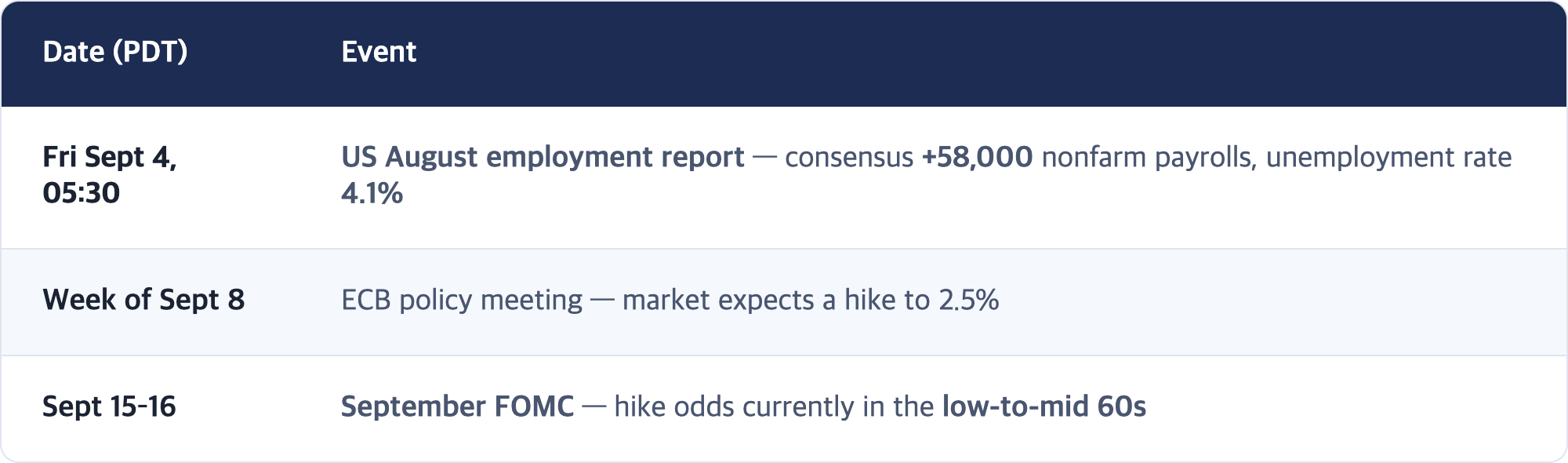
[INTERPRETATION] Friday's payrolls report remains the whole week. The market is standing between "inflation says they have to hike" and "the labor market is cooling, so they can't." This week's two employment prints pointed in opposite directions — ADP at 38,000 said hiring is weak; Challenger at −46.1% said firing is weak too. A nonfarm number well under 58,000 lets yields fall further and is the most direct relief available to growth and semiconductor names. Well above it, a September hike becomes a foregone conclusion and today's bond calm was a single day.
[INTERPRETATION] One more thing for anyone watching Korea. The won has strengthened two sessions running (−1.7 on Sept 2, −9.4 on Sept 3, to 1,359.3). Foreigners sold more than 2.3 trillion won of Korean stocks across those two days and the currency still firmed. That is the second piece of evidence that this is position-trimming inside the equity market, not capital leaving the country. But remember what the buyback program does while it runs: with roughly 46 trillion won still to be spent, the index will look stronger than the conviction of the people trading it. September 3 was exactly that kind of day.
📖 Study note — why a company can beat and still fall: the invisible bar called "expectations"
The concept. A stock does not move on how much a company earned. It moves on how much more it earned than the market already expected. That expectation is the consensus — the average of analyst forecasts. What actually gets released on earnings day is not a number; it is the gap between the number and the bar.
An analogy. You score 90 on a test. That is a good score. If your parents expected 95, the mood at dinner is bad. If they expected 70, there is a celebration. Same 90, opposite reactions. Markets work the same way. The 90 is already in the price — that is what "priced in" means — and what the market trades is the five-point gap.
Then there is guidance, which matters more. Earnings are a report card for a quarter that has already ended. Guidance is the company's own forecast for the quarter ahead. Since the past is already known, the market weights guidance far more heavily. Broadcom is the textbook case: the quarter behind it was overwhelming — revenue +86%, AI +221% — but the quarter ahead was guided to $34.8bn against a $35.03bn bar. The market looked past the blowout and at the 0.7%.
Three cases worth remembering.
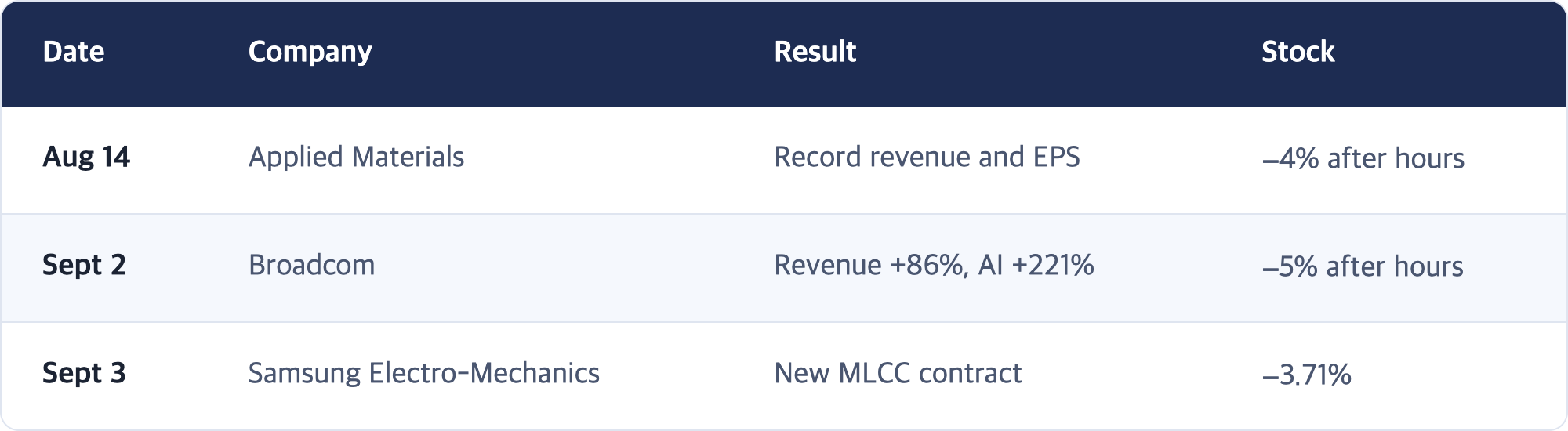
What the three have in common is not the companies — it is the state of the market. When rates are high and the bar is already set high, strong results stop being a reason to buy and become an opportunity to take profits. In that environment, instead of asking "great numbers, why is it down?", ask "where was the bar?" first. The market reads much more clearly from there.
📌 Corrections
1) We are partially withdrawing the time-zone explanation from the Sept 2 brief. That brief argued Wednesday's 4% KOSPI drop was not a Korea-specific shock but a consequence of only the bad news existing during Korean trading hours, and set an explicit test: if Korea fails to recover half the drop (6,699.26), there is a Korea-specific factor.
- Sept 3 close 6,579.48 — recovery of 16.76 points, 6.1% of the drop
- 119.78 points short of the 6,699.26 threshold
The explanation held only as far as the opening bell. The 6,650.33 open (+1.33%) did reflect the US rebound as a gap. That gap then disappeared over the session. On a full-day basis the test failed, so a substantial part of Wednesday's drop has to be assigned to a Korea-specific factor — and that factor turned out not to be a new piece of bad news but the absence of a buyer (see section 2).
2) Result of checkpoint 4 from the Sept 2 brief (semiconductor support levels). Samsung Electronics held the 250,000 won line — at exactly 250,000. SK Hynix lost the 1.6mn won line at 1,596,000.
3) KOSDAQ figure updated. The 803.98 in the Sept 2 follow-up memo was Wednesday's close. Thursday's close is 790.21 (−1.71%), below 800.
4) Investor flow figures differ by source. Corporate treasury net buying is reported as 1.5936tn won (Financial News, Money Today) and 1.5634tn (Get News); foreign net selling as −419.3bn / −419.6bn / −423.2bn. This brief uses 1.5936tn and −419.3bn. One outlet reported institutions at −5.03tn and corporate treasury at +9.71tn; those appear to be on a different basis and are not cited here.
5) The August payrolls consensus has moved. The Sept 2 brief carried +60,000 and a 4.2% unemployment rate. As of today the consensus is +58,000 and 4.1%. The direction of the argument is unchanged.
6) Gold quotes continue to disagree across sources — futures at $4,495.10 (+1.82%) versus spot at $4,385–$4,428 (about +0.9%). Neither is treated as definitive; both are shown. The August 31 close remains unresolved.
7) This edition ran on schedule. Scheduled for 05:30 PDT, started 05:35 PDT. The timing drift seen repeatedly since August 31 did not occur this time.
🔗 Sources
- Financial News — KOSPI closes higher on corporate treasury buying
- Money Today — KOSPI swings in a flow vacuum, closes at 6,579.48 · Nikkei down 0.17%
- Maeil Ilbo — Only buybacks bought: the KOSPI's flow cliff
- Get News — Samsung and SK Hynix close lower
- Business Korea — Closing report: KOSPI holds the 6,580 area
- CNBC — Broadcom drops 5% as weak guidance overshadows beat · Treasury yields move lower
- Yahoo Finance — Sept 3 US market live blog · Strong results not enough for Broadcom
- Motley Fool — Broadcom AI chip sales tripled: the $34.8bn number
- Reuters via Investing.com — European shares edge higher as bond yields ease
- Investing.com — ISM services PMI and jobless claims due Thursday
- Trading Economics — US 10-year Treasury yield · Gold
- Nasdaq — SOX index
This brief summarizes market flows and macro variables. It is not a recommendation to buy or sell any individual security.
📌 More market briefs
※ This post is market observation and organization intended to support your own judgment. It is not a recommendation to buy or sell any security. Figures are as of the time of writing and may differ between sources.
If this was useful, bookmark it or pass it along. It genuinely helps me write the next one.
I can survive. We can survive.