Sept 16, 2026 KOSPI Market Brief — What to Watch Before the Korean Open
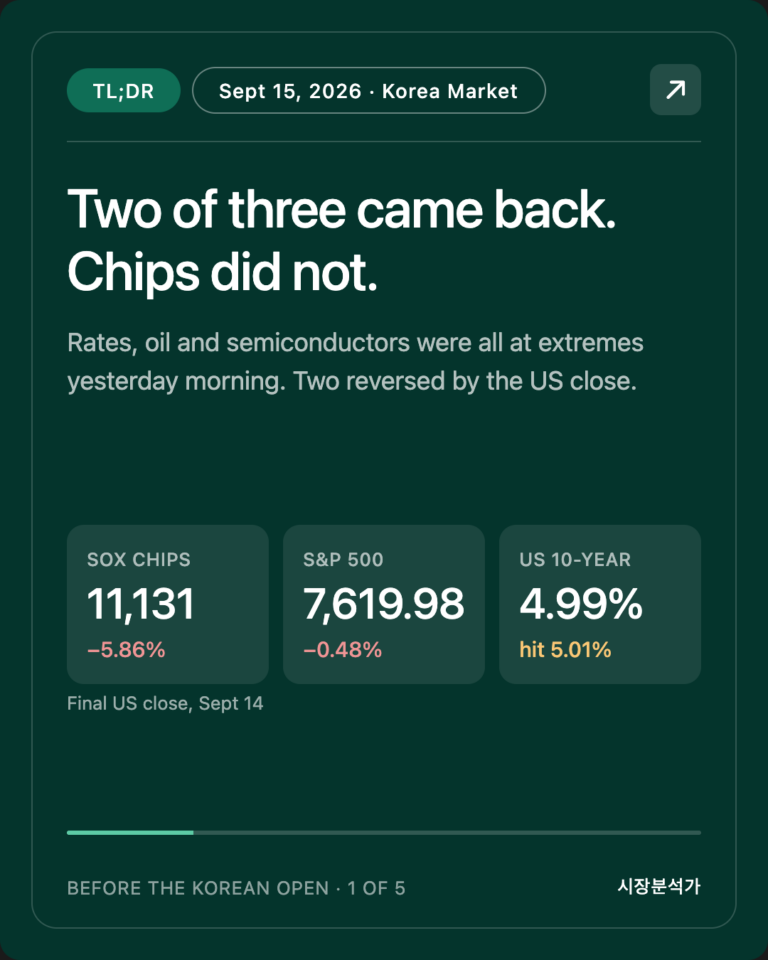
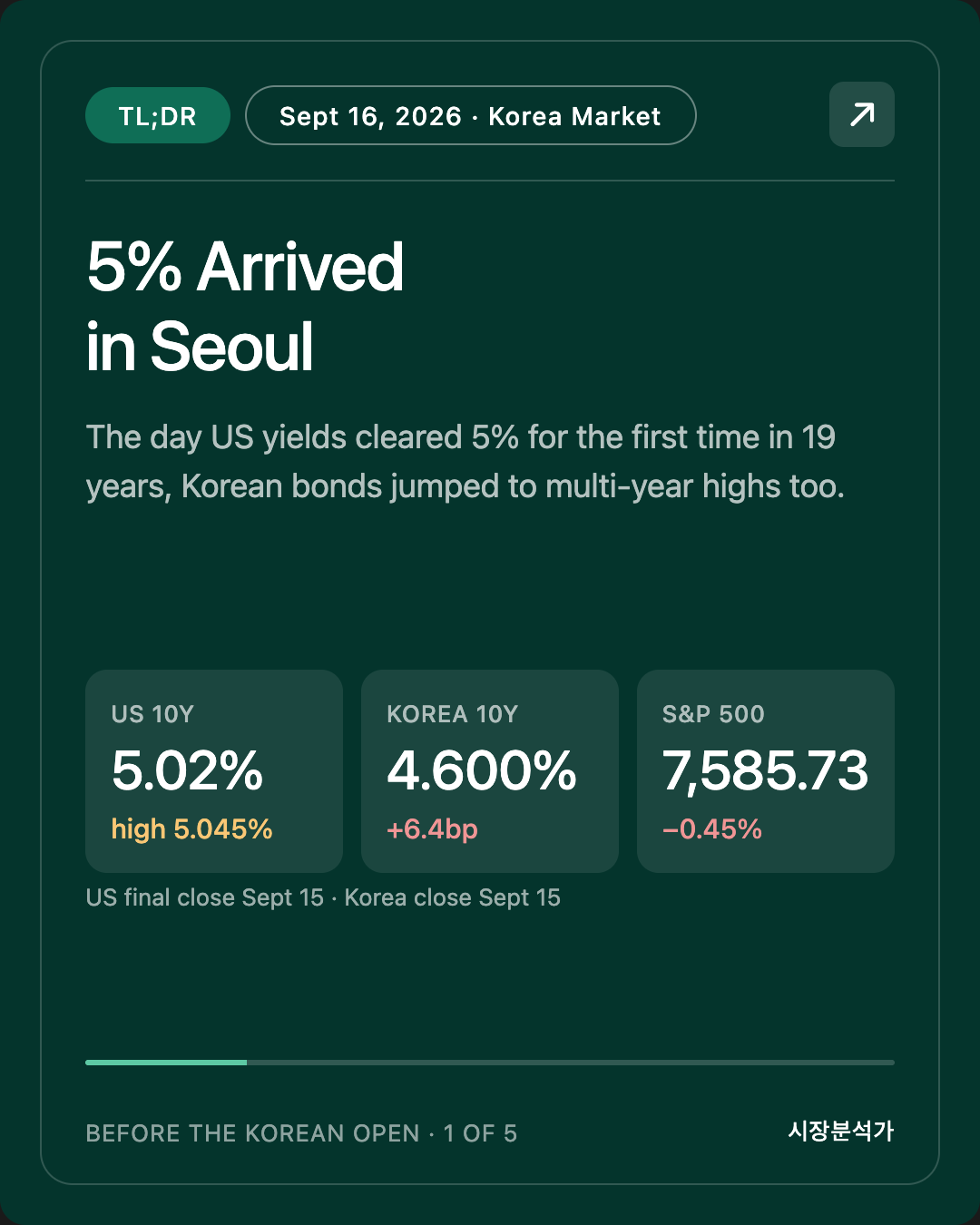
- The US 10-year crossed 5%. Intraday 5.045%, closing around 5.01–5.02% — the highest in 19 years, since July 2007, and above the October 2023 peak.
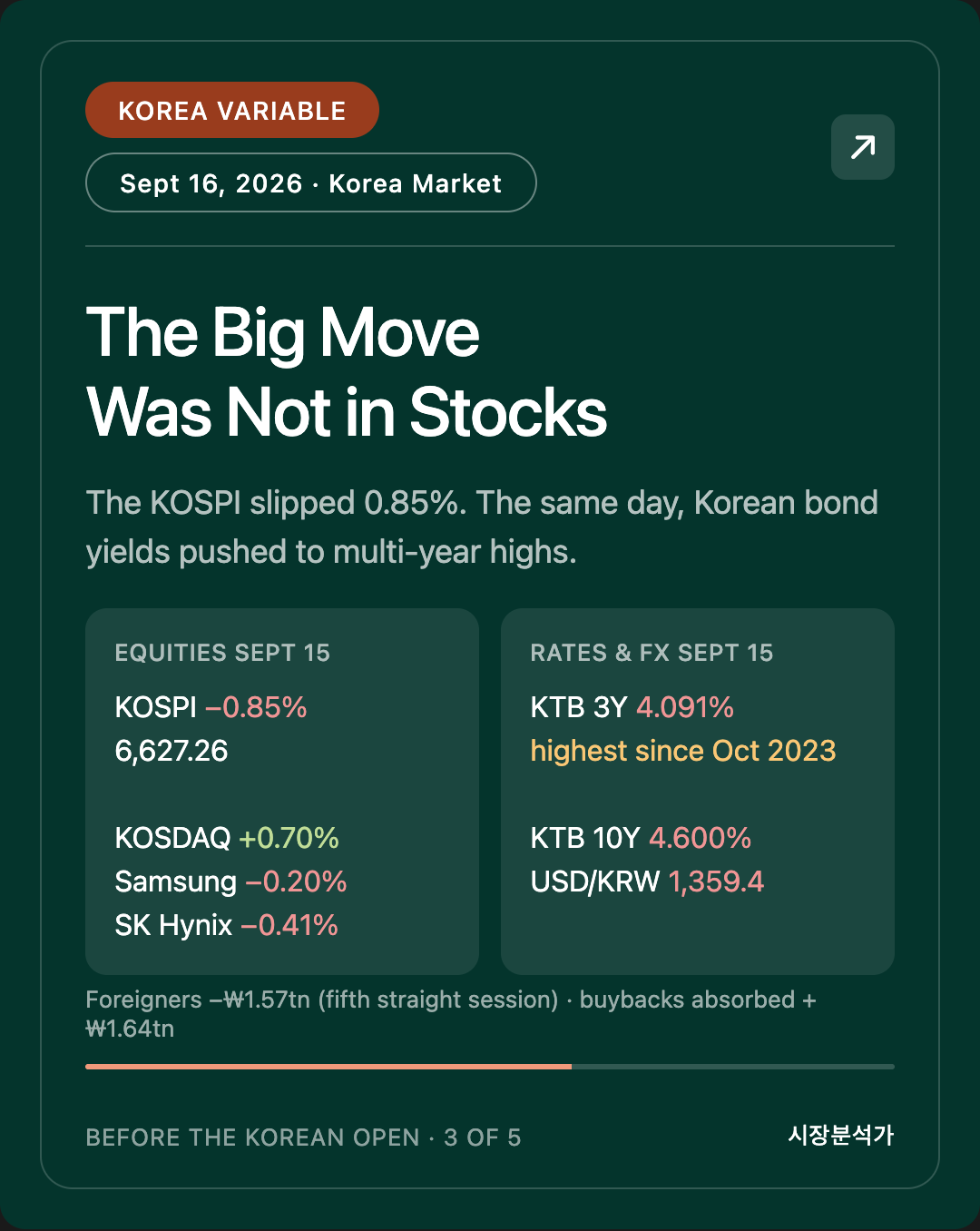
- 🔴 Korean government bond yields jumped the same day. The 3-year hit 4.091% (+6.6bp), its highest since October 2023; the 10-year hit 4.600% (+6.4bp), its highest since October 2022. The biggest price move in Korea yesterday was not in stocks. It was in bonds.
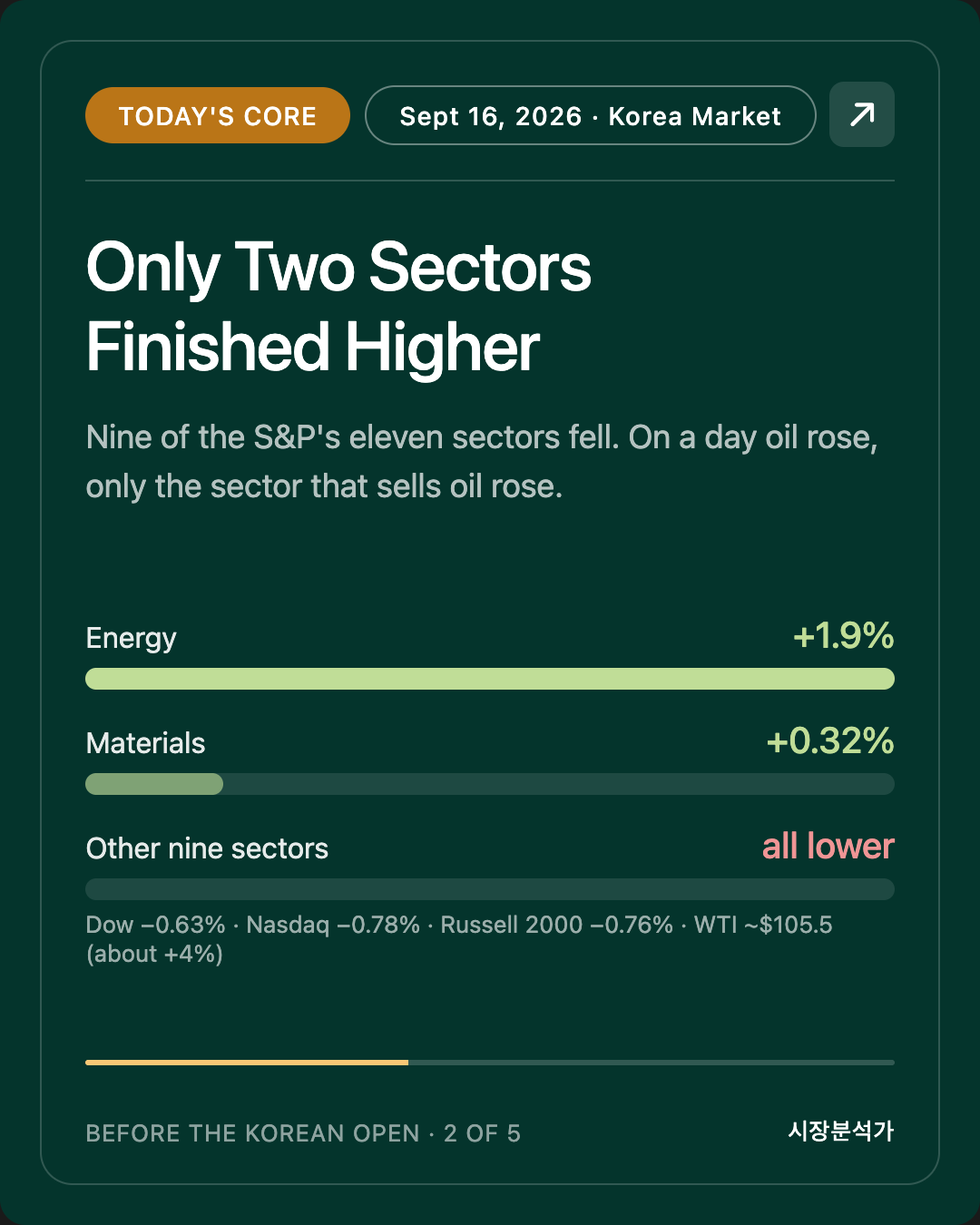
- All three US indexes fell. Dow 52,093.11 (−0.63%) · S&P 500 7,585.73 (−0.45%) · Nasdaq 25,981.57 (−0.78%) · Russell 2000 2,870.29 (−0.76%). Of the S&P's 11 sectors, only energy (+1.9%) and materials (+0.32%) advanced.
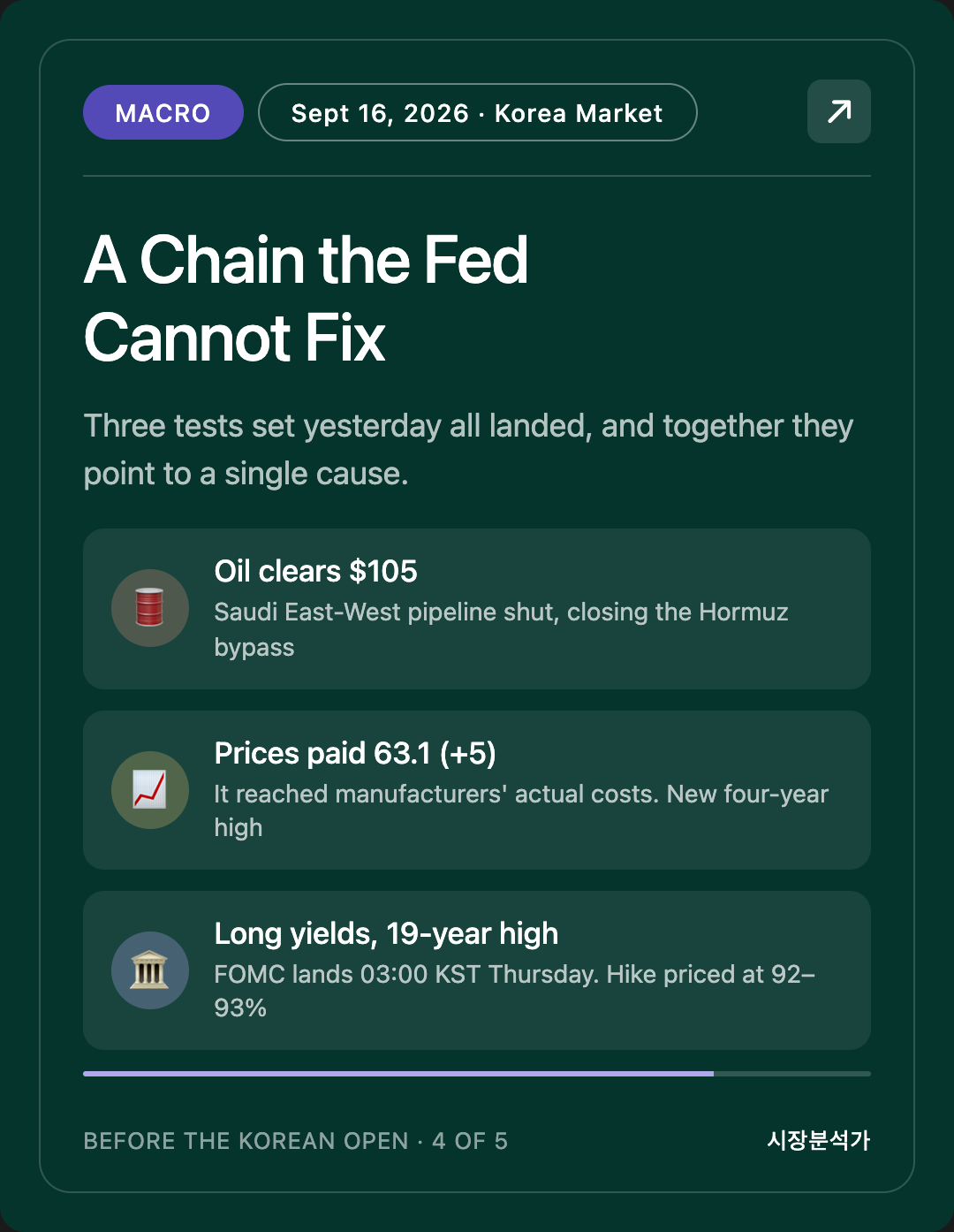
- The cause is unchanged: oil. WTI around $105.5 (roughly +4%), Brent near $107. Saudi Arabia's East-West pipeline remains shut, closing the one export route that bypasses the Strait of Hormuz.
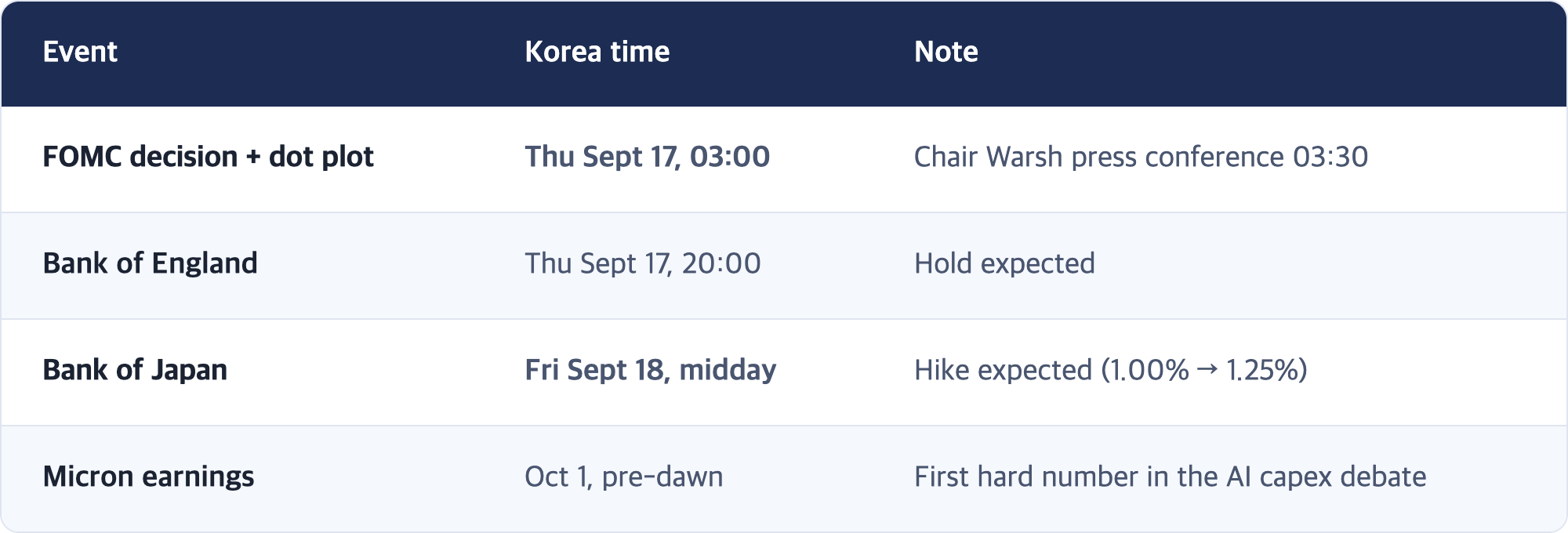
- The FOMC decision lands at 03:00 KST Thursday (14:00 ET Wednesday). A hike is 92–93% priced. Korea trades one more full session without knowing the outcome. And the thing that matters is not the hike — it's the dot plot.
This is Mr. Can. Here is the Sept 16, 2026 brief ahead of the Korean market open.
Written: 08:10 KST, Sept 16 (Vancouver: 16:10 PDT, Sept 15)
Basis: US close Sept 15 (final) + Korea close Sept 15 + US bond and commodity settlements Sept 15
✅ On schedule. Scheduled 16:00 PDT, started 16:10 PDT. Sixth consecutive on-time run.
Written after the US regular session closed at 13:00 PDT, so every US figure here is a final close, not an intraday quote.
SEO Intro
Yesterday morning this brief put four things on the board. Would the 10-year Treasury close above 5%? Would the Empire State survey's prices-paid index rise? Would WTI hold above $100? Would semiconductors hold their ground?
The first three landed exactly as written.
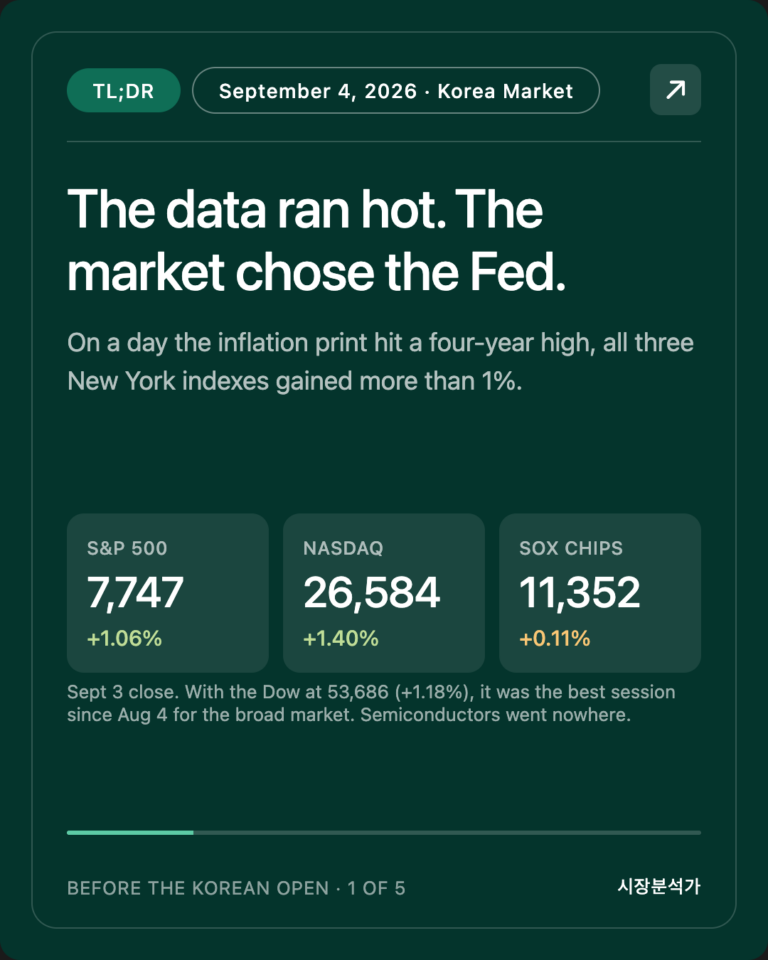
The 10-year touched 5.045% intraday, its highest since July 2007. Empire State prices paid jumped five points to 63.1, a fresh four-year high. WTI did not just hold $100 — it cleared $105.
But the three checkpoints were never really about those numbers. They were assembled to answer one question: is what's hurting this market the kind of thing the Fed can fix tomorrow?
Three out of three landing means the answer is no.
And yesterday, for the first time, that answer showed up in Seoul. Not in the KOSPI. In Korean government bonds.
1. The Story: 5% Arrived in Seoul
[Fact] What actually moved in Korea yesterday
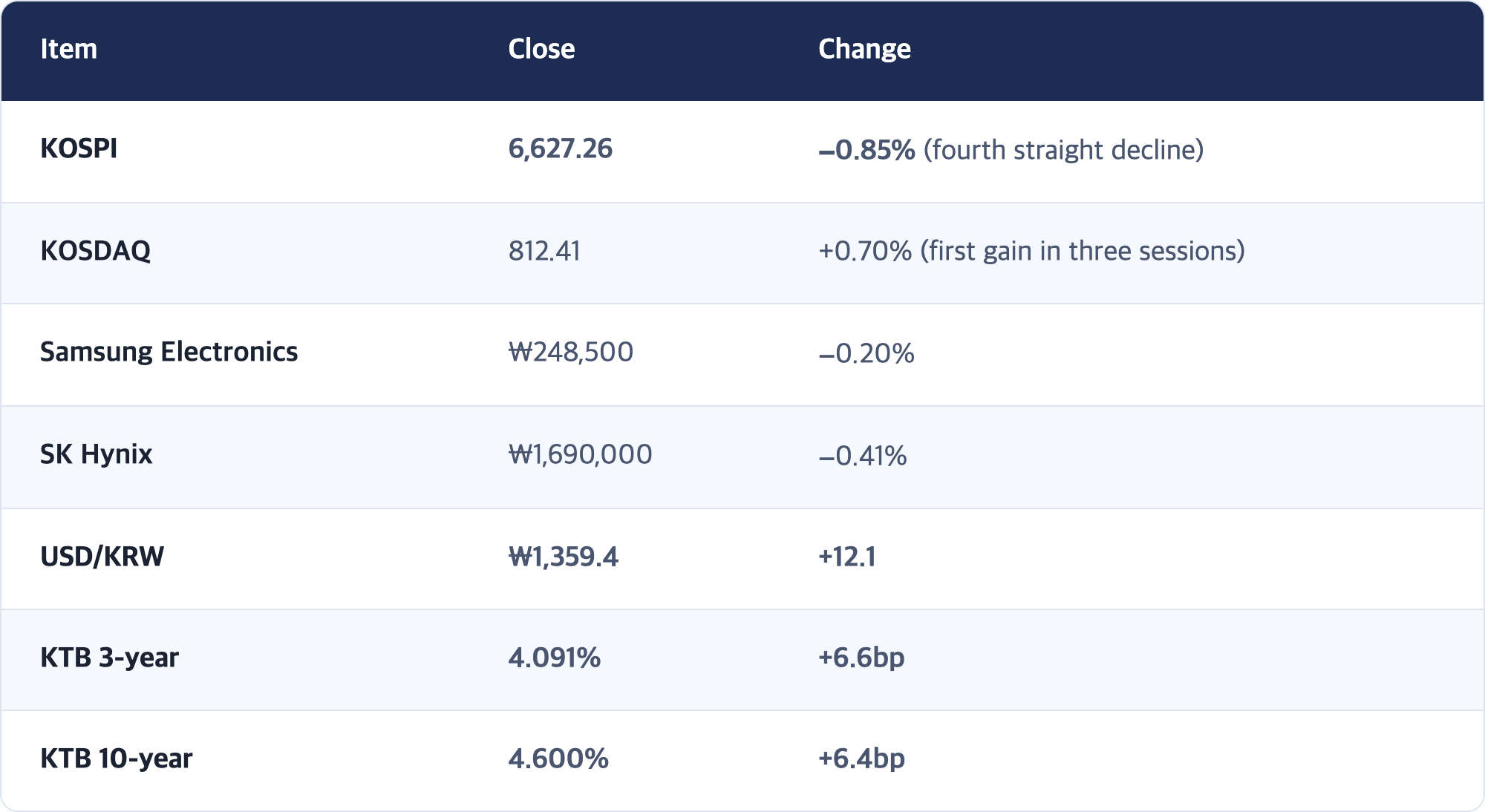
The KOSPI closed at 6,627.26, down 0.85%. Unremarkable. Meanwhile, in the Korean bond market:
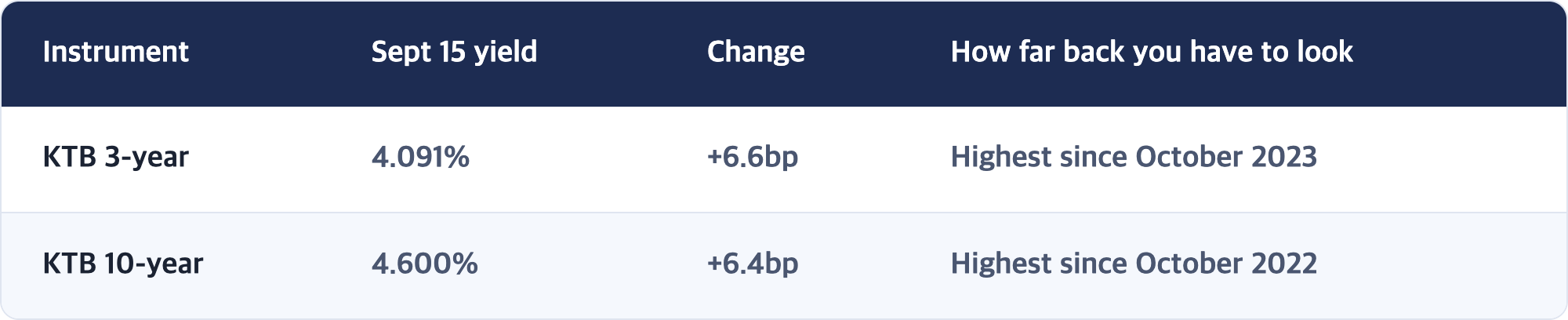
One more number gives the scale. The 3-year Korean government bond yielded 2.935% on January 2 of this year. In nine months it has risen 1.156 percentage points.
🔴 [Interpretation] This is yesterday's real news
For several sessions running, this brief has been writing about American yields — 4.80%, then 4.99%, then 5.04%. Each time, the transmission to Korea was described as indirect: through the currency and through foreign equity flows.
Yesterday it stopped being indirect. Korean yields themselves followed.
A Korean bond fund manager put it plainly: as the US 10-year hit 5%, Korean yields are synchronizing, with sentiment weakened by the prospect of hikes from both the Fed and the Bank of Japan.
Why this matters, stated simply:
When foreigners sell Korean stocks, the pain lands on people who own stocks. When government bond yields rise, the pain lands on everyone who borrowed money. Bank bonds and corporate bonds are priced off the government curve. Every mortgage holder and every company rolling debt sits on top of that line.
[Interpretation] So watch one extra thing today
Even if the KOSPI bounces today, if the 10-year KTB pushes past 4.600%, that bounce means something different. It would mean stocks looked cheap, not that the pressure on Korea eased.
Checkpoint 2 below watches exactly that.
2. Scoring Yesterday's Checkpoints (US session, Sept 15)
The four items the Sept 15 morning brief put on the board. The axis was: is this something the Fed can fix tomorrow?
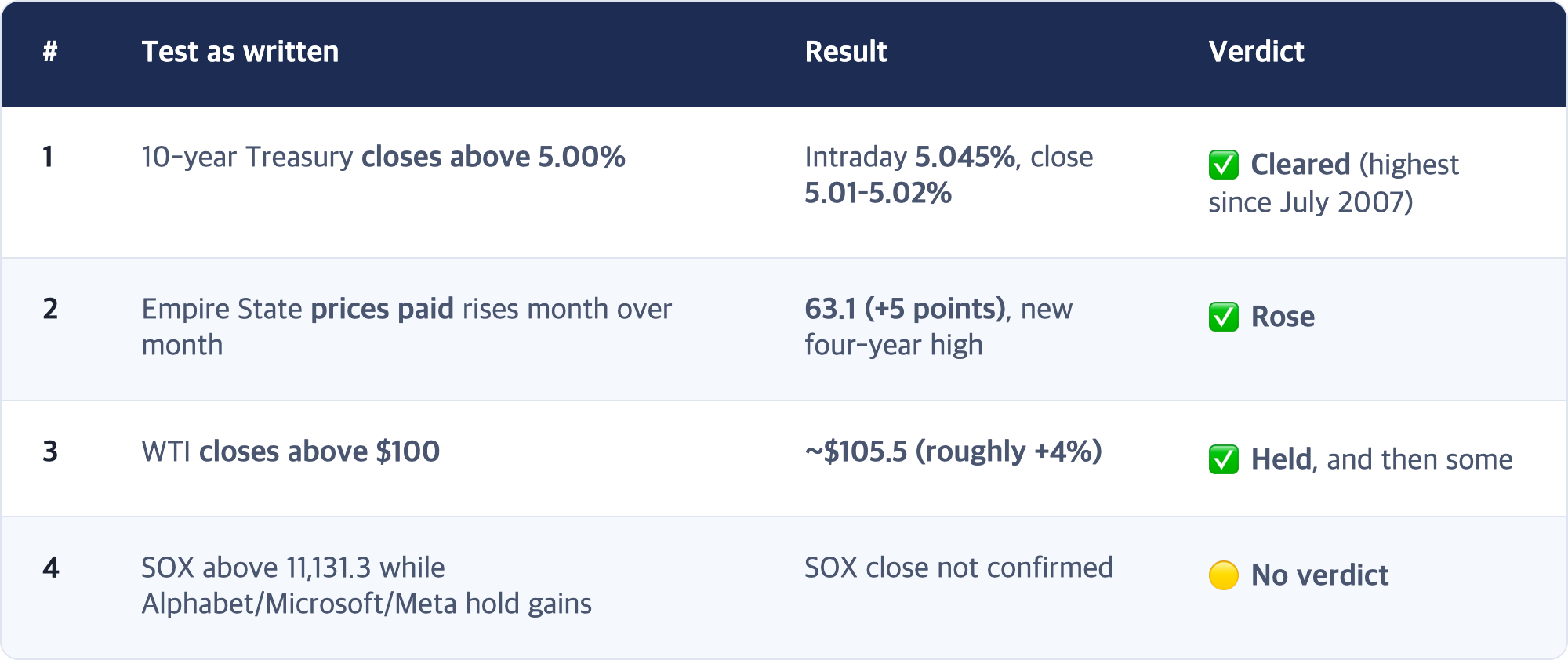
🔴 [Interpretation] Three hits, and they form a chain
Individually these are small numbers. Put together they make one causal sequence.
Oil cleared $105 → that cost reached actual manufacturing input prices (prices paid 63.1) → long-term yields hit a 19-year high.
Number 2 carries the most weight. Empire State prices paid measures the share of New York State manufacturers reporting higher input costs. It rose five points to 63.1, exceeding the four-year high set in May. Prices received — what they charge customers — also rose five points, to 28.1.
Yesterday's brief called this "the first check on whether oil has moved from an expectations problem to an actual cost problem." It has moved.
Which means a 25bp hike tonight, hawkish or otherwise, does not reopen a Saudi pipeline. That is what the three checkpoints jointly say.
[Interpretation] Number 4 asked the wrong question
Honestly stated: number 4 cannot be scored. The SOX close was not obtained.
But even with it, the answer would have been muddled. Individual chip names actually rose yesterday: Qualcomm +4%, AMD +2%, Coherent nearly +2%. CNBC credited those gains with cushioning the S&P's and Nasdaq's declines.
And yet the Nasdaq was the weakest of the three indexes at −0.78%. Chips up, Nasdaq down hardest.
Checkpoint 4 asked whether semiconductors would hold. But yesterday's real fault line was not inside the chip sector — it ran along interest-rate sensitivity. On a day when only energy rose and nine of eleven sectors fell, picking one sector as your question cannot produce a useful answer.
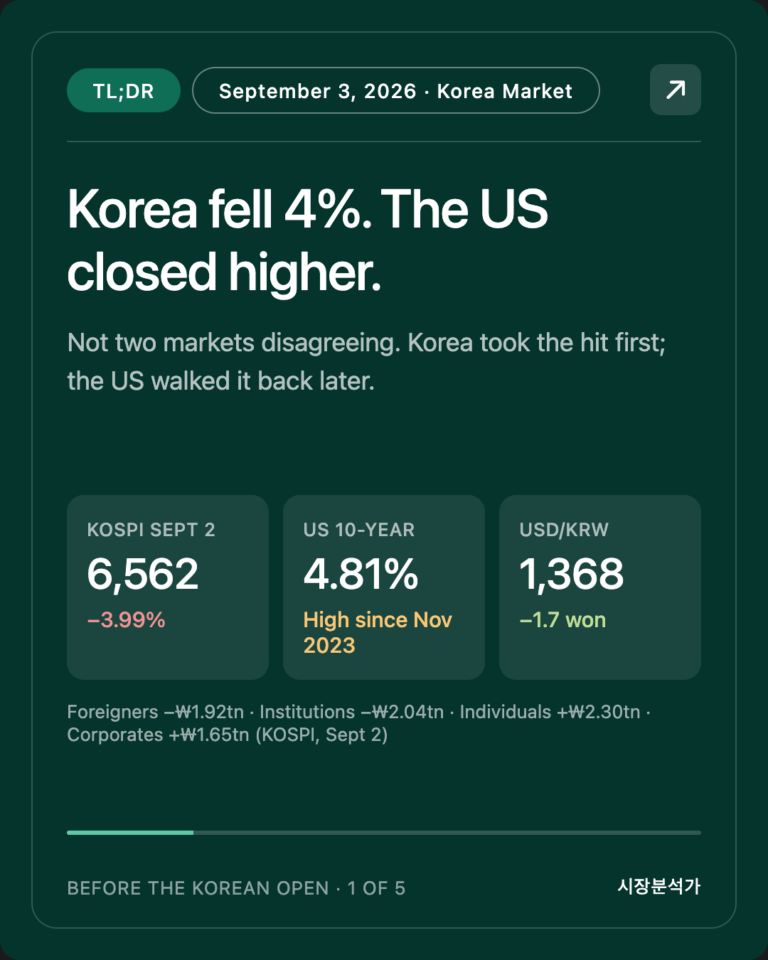
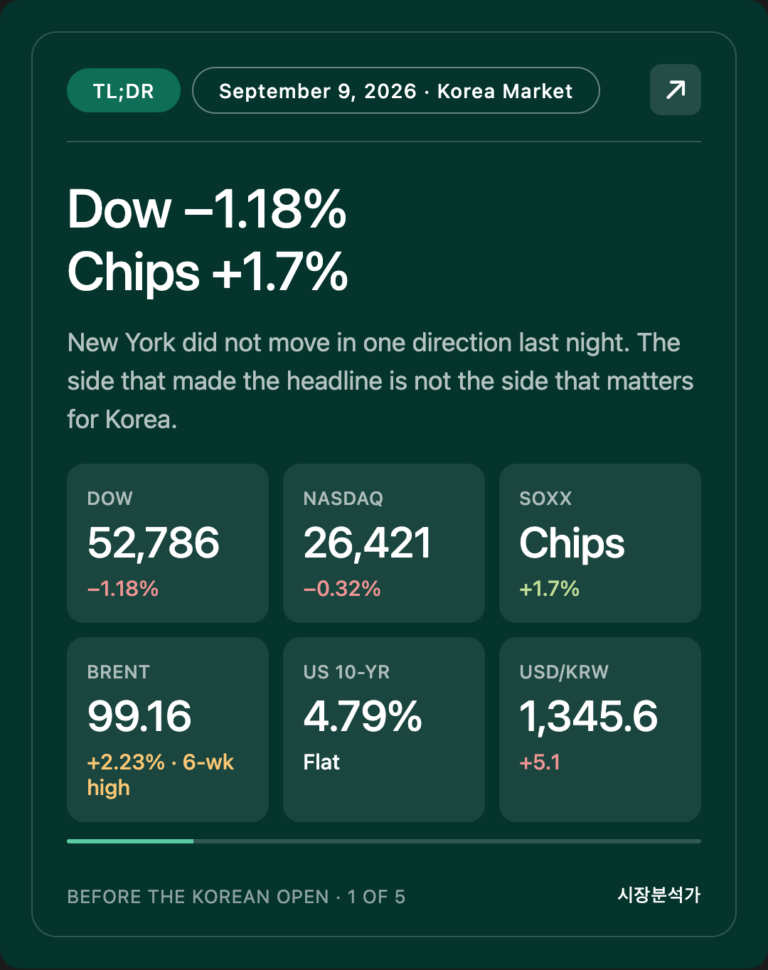
That makes this the third time this project has chosen the wrong axis, after September 3 (Dow vs Nasdaq) and September 14 (index vs index). Today's checkpoints ask about prices, not sectors.
3. US and Europe Close (Sept 15 ET)
[Fact] US indexes
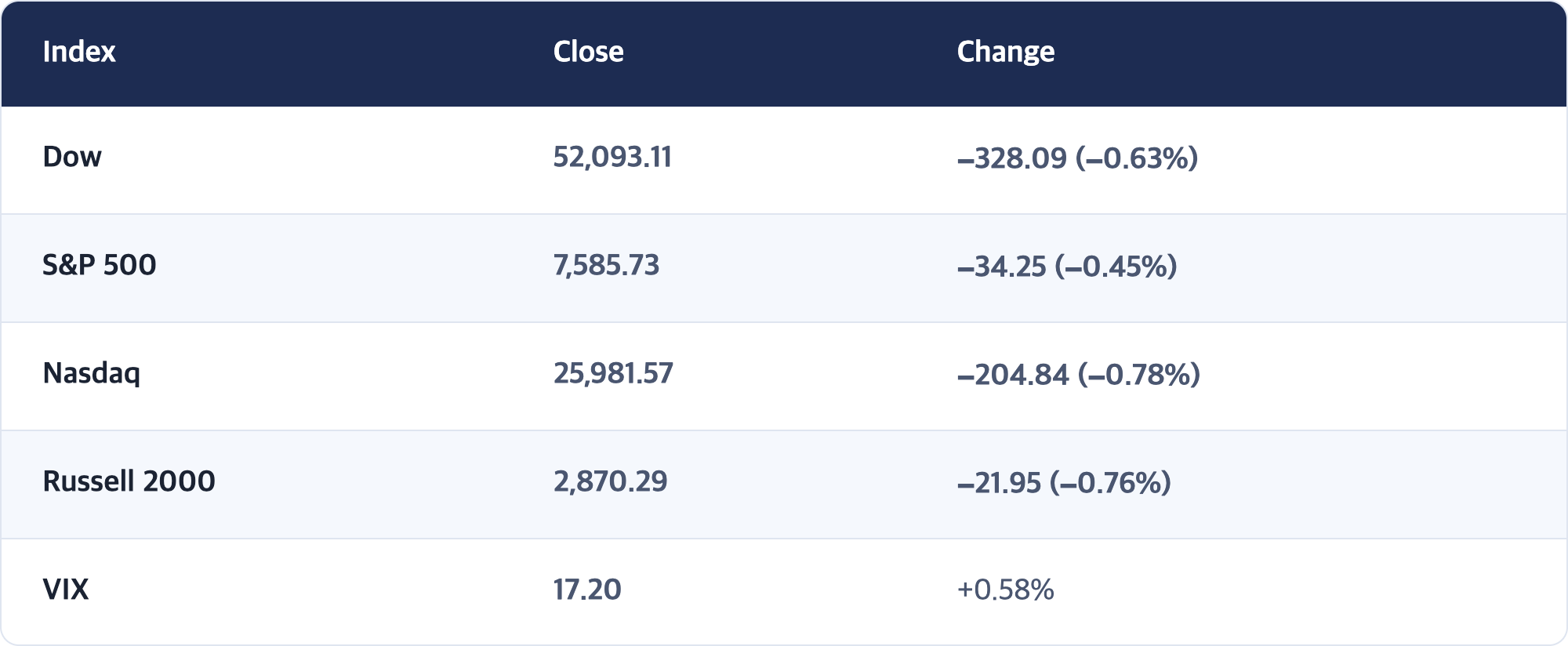
🔴 [Fact] Only two sectors advanced
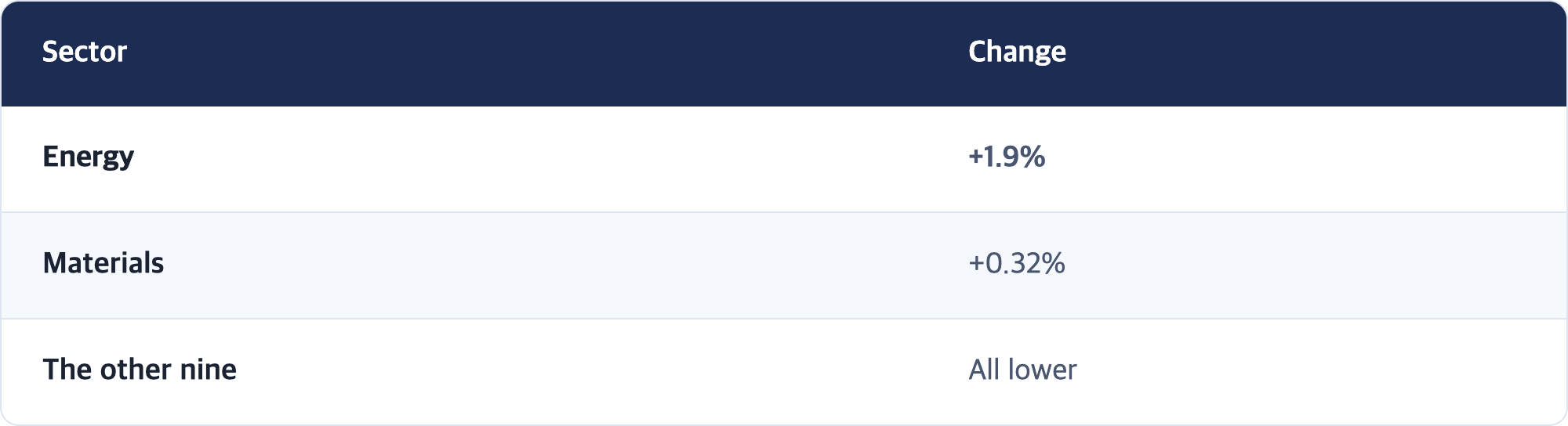
That table explains the whole session. On a day oil rose, the sector that sells oil rose. Everything else absorbed the rate burden.
[Fact] Bonds and commodities
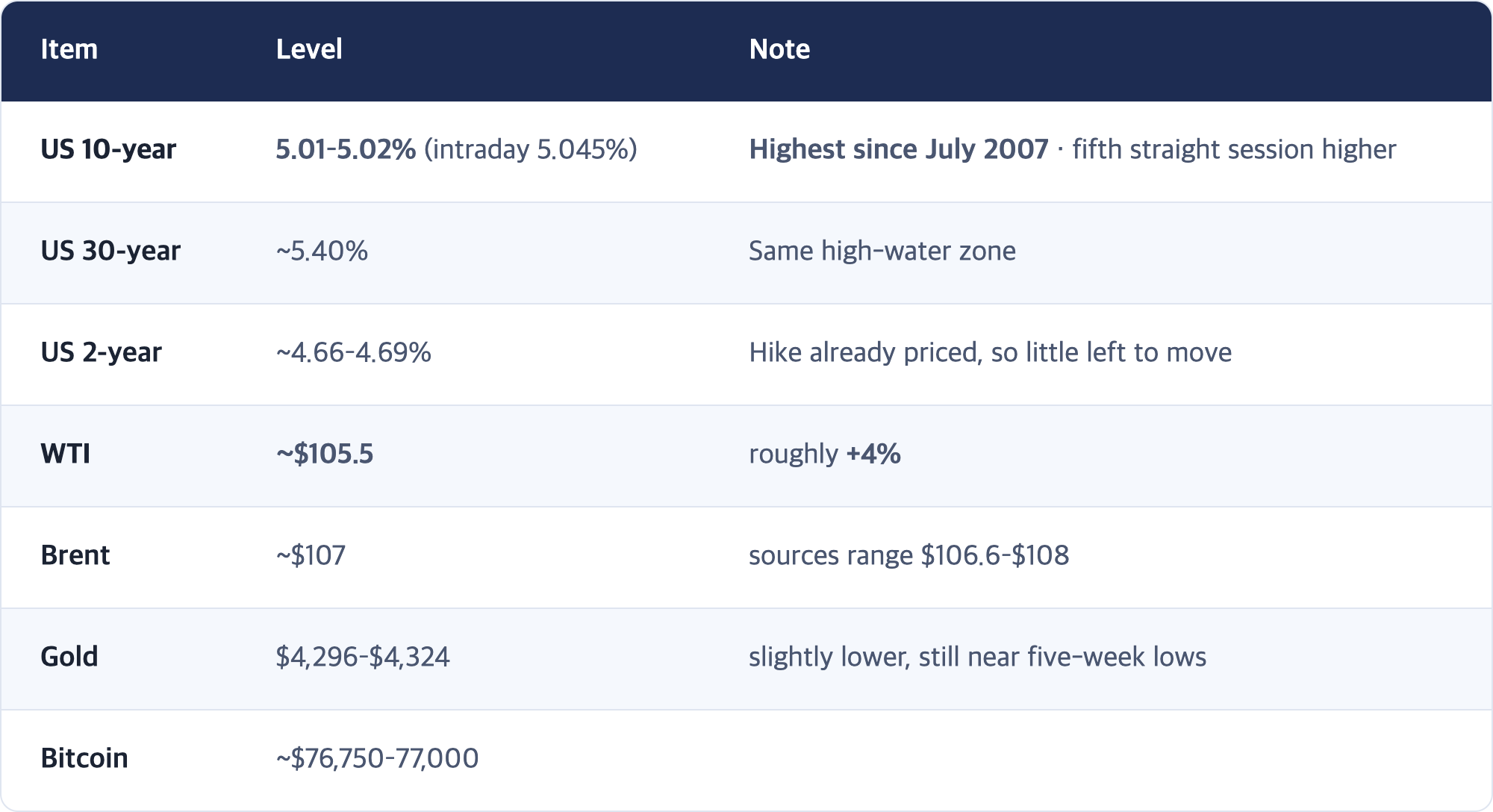
ℹ️ Sources split on the 10-year close between 5.01% and 5.02%, and on the intraday high between 5.03% (Korean outlets) and 5.041–5.045% (US outlets). This brief reads it as close 5.01–5.02%, intraday around 5.04%.
[Interpretation] Why oil won't come down
Saudi Arabia's East-West pipeline is shut. That line carries crude from Gulf fields to the Red Sea — the only export route that avoids the Strait of Hormuz.
With it down, Riyadh is reportedly asking to move more volume through the Strait instead. Repairs may take weeks. The US energy secretary said he expects it back soon, but the market is watching the pipeline, not the statement.
The detour is blocked while the main road is dangerous. That is the structure keeping crude above $100.
4. The Korea Variable: What Sold Yesterday, What Arrives Today
[Fact] Korea close, Sept 15
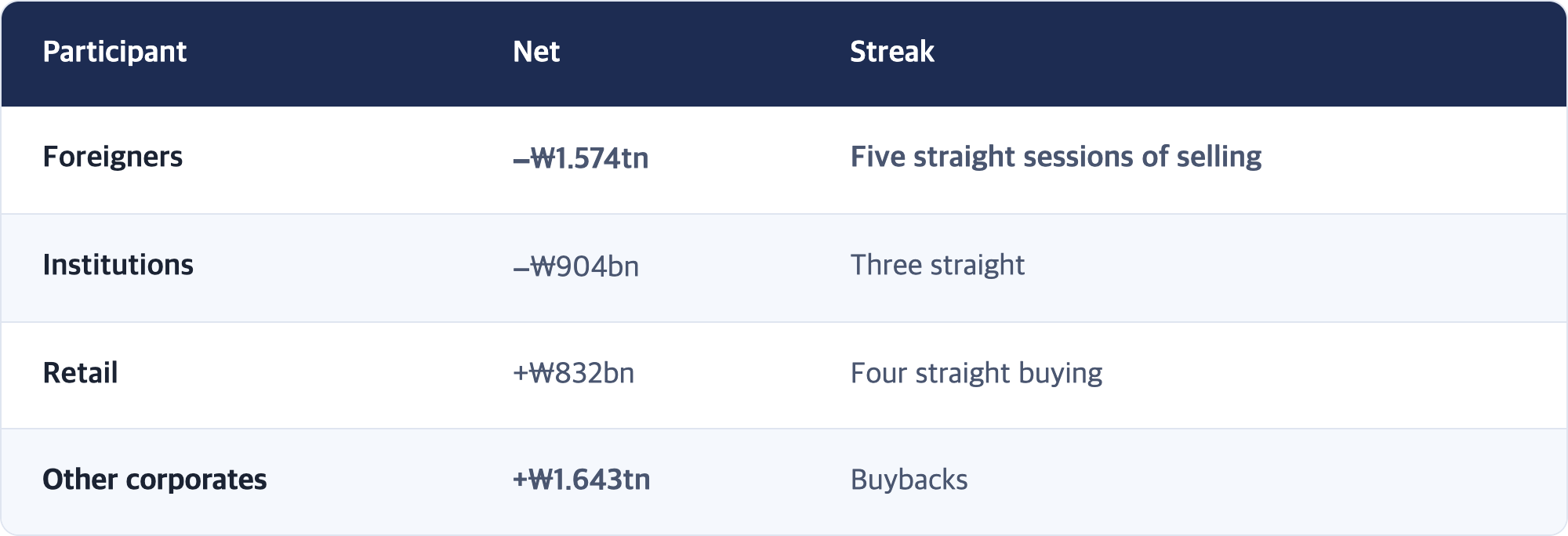
[Fact] KOSPI flows (Korea Exchange basis)
🔴 [Interpretation] Korea faces three layers today
- Rates. The US 10-year crossing 5% already reached Korean government bonds during Asian hours yesterday. Today adds the confirmed US close above 5%.
- Currency. The won ended at 1,359.4, and the dollar strengthened further afterward in New York. The open is likely above 1,360.
- Semis are neutral, for once. Chip names rose in the US yesterday. The sector that drove Korea's last two sessions lower gets at least one day off.
So today's session is likely to be a rates day, not a chips day. If so, expect the KOSDAQ — heavier in growth names whose earnings sit further out — to underperform the KOSPI, reversing yesterday's pattern.
[Interpretation] How to count the buyback bid
"Other corporates" absorbed ₩1.643 trillion yesterday — most of the combined ₩2.477 trillion sold by foreigners and institutions. The same structure appeared on August 31, September 3, and again yesterday.
Which raises the question to watch: when does the index stand up without the buyback? Buyback programs end. The current floor is partly manufactured. Checkpoint 4 measures how thick that floor is.
5. Macro Backdrop: The Dot Plot, 03:00 KST Thursday
[Fact] Calendar (KST)
[Fact] What's priced
CME FedWatch puts a 25bp hike at 92–93%. That would take the range from 3.50–3.75% to 3.75–4.00% — the first hike since July 2023.
Forecasters split from there:
- Bank of America: 25bp at each of the three remaining meetings this year, +0.75 percentage points by year-end.
- Citigroup: hike now, then hold, with cuts beginning June next year.
One camp sees three more, the other sees this as the last. That gap is precisely what tonight's dot plot has to answer.
🔴 [Interpretation] The hike itself is already in the price
At 92% priced, the hike alone gives the market little reason to move.
Two things will actually be read:
- The year-end median dot. One more hike penciled in favors the BofA view; nothing more favors Citi.
- How the press conference treats oil. Is energy inflation "transitory," or a risk of becoming embedded in expectations?
And as yesterday's study note laid out: right after the release, a big move in the 2-year is a Fed story; a bigger move in the 10- and 30-year is an inflation-outlook story.
6. Korea Session Preview (Wed Sept 16, KST)
[Observation] Starting line
KOSPI 6,627.26, KOSDAQ 812.41, USD/KRW ₩1,359.4, KTB 10-year 4.600%.
Overnight, US indexes fell 0.45–0.78%, the 10-year closed above 5%, and oil rose further. The only overnight item friendly to Korea is that individual chip names bounced.
[Interpretation] The fork
If rates lead: the 10-year KTB pushes past 4.60%, the won breaks 1,365, and the growth-heavy KOSDAQ lags the KOSPI. The index tests 6,600.
If it's a pre-FOMC holding pattern: volumes thin out and the index is boxed between 6,600 and 6,700. With US chips firm overnight, Samsung and SK Hynix have room for a modest bounce.
The currency at the open decides which. Settling in the low 1,360s points to the second; drifting toward 1,365 points to the first.
✅ Four checkpoints for today's Korean session
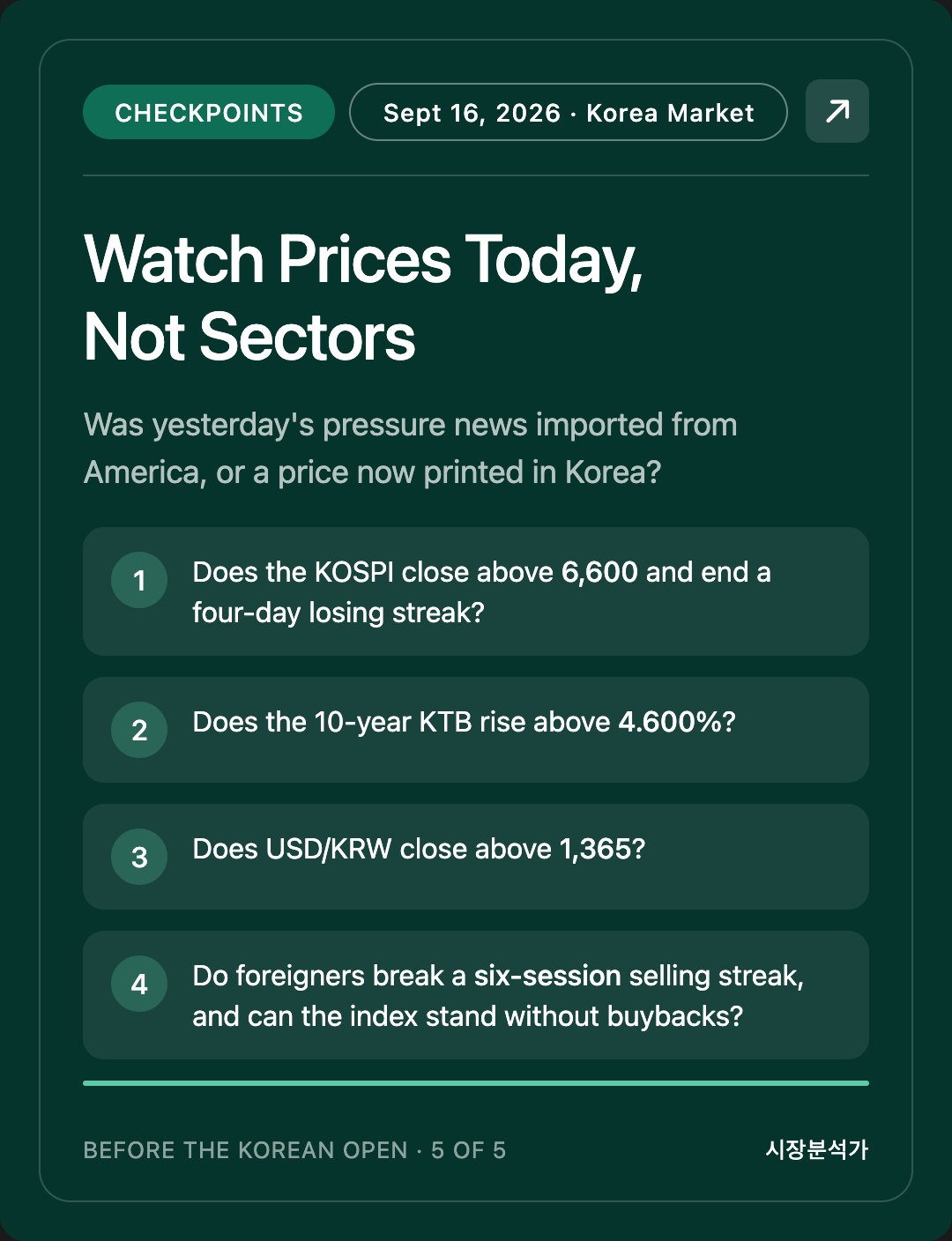
- Does the KOSPI close above 6,600 and end the four-session losing streak? Yesterday's low was 6,582.20, so the line has already been breached intraday
- Does the 10-year KTB rise above 4.600%? This separates a one-day sympathy move from sustained synchronization with US yields
- Does USD/KRW close above ₩1,365? Above that, foreign selling likely re-accelerates; stalling in the low 1,360s means yesterday was an overreaction
- Do foreigners break a six-session selling streak, and can the index stand without the buyback bid?
The axis, stated up front: today's four ask whether what pressured Korea yesterday was news imported from America or a price now printed in Korea. Items 1 and 4 look at equities; items 2 and 3 look at Korea's own prices. If 2 and 3 both deteriorate, this is structural, not a headline.
7. Study Note: Why Seoul's Yields Follow New York's
Since today's core point is that America's 5% showed up in Korean government bonds, here is the mechanism.
The concept
Yield synchronization is when one country's interest rates move with another's. US Treasury yields, in particular, serve as the reference point for bonds worldwide.
Three reasons.
- Money crosses borders. If the US 10-year pays 5% and Korea's pays 3%, capital goes to America. To sell Korean bonds you have to pay more. Korean yields rise.
- Treasuries are the global risk-free benchmark. When the price of the safest asset in the world moves, the required return on everything riskier moves with it. Korean government bonds and corporate bonds both sit on top of that line.
- Expectations move together. When oil pushes the US inflation outlook higher, it does the same to Korea's — a country that imports essentially all of its crude.
The analogy
Two shops in the same building.
The big shop (America) raises its hourly wage to ₩15,000. If the small shop next door (Korea) keeps paying ₩10,000, nobody applies. Whether the small shop's owner likes it or not, the neighbor's wage sets the floor for their own.
This is why market yields can rise even when the Bank of Korea hasn't moved. The policy rate is set by the central bank; the government bond yield is set by buyers and sellers — and many of those buyers and sellers are doing their math off US yields.
The example: yesterday
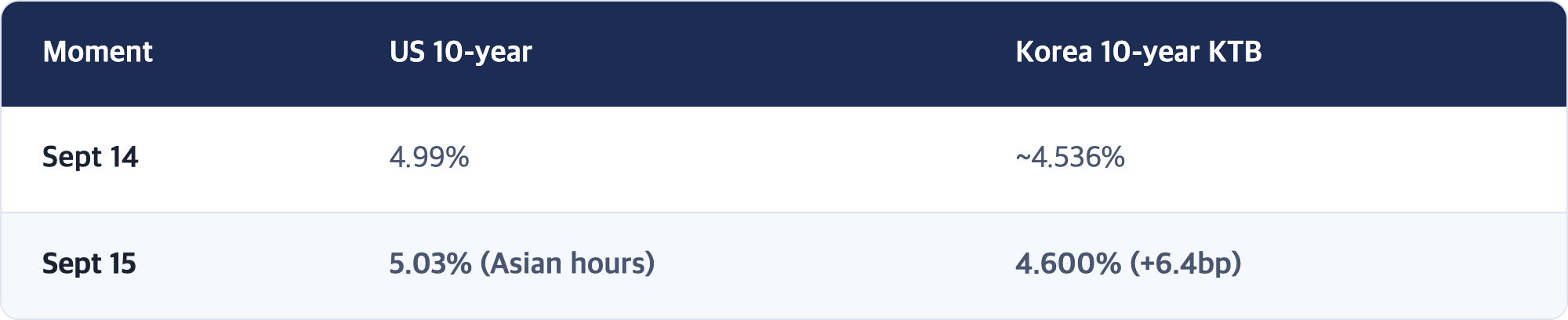
Note the timing. Korean bonds moved not after the US close, but at the moment the US 10-year printed 5.0266% during Asian trading hours. Treasuries trade around the clock.
Korea's bond market did not read the news the next morning. It was watching the same screen at the same time.
One line
The exchange rate is the channel through which US rates travel to Korea. The government bond yield is the evidence that they arrived. Yesterday was the day arrival was confirmed.
8. Corrections and Open Items
🔴 One axis error (self-review)
Checkpoint 4 in the Sept 15 morning brief used the wrong axis. It asked about one sector when the session saw only energy rise and nine of eleven sectors fall. On such a day no single sector can characterize the market. This follows September 3 (Dow vs Nasdaq) and September 14 (index vs index) — a third instance of the same mistake. Today's checkpoints ask about prices (yields, the currency) rather than sectors, to break the pattern.
Source discrepancies (values adopted here)
![Item · Values seen · Adopted / US 10-year, Sept 15 · close 5.01% / 5.02% · intraday 5.03% (KR outlets) / 5.041–5.045% (US outlets) · Close 5.01–5.02%, intraday ~5.04% / WTI, Sept 15 · $105.47 (−0.34%) [Yahoo] · $105.49 (+4.04%) [Trading Economics] · ~$105.5, roughly +4% on the day / Brent, Sept 15 · $106.57 [Fortune] · $107.46 [Convex] · ~$108 [Yahoo] · ~$107 / Gold, Sept 15 · $4,295.94 (−0.07%) · $4,323.70 (−0.21%) · $4,296–$4,324 shown as a range (ope...](https://wecansurvive.ca/wp-content/uploads/2026/09/tbl_10-23.png)
Open items
- SOX close for Sept 15 not obtained. Only individual names (Qualcomm +4%, AMD +2%) were confirmed. This is why checkpoint 4 has no verdict
- US 2-year and 30-year closes for Sept 15 not obtained. Only pre-market levels (4.686%, 5.40%)
- Dollar index close for Sept 15 not obtained — a sixth consecutive session with this item open. Confirmed only to the Sept 14 level near 99.6
- Overnight USD/KRW NDF not obtained. A figure near 1,362 appeared but could not be sourced, so it is not cited
✅ One item resolved
CME as the single source for Fed odds, maintained. Only CME FedWatch (92–93%) is cited in this brief.
Sources
- Stock market news for Sept. 15, 2026 — CNBC
- Stock market today: Dow, S&P 500, Nasdaq fall as 10-year Treasury yield touches 2007 high ahead of Fed decision day — Yahoo Finance
- Stock Market Today (Sept. 15, 2026): Stocks sink as Fed meeting begins, Treasury yields hit 19-year highs — TheStreet
- Empire State Manufacturing Survey — Federal Reserve Bank of New York
- Korean government bond yields synchronize with US — Segye Ilbo
- US 5% yields set off a rate shock for Korean households and firms — NewDaily
- US Treasury yields top 5%, a 19-year high — MoneyToday
- KOSPI closes down 0.85% at 6,627 on US yields — Newspim
- KOSPI retreats below 6,620; won jumps 12.1 to 1,359.4 — BusinessKorea
- Current price of oil as of Sept. 15, 2026 — Fortune
- Crude Oil — Trading Economics
- Gold — Trading Economics
- September Fed Meeting: Live Updates and Commentary — Kiplinger
This brief interprets market flows and macro variables. It is not a buy or sell recommendation on any individual security.
📌 More market briefs
※ This post is market observation and organization intended to support your own judgment. It is not a recommendation to buy or sell any security. Figures are as of the time of writing and may differ between sources.
If this was useful, bookmark it or pass it along. It genuinely helps me write the next one.
I can survive. We can survive.