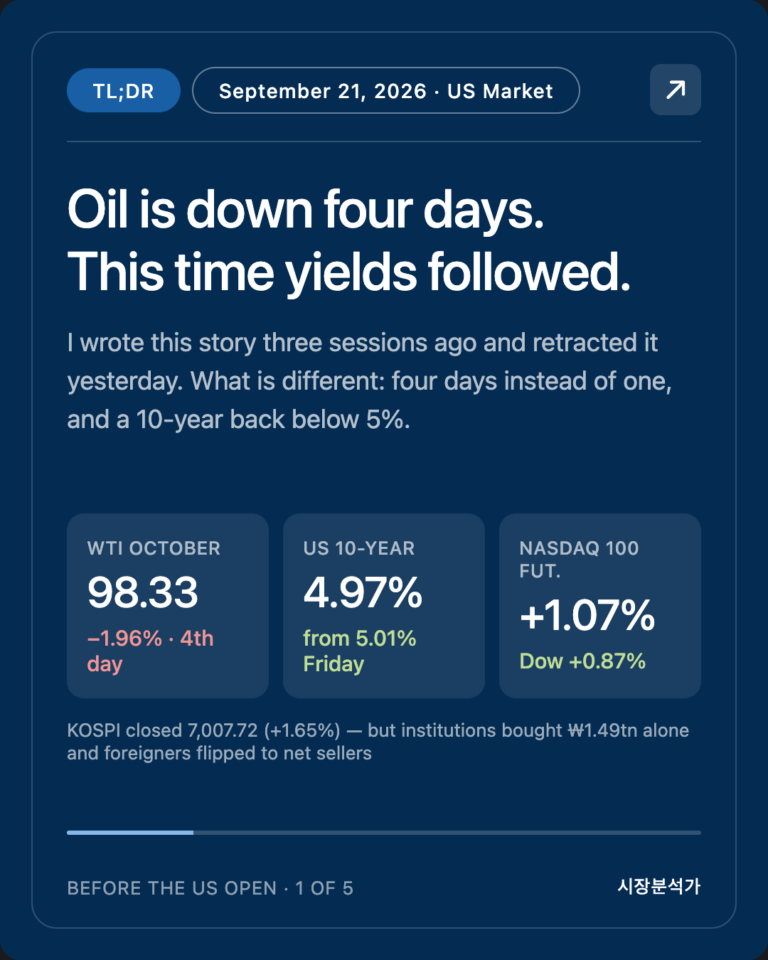
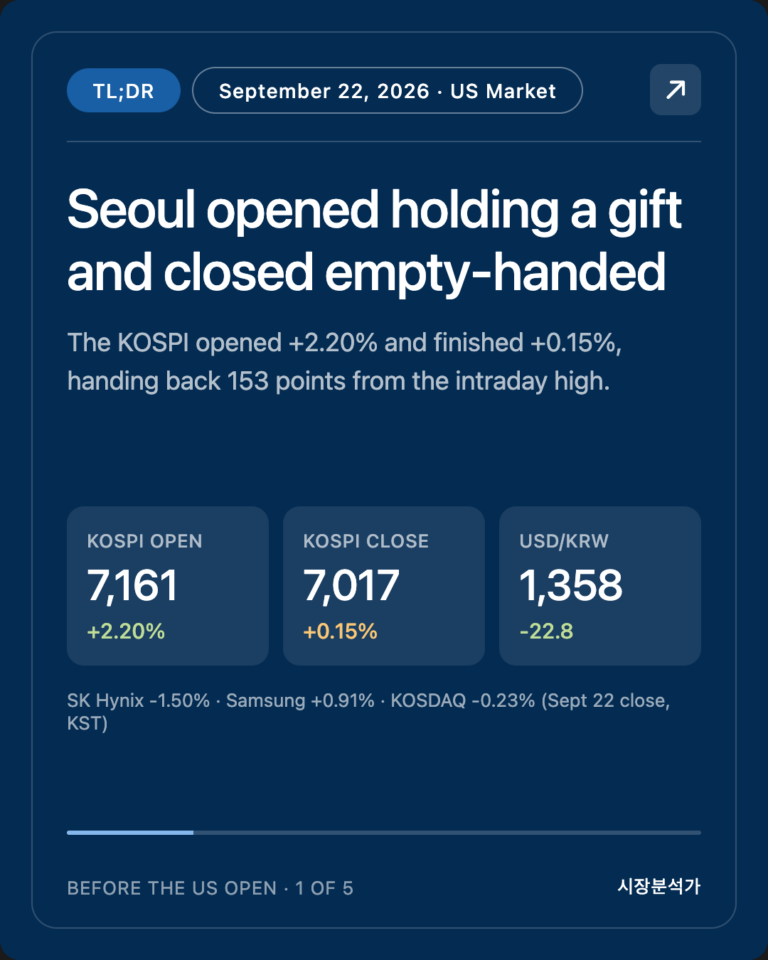
October 14, 2026 US Market Brief — Nasdaq and S&P 500 Before the Open
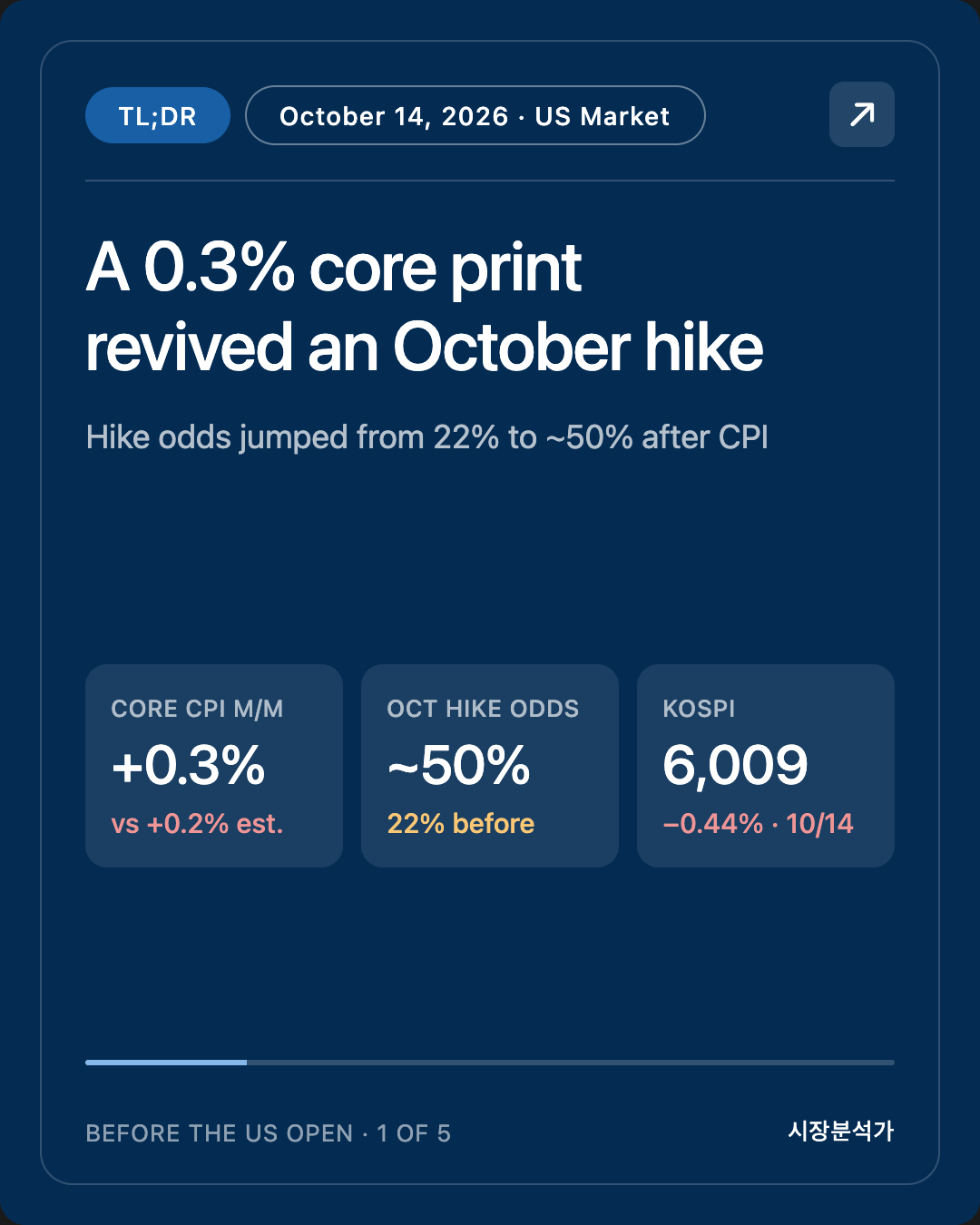
- ★ A 0.3% core print put an October hike back on the table. Headline 3.7% (vs 3.6%), core +0.3% m/m (vs 0.2%) and 2.6% y/y. October hike odds went from ~22% to ~50% (44–54%).
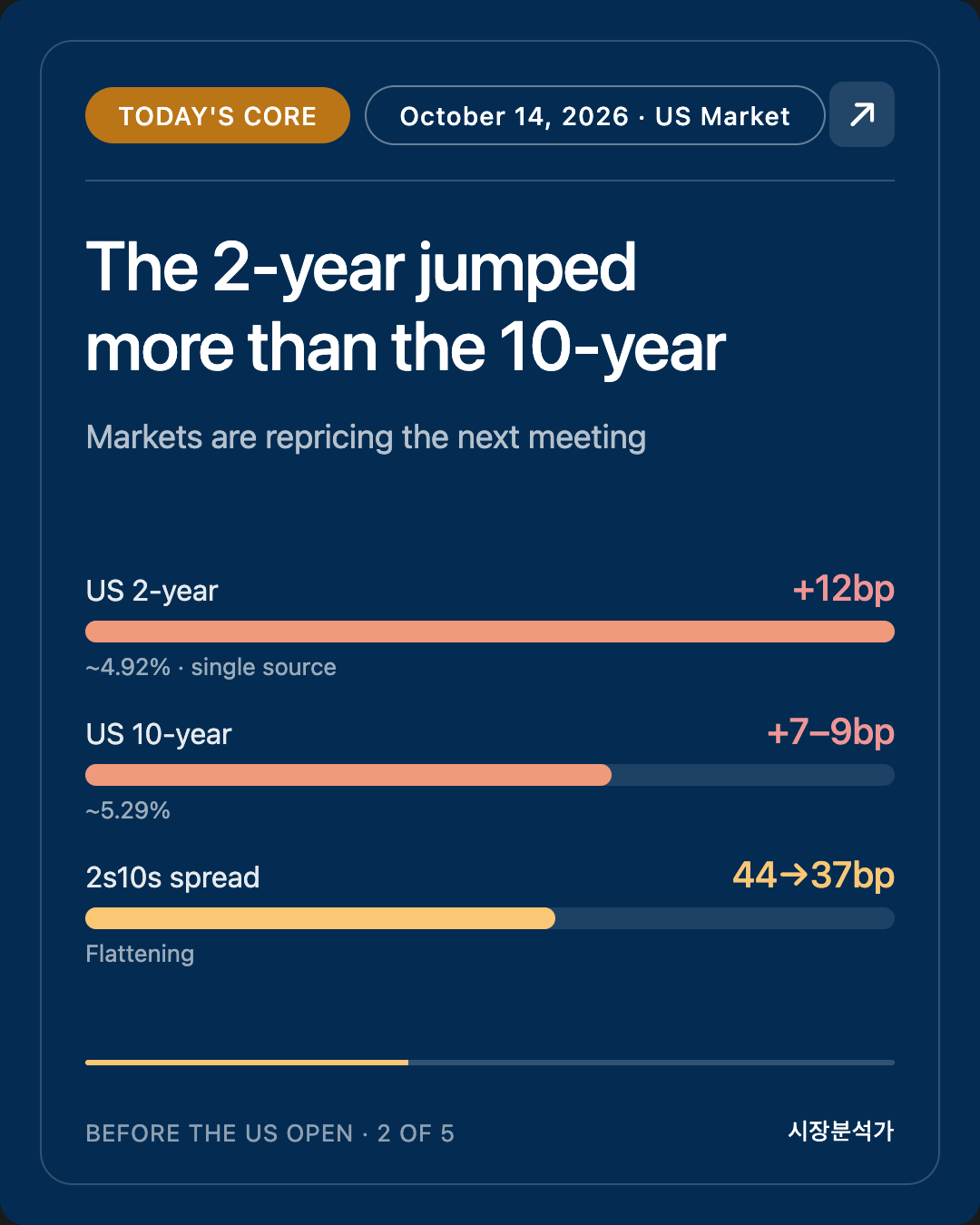
- ★ The 2-year moved more than the 10-year. 2-year up about 12bp to ~4.92% 🟡, 10-year near 5.29% (+7–9bp). The 2s10s spread narrowed from about 44bp to about 37bp (a flattening). Markets are repricing the next meeting, not long-run inflation.
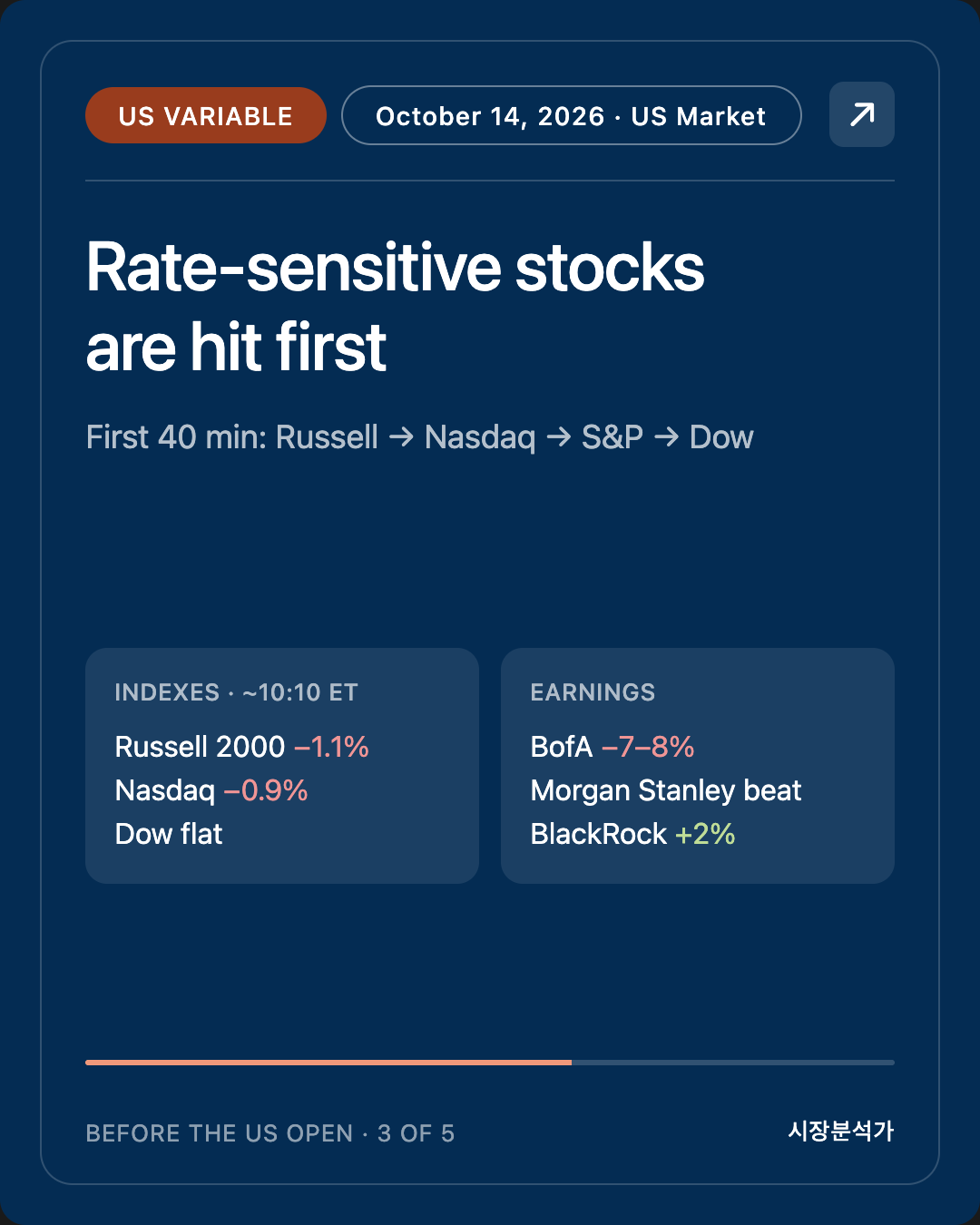
- Rate-sensitive stocks are taking the hit first. Nasdaq ~−0.9%, Russell 2000 ~−1.1%, Dow flat. Bank of America fell ~7–8% after a $1.2 billion regulatory penalty drove an earnings miss; Morgan Stanley beat but slipped ~2% premarket.
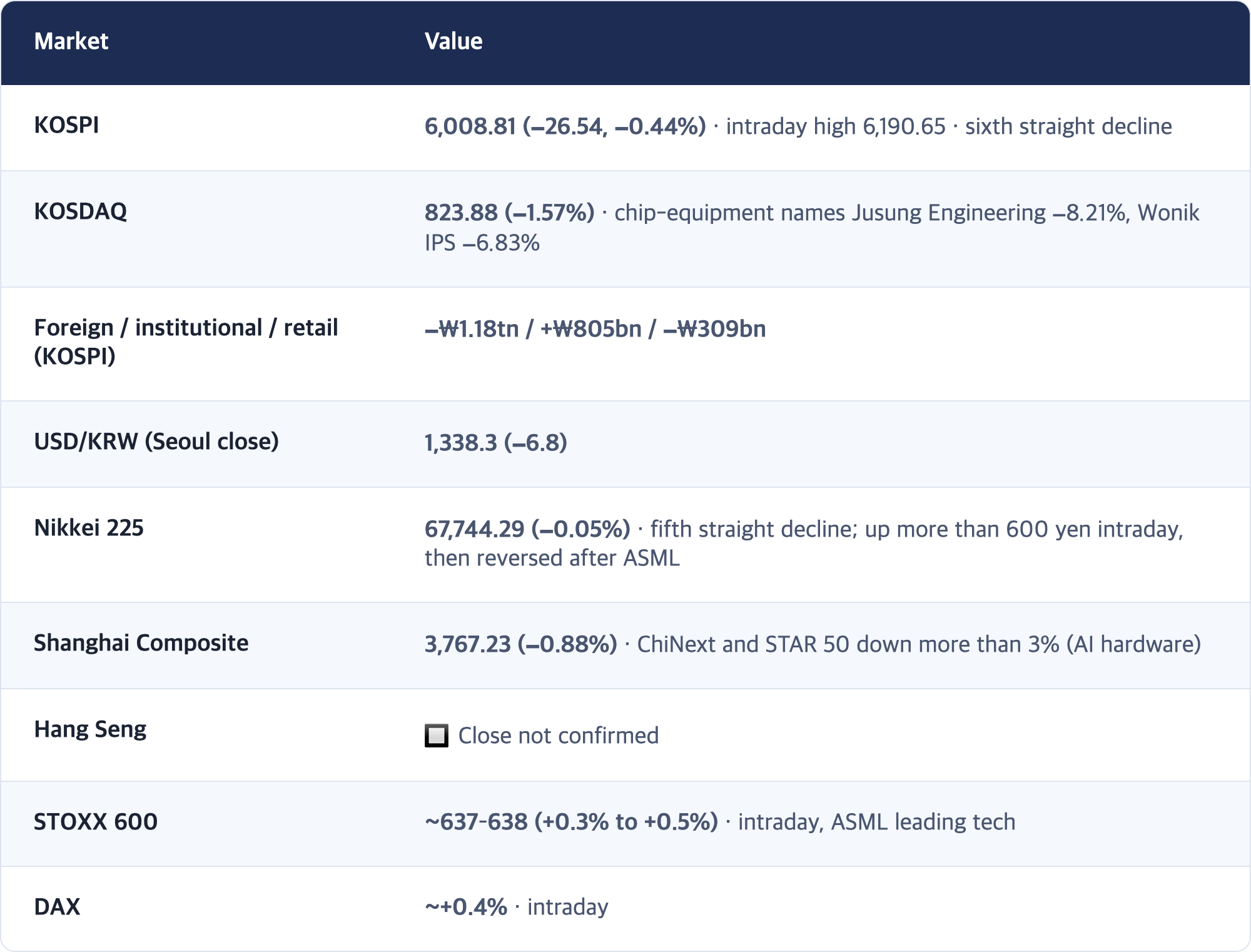
- Seoul couldn't hold its bounce. KOSPI 6,008.81 (−0.44%), intraday high 6,190.65. Foreigners sold ₩1.18 trillion (down from ₩4.52 trillion the day before, but a seventh straight day). SK hynix ₩1,419,000 (−1.66%), Samsung Electronics flat. The won firmed to 1,338.3 per dollar (−6.8).
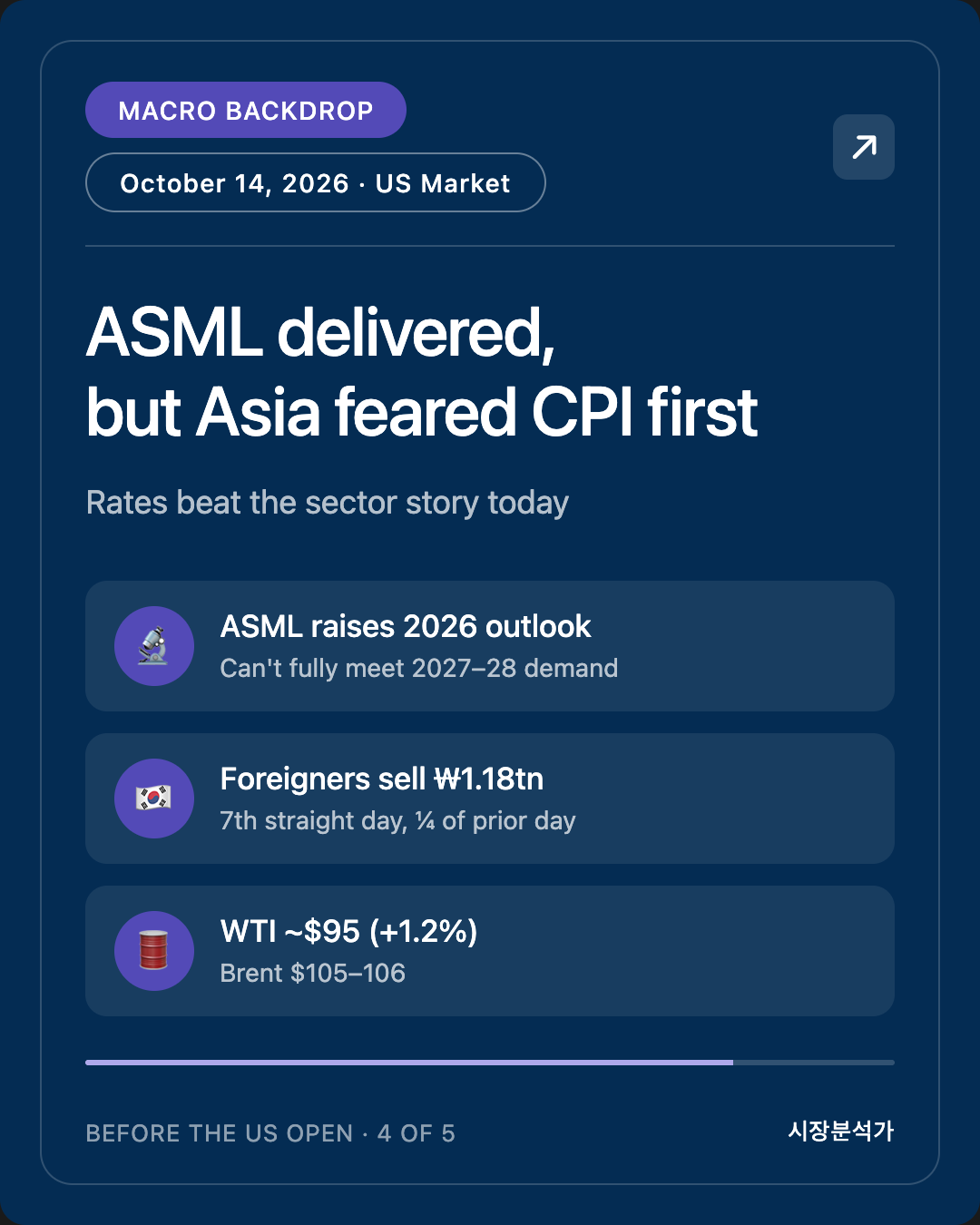
- ASML answered the "how long" question with numbers. Q3 net income €5.0 billion (vs €4.1 billion expected), 2026 sales guidance raised to €44–45 billion, and it said it will not be able to fully meet demand in 2027 or 2028. Asian chip stocks still didn't follow.
This is Mr. Can. Here is the October 14, 2026 brief ahead of the US market open.
Written: 2026-10-14 07:40 PDT (Korea 10/14 23:40 KST)
Basis: Seoul, Tokyo and Shanghai closes on 10/14 + Europe intraday + US September CPI (released 05:30 PDT) + the first ~40 minutes of the US cash session (about 10:00–10:10 ET)
🔴 Scheduled for 05:30 PDT, started at 07:09 PDT — 1 hour 39 minutes late. So this edition is not a CPI preview; it covers the first hour after CPI. US figures are intraday and may differ from the close.
🟢 No missed editions. The previous one was the 10/13 Korea-open brief.
🟡 The Hang Seng close and the exact 2-year yield level come from a single source each (see section 7).
SEO Intro
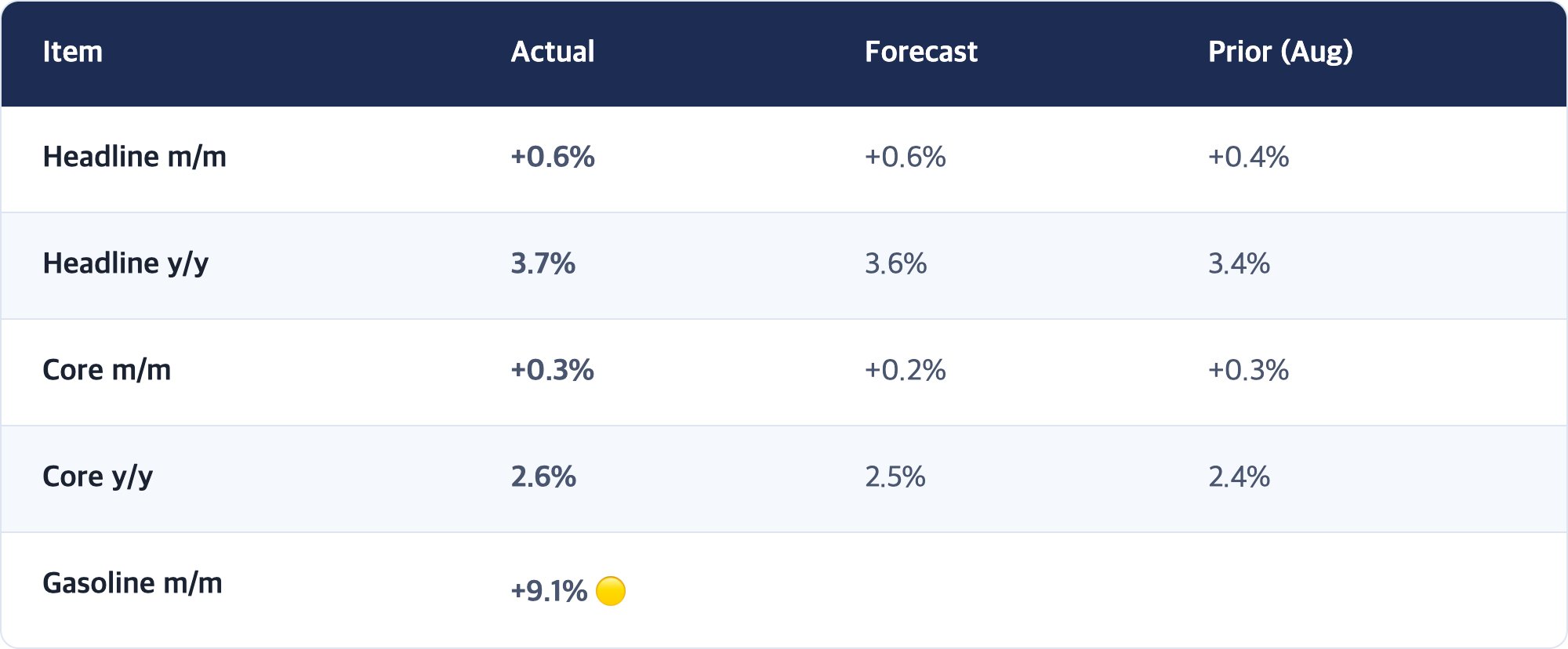
Inflation knocked on the Fed's door again. US September CPI, released at 8:30 a.m. ET on October 14, rose 3.7% year over year (forecast 3.6%) and +0.6% month over month (in line). The number markets were really waiting for was core — CPI excluding food and energy — which rose +0.3% on the month (forecast +0.2%) and 2.6% on the year (forecast 2.5%).
That 0.1-point miss moved rate expectations. The probability of a hike at the October 27–28 FOMC meeting jumped from about 22% before the release to roughly 44–54% afterward, depending on source and timing. The 2-year Treasury yield rose about 12bp to near 4.92%, and the 10-year climbed to about 5.29%. Forty minutes into the session, the Nasdaq was down about 0.9%, the S&P 500 about 0.6%, and the Dow was roughly flat.
Seoul closed before any of this. The KOSPI opened more than 2% higher, then faded to 6,008.81 (−0.44%), barely holding 6,000, as foreign investors sold for a seventh straight session. Today's US question: did one CPI print really break the "October hold" assumption, or is this a first-hour overreaction?
1. Scoring Yesterday's Checkpoints
The four set in the 10/13 Korea-open brief (scored at the 10/14 Seoul close)
The question was: would Seoul reverse the extra losses it took relative to New York, or keep them?
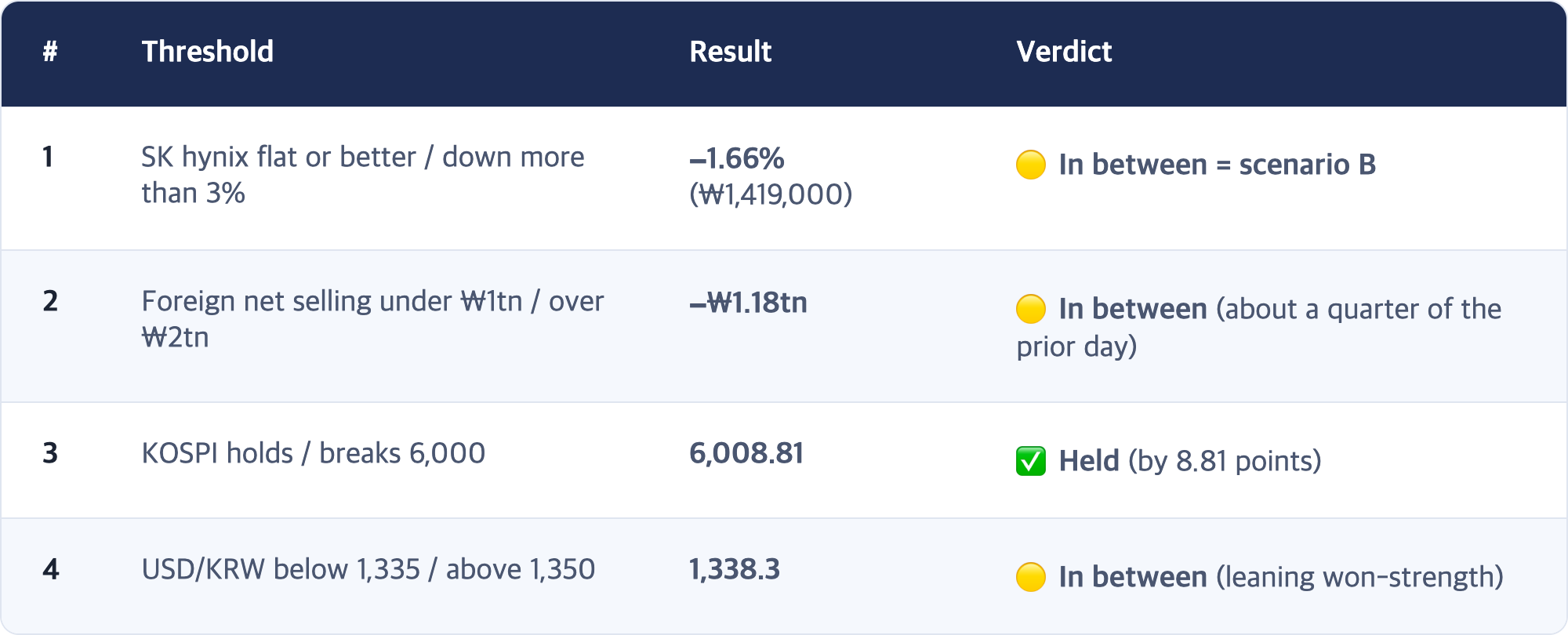
★ [Interpretation] Neither a reversal nor an extension — the selling slowed down
Scenario A (reversal) was right for about an hour. The KOSPI reached 6,190 and the two chip giants opened strong. But chip selling returned around ASML's results in the Seoul afternoon, and foreigners sold ₩731.9 billion of SK hynix alone (per KB Securities).
The numbers are still clearly different from the day before. Foreign selling fell from ₩4.52 trillion to ₩1.18 trillion, SK hynix's drop shrank from −10.09% to −1.66%, and the won gained 6.8. Yesterday's brief said that if flows caused the crash, flows have to stop before a rebound. Today they slowed, but didn't stop.
2. Today's Core Story: A 0.1-Point Miss Changed What the October Meeting Is About
[Fact] US September CPI (released 05:30 PDT / 08:30 ET, Labor Department)
[Fact] Market reaction (with timing)
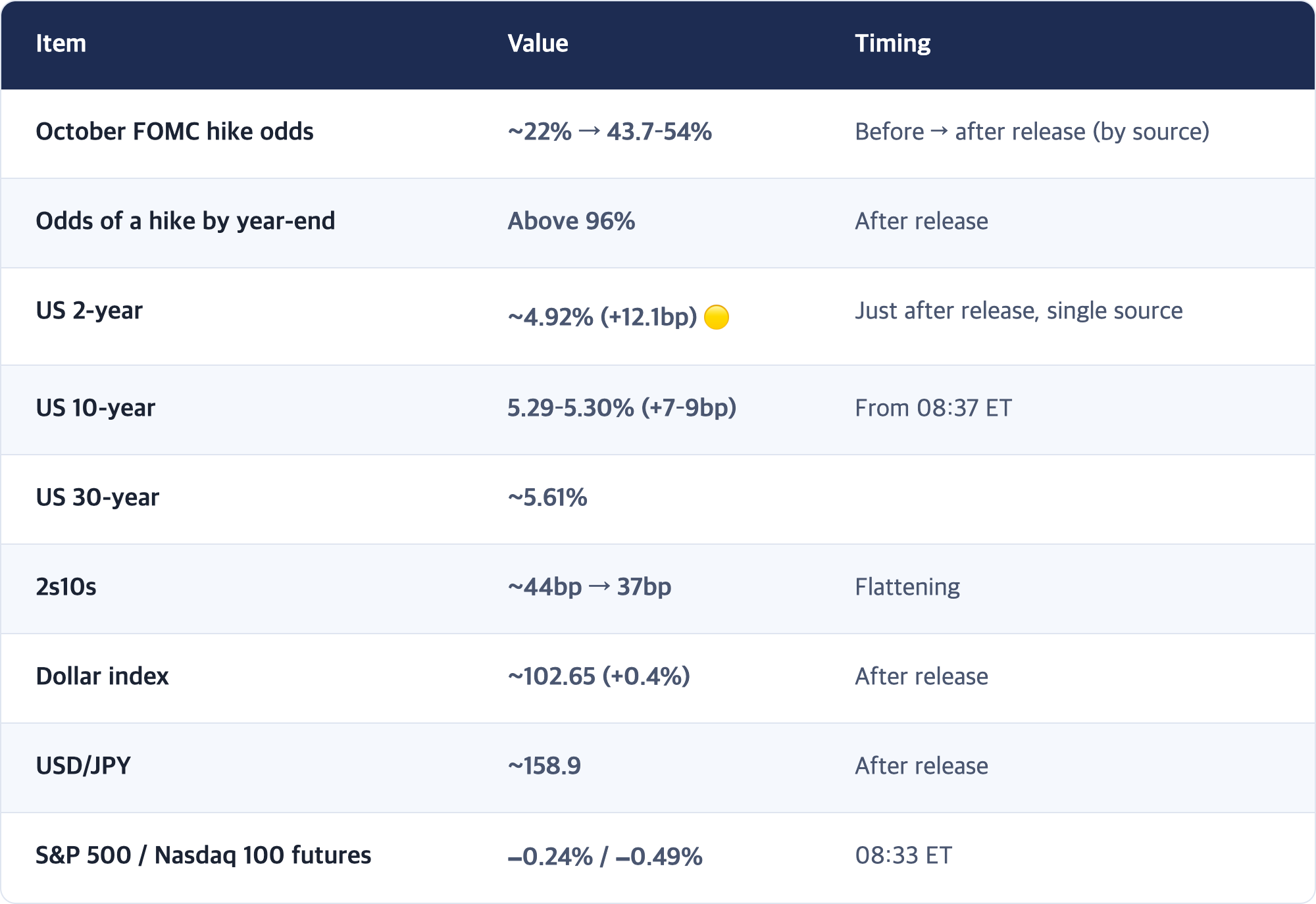
★ [Interpretation] Everyone expected the headline. Core moved the market.
The 0.6% headline was already priced in — everyone knew gasoline spiked in September because of the ongoing Strait of Hormuz disruption. Markets were watching core. Before the release, JPMorgan's Market Intelligence desk framed it simply: a rounded 0.2% probably lets the Fed hold, a rounded 0.3% probably means a 25bp hike. It came in at 0.3%.
This doesn't contradict New York Fed President John Williams, who said yesterday that one more hike this year may be appropriate but none is needed in 2027. It narrows the question from "one more hike?" to "October or December?" That's why the 2-year (policy-sensitive) moved more than the 10-year. Note the contrast with September 11, when a 0.3% core print sent September hike odds above 90%. This time odds stopped near 50%. The market moved to a coin flip, not a certainty.
[Observation] Core at 0.3% matches August's pace. It's not acceleration — it's a failure to slow. Before the October 28 decision, the remaining data include PPI (tomorrow) and retail sales.
3. The US Variable: The Most Rate-Sensitive Stocks Are Falling First
[Fact] US intraday, 10/14 (about 10:00–10:10 ET, Yahoo Finance and Reuters)
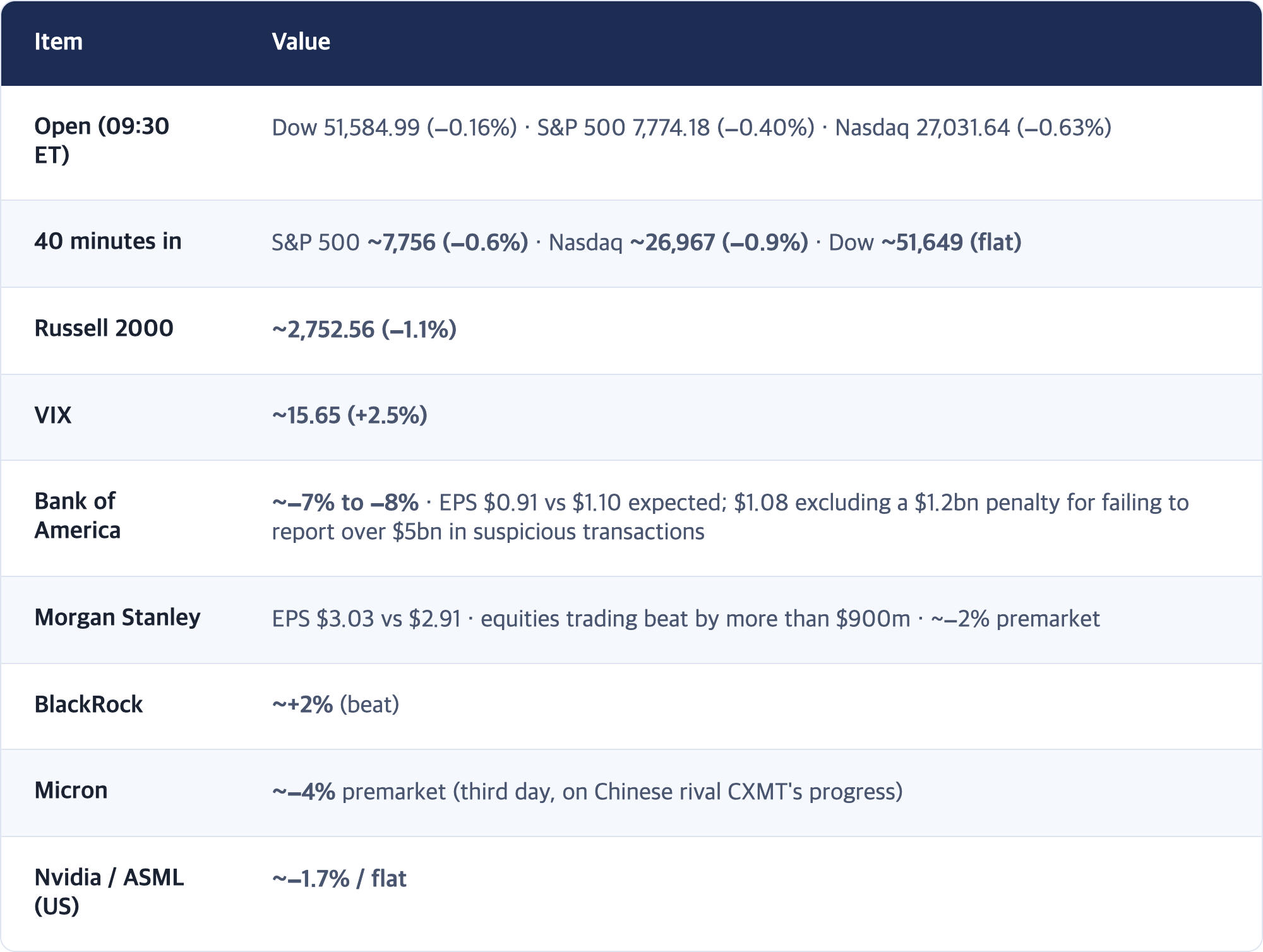
★ [Interpretation] Not all red is the same red
The order in the first hour is textbook: Russell 2000 (−1.1%) → Nasdaq (−0.9%) → S&P 500 (−0.6%) → Dow (flat). When yields rise, heavily indebted small caps and growth stocks whose value sits in far-off earnings get hit first. That suggests today's decline is about rates, more than about memory chips or China (observation).
Banks need a separate read. Bank of America's 7–8% drop reflects a one-off penalty, not rates. Excluding it, earnings were near expectations and net interest income rose 8% year over year to $16.4 billion. After Citi's −5.6% yesterday, it's the second straight day a big bank posted reasonable results and still fell sharply. This week has now twice suggested banks are not an easy landing spot for money rotating out of tech.
4. Macro Backdrop: Seoul and Tokyo Feared CPI More Than They Cheered ASML
[Fact] Asia and Europe, 10/14
[Fact] Commodities and other assets (US intraday)
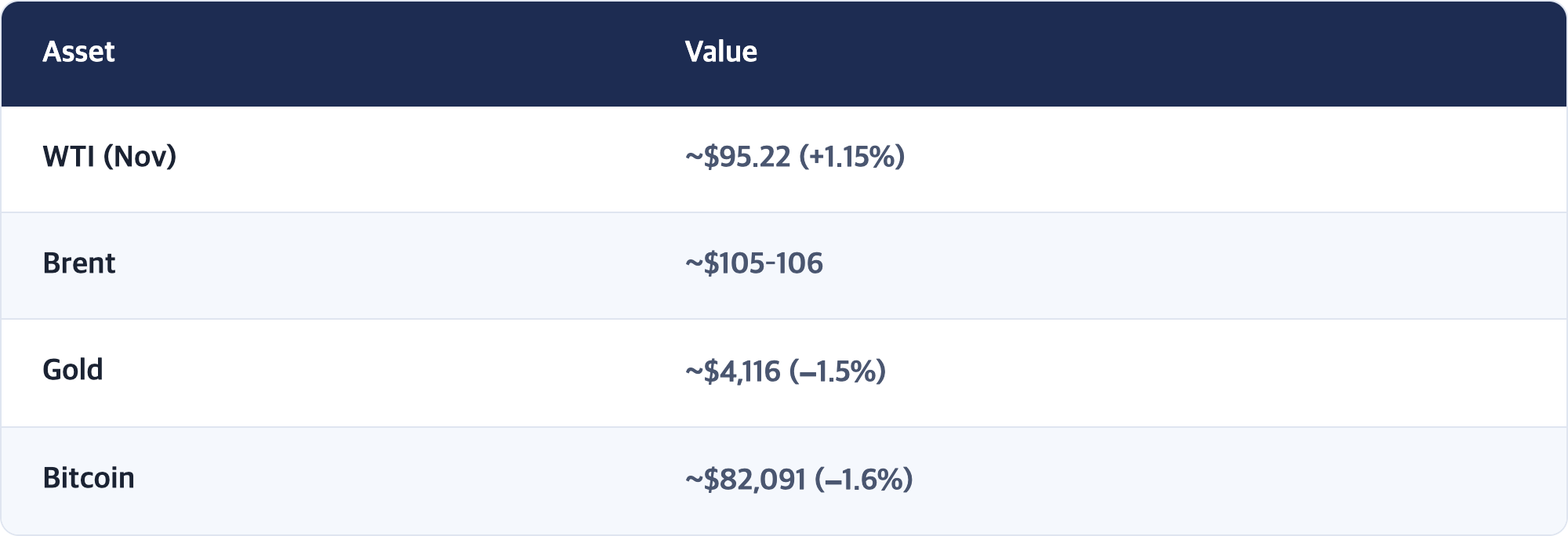
★ [Interpretation] ASML was good news — so why didn't Asian chips follow?
ASML's numbers were counter-evidence to this week's memory worries. Broadcom CEO Hock Tan suggested memory tightness could look different a year from now; ASML, the near-monopoly supplier of advanced chipmaking tools, said it can't fully meet demand in 2027 or 2028. When the toolmaker is sold out two years ahead, its customers are planning long-cycle investment.
Yet Tokyo reversed lower after the release and Korean equipment stocks fell 6–8%. Two explanations fit best (interpretation). First, expectations were already in the price (ASML fell 1.86% in its regular session and 2.26% after hours before bouncing in European trade). Second, CPI was hours away. Good sector news is hard to act on right before a major rate event.
So today was a day when the rates story beat the sector story. That ranking gets tested again tomorrow with TSMC's results.
[Interpretation] The four Korean market commentators we track (Kwak Sang-jun, Park Si-dong, Lee Kwang-soo, Lee Sun-yeop) broadly share a long-term bullish view on Korea centered on semiconductors. ASML's guidance supports that view. But the flows-and-leverage problem Lee Sun-yeop has emphasized hasn't eased: foreigners have sold for seven straight days. Long-term fundamentals improving and short-term flows turning are on different clocks.
5. Today's US Session (Wed 10/14): Checkpoints
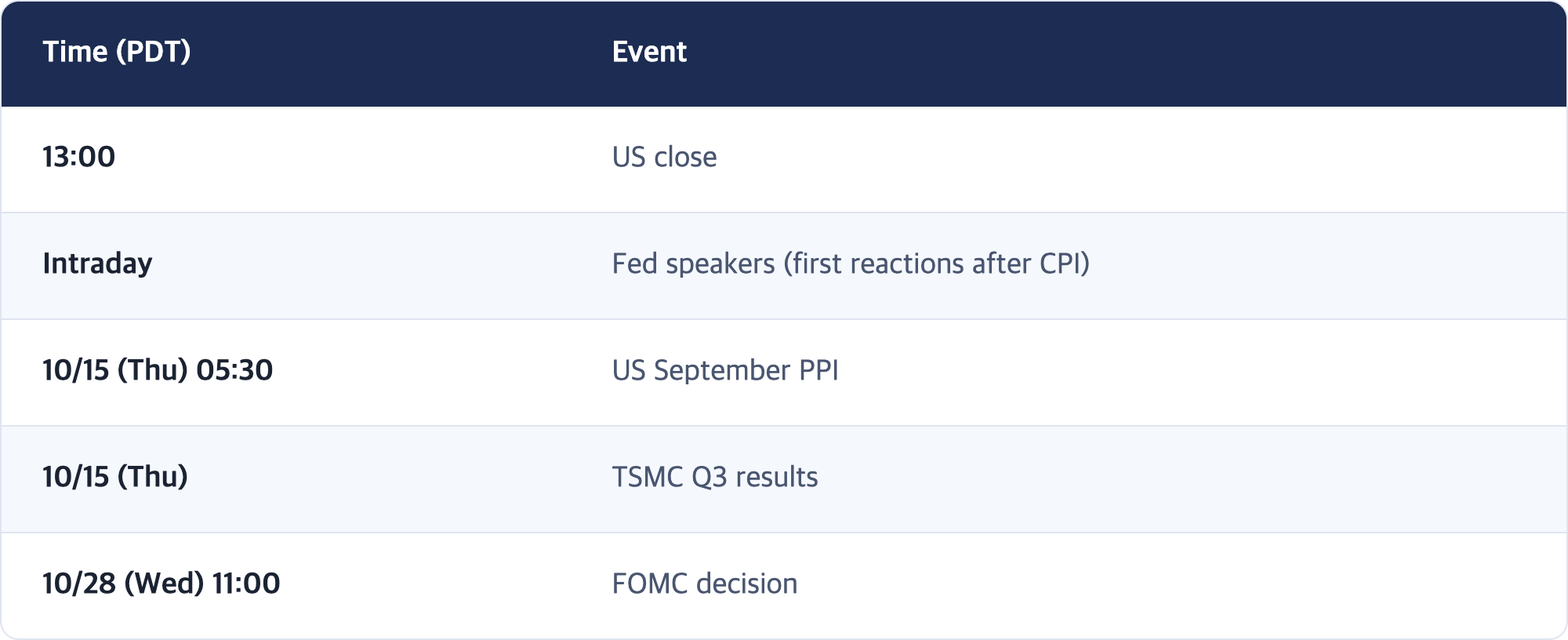
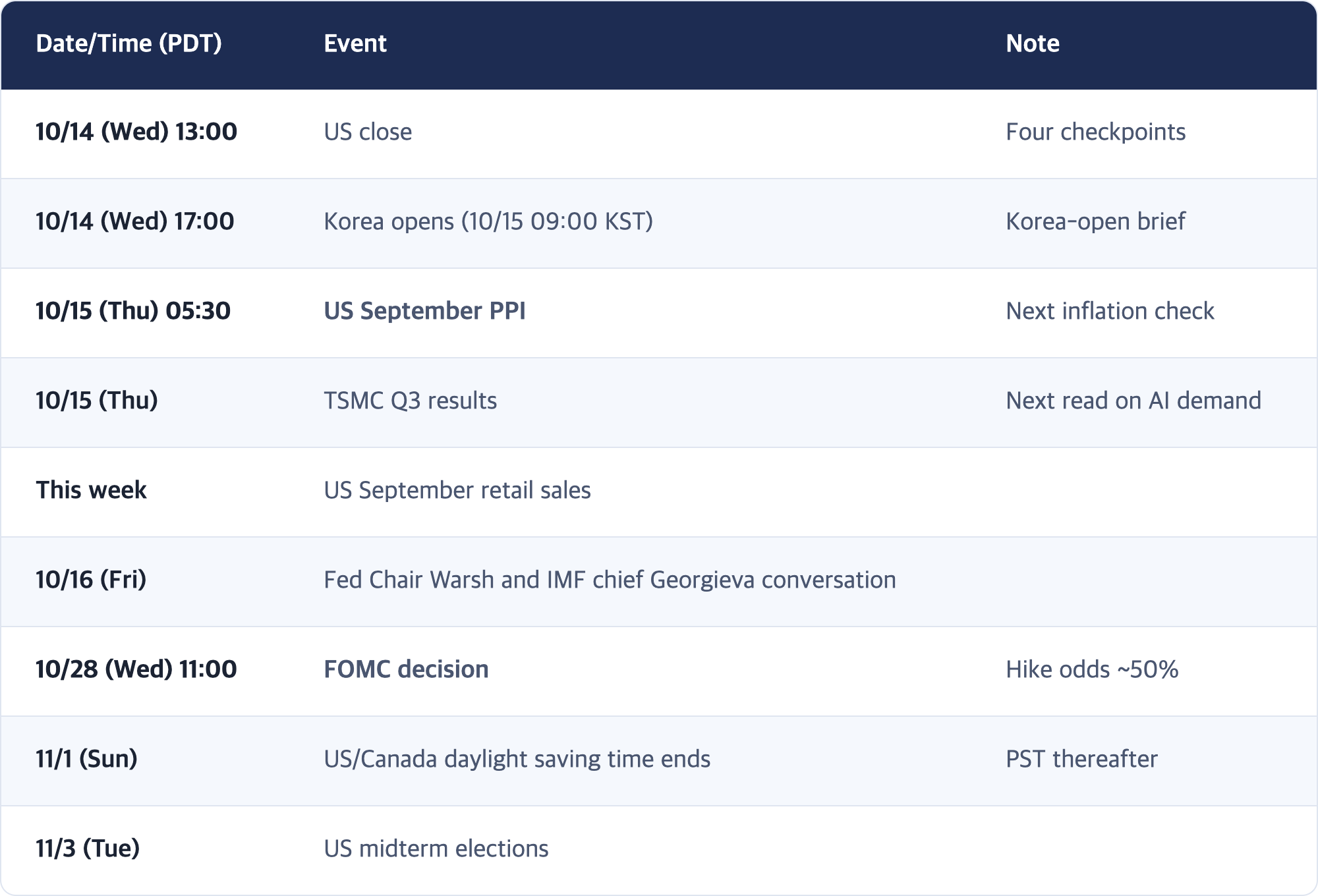
[Observation] Remaining schedule (PDT)
✅ Four checkpoints (by today's US close)
The question: does the CPI shock stick as "next-meeting" pricing through the close, or fade as a first-hour overreaction?
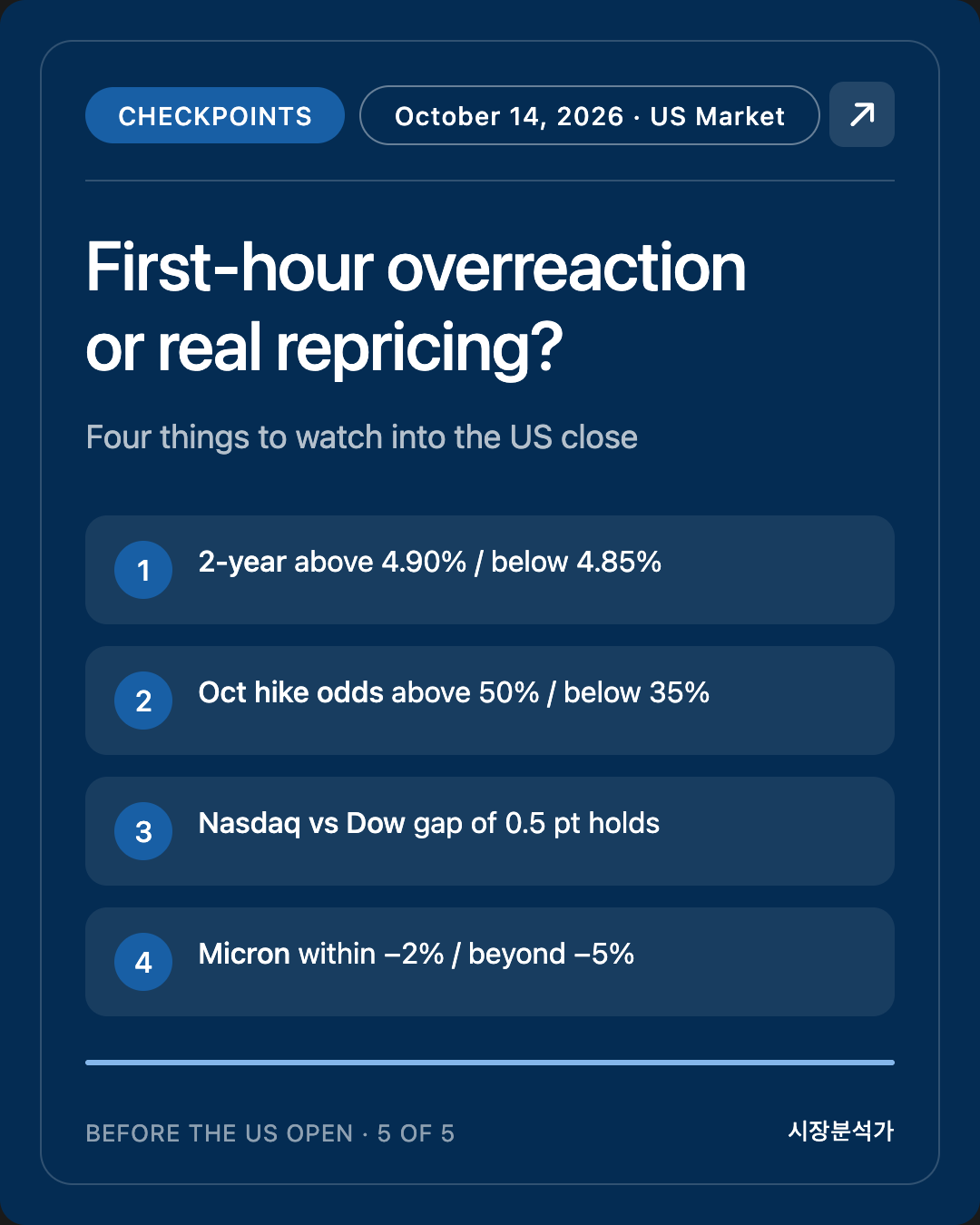
- US 2-year holds above 4.90% / falls back below 4.85%. Holding above means an October hike is genuinely priced in. (Most important)
- CME October hike odds close above 50% / below 35%. Currently swinging between 44% and 54%.
- Nasdaq vs Dow gap stays at 0.5 points or more. If it holds, it's a rates-driven selloff; if it narrows, the first hour overshot.
- Micron within −2% / beyond −5%. Does the third day of memory weakness get absorbed by the rates story, or extend on its own? This sets SK hynix's starting point in Seoul tomorrow.
[Interpretation] If #1 holds above while the #3 gap narrows, that means "yields went back up, but stocks held." As this brief noted on September 18, score stocks and bonds separately. In that case, tonight's Korea-open brief should start from the 2-year, not from stock prices.
6. Study Note: Why Markets React to Core CPI, Not the Headline
Concept
Headline CPI tracks the price of everything consumers buy. Core CPI removes food and energy. Those two swing with weather, wars and harvests — moves that interest rates can't control. What the Fed can influence with rates are prices that move slowly and stickily: wages, rents, services. That's why core is closer to "the inflation the Fed is targeting."
Analogy
Think of a thermometer. Take your temperature right after a hot cup of tea and it reads high (headline, gasoline). A doctor won't prescribe fever medicine based on that. They check again an hour later, after the tea wears off, to see whether a fever remains (core). What the tea caused will pass; a real fever needs treatment.
Today's example
- Headline +0.6%: mostly gasoline (+9.1% 🟡). Fully expected; markets barely reacted.
- Core +0.3% (vs 0.2%): just 0.1 point above forecast, yet October hike odds jumped from 22% to about 50%.
- The catch: energy prices that stay high long enough eventually seep into core through airfares, freight and delivery costs. With the Hormuz disruption now past 200 days, it's harder for the Fed to call energy purely "transitory."
One line
Headline tells you how bad it feels right now; core tells you whether the fever has settled in. The Fed sets rates on the second.
7. Corrections and Open Items
Corrections
- None.
Source discrepancies (adopted value noted)
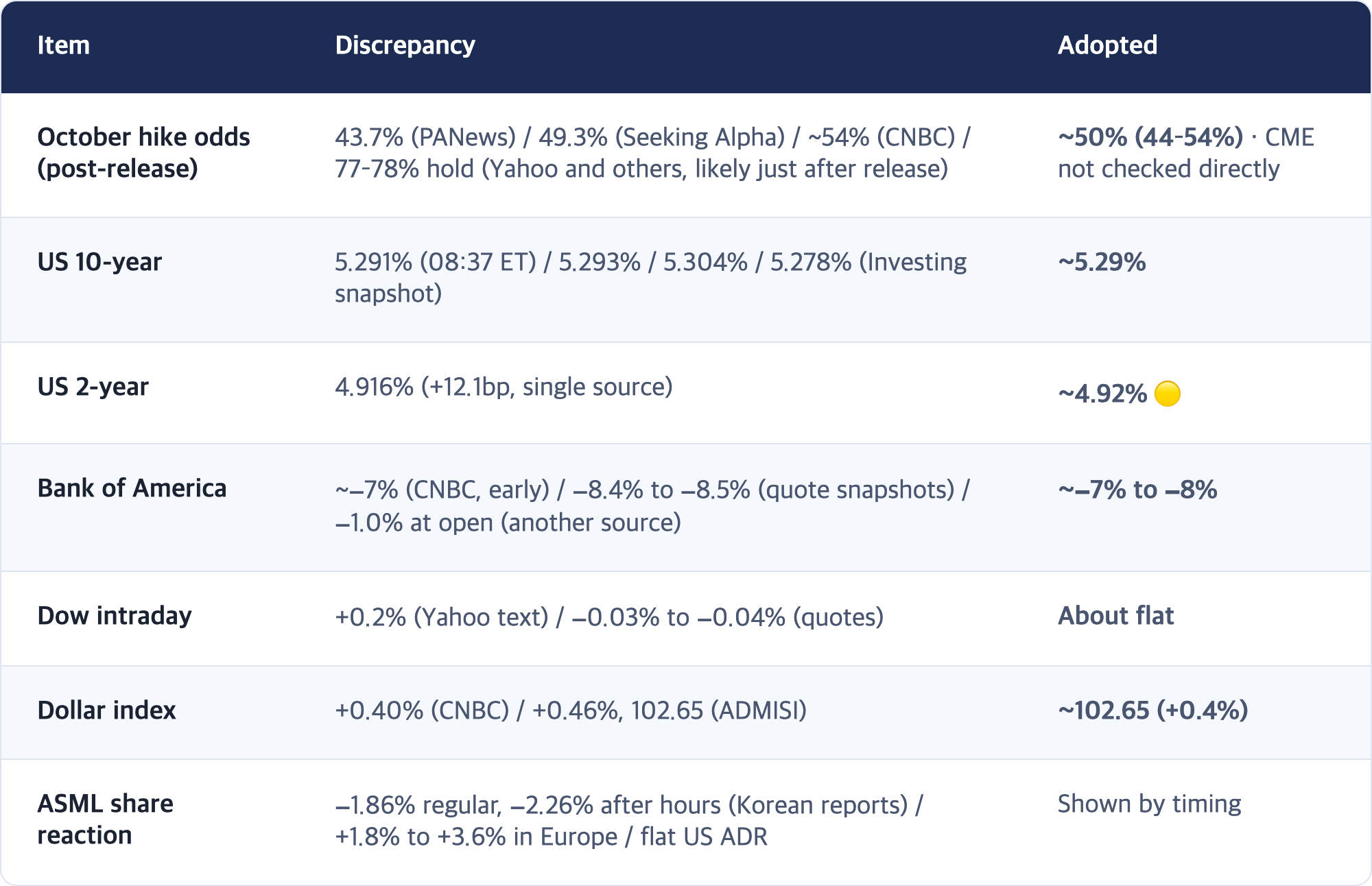
🔲 Not confirmed
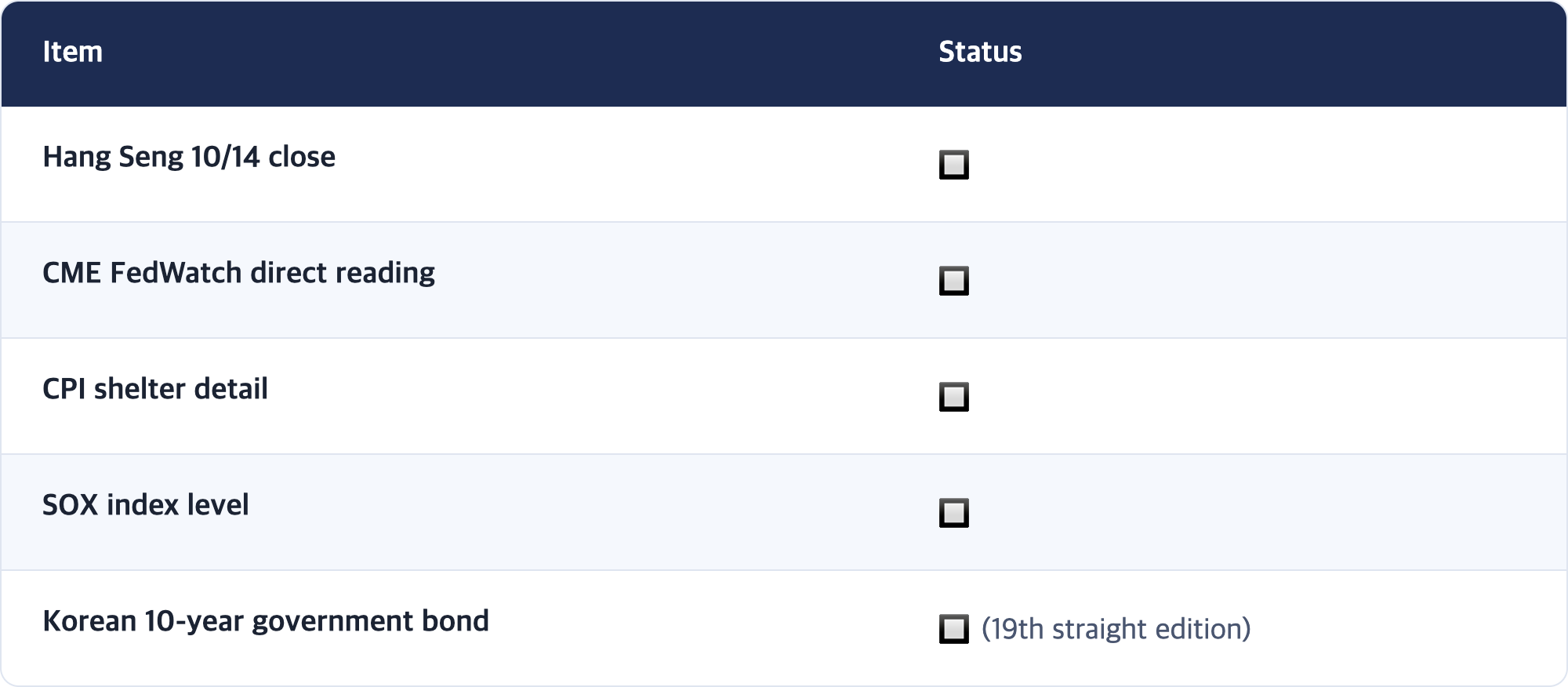
8. Event Calendar (PDT)
Sources
- S&P 500 futures turn negative after Sept inflation data | Reuters via Investing.com
- Wall St opens lower after hot CPI data fuels rate-hike bets | Reuters via Investing.com
- Stock market today: Dow gains, S&P 500, and Nasdaq decline on hot inflation data | Yahoo Finance
- CPI inflation report September 2026 | CNBC
- September 2026 CPI inflation beats Wall Street forecasts | Quartz
- CPI Preview: 0.2% Favours a Hold, 0.3% Favours a Hike | Investing.com
- October rate hike probability pops to 49% | Seeking Alpha
- After US CPI release, probability of Fed rate hike in October rises to 43.7% | PANews
- US CPI data comes hotter than expected | Invezz
- U.S. dollar index up about 0.40% after hotter-than-expected CPI report | CNBC
- Hot CPI Print | ADMISI
- Bank of America shares drop 7% after third-quarter revenue miss and regulatory penalty | CNBC
- Morgan Stanley (MS) Q3 2026 earnings | CNBC
- ASML reports €11.7 billion total net sales and €5.0 billion net income in Q3 2026 | GlobeNewswire
- European shares edge higher as ASML's AI demand outlook boosts tech | Reuters via Investing.com
- KOSPI gives up early 2% gain, barely holds 6,000 | Newspim (Korean)
- KOSPI fails to rebound on foreign selling, sixth straight decline | Infostock Daily (Korean)
- Japan stocks fall for fifth day after ASML results | Newspim (Korean)
- China stocks close: tech down more than 3% | Newspim (Korean)
Market Analyst · This brief does not recommend buying or selling individual securities. It provides macro context and interpretation.
📌 More market briefs
※ This post is market observation and organization intended to support your own judgment. It is not a recommendation to buy or sell any security. Figures are as of the time of writing and may differ between sources.
If this was useful, bookmark it or pass it along. It genuinely helps me write the next one.
I can survive. We can survive.